Growing Garlic in Containers: Autumn Planting to Harvest
Can you grow garlic in containers? Yes. Plant individual garlic cloves in a deep, well-draining outdoor container with a sunny position and enough room for bulbs to develop. In many climates, autumn planting gives garlic time to establish roots before winter. Growing garlic in containers works best when variety and timing suit your local climate. For related seasonal care, see our frost protection guide for container vegetables.
This guide focuses on harvesting garlic bulbs from patio, balcony or other outdoor containers. Choose a locally suitable variety, leave enough space between cloves and plan where the pot will spend winter before you plant.
What you need before planting
- Healthy seed garlic from a reputable grower or garden supplier.
- A container with open drainage holes and room for the full growing season.
- Fresh growing mix formulated for containers.
- A sunny outdoor position and access to water.
- A label recording the variety and planting date.
Start with your available space and sunlight. Our container vegetable gardening guide explains how to plan the whole setup, while these balcony vegetable garden ideas help you fit pots around everyday access.
Choose garlic suited to your climate
Buy garlic sold for planting rather than assuming supermarket bulbs will suit your garden. A named variety helps you check climate suitability and planting instructions. Reject cloves that feel soft or show decay. University of Maryland Extension recommends healthy planting stock and explains the cold period needed for bulb development.
Hardneck or softneck garlic?
Hardneck garlic is often chosen for colder climates and commonly produces a flower stalk called a scape. Softneck garlic is often better suited to milder winters and has flexible stems that can be braided after curing. These are broad patterns: ask a local supplier which named varieties perform well in your area.
Illinois Extension’s autumn garlic guidance describes these differences. Do not select a variety using storage life alone; it also needs to grow well through your winter.
How big should a container for garlic be?
The Royal Horticultural Society’s container guidance recommends a pot at least 25 cm (10 inches) deep and cloves about 15 cm (6 inches) apart. Treat this as a useful roomy starting layout, rather than packing cloves against the rim.
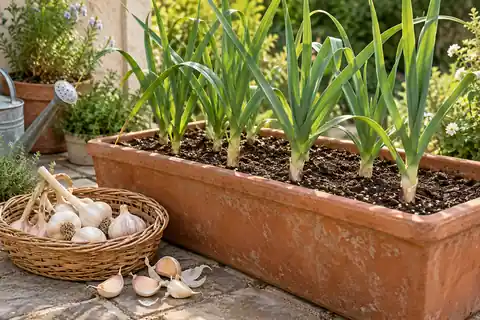
Measure the usable depth inside the pot, allowing room below the rim for watering. Then mark planting positions across the surface. A long planter can make spacing easier to judge; its outer dimensions do not tell you how much rooting space it contains.
The material also affects care. Fabric containers may dry faster, while some terracotta pots can crack in freezing conditions. Compare the maintenance tradeoffs in grow bags versus pots for vegetables. Choose a container you can protect appropriately and move safely if your winter plan requires it.
Use container mix and check the outlets
Fill the pot with fresh, well-drained growing mix intended for container plants. In the UK, this is usually labelled potting compost; it is different from a bag of garden compost used as a soil amendment. Avoid filling the container with untreated garden soil that may compact.
Our guide to potting mix for container vegetables explains bag labels and preparation. Check container drainage holes before adding the mix, and keep the outlets clear underneath the pot.
University of Maryland’s container vegetable guidance covers container materials and growing media. Good drainage matters throughout the season, including rainy periods when you are not watering.
When should you plant garlic in pots?
Autumn is the usual planting season for many bulb garlic varieties. The aim is to establish roots before winter slows growth. Some varieties are suitable for spring planting, so follow the planting-stock instructions and regional guidance.
There is no single planting week for every reader. University of Minnesota Extension gives frost-based timing for Minnesota, while Oregon State Extension describes autumn planting for Oregon. Neither calendar should be copied automatically into a different climate.
Check your local extension service or gardening organisation, then confirm that the variety matches the recommended planting season. A mild winter and a severe winter require different decisions about variety and container protection.
How to plant garlic cloves in a container
- Moisten the growing mix and fill the container, leaving watering space below the rim.
- Separate the bulb into individual cloves shortly before planting. Keep each clove’s papery skin intact.
- Select sound, plump cloves and mark positions with adequate space between them.
- Make a hole for each clove. Place the pointed end upward and the flat basal end downward.
- Cover, water gently if needed and let excess water drain. Label the pot.
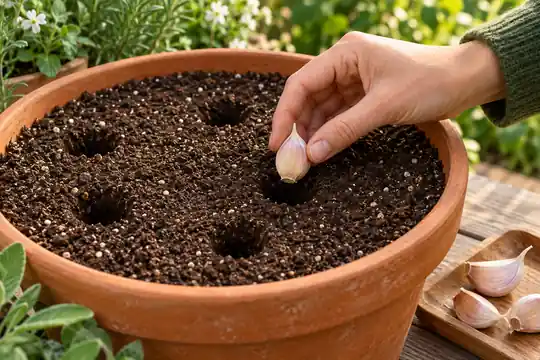
Planting-depth recommendations differ between regions and growing situations. For its UK container method, the RHS puts the clove tip about 2.5 cm (1 inch) below the mix. US extension guides often give deeper soil cover for outdoor planting. Follow advice appropriate to your location and planting stock; do not combine measurements that refer to different parts of the clove.
Plant a separated clove in each position, rather than burying a whole bulb. Do not peel away its protective skin or force it into compacted mix.
Watering and feeding through the season
Check the mix regularly and water according to its moisture, the weather and plant growth. A pot exposed to wind or sunshine can behave differently from one against a sheltered wall. Rain may miss a container under an overhang.
Apply water to the mix and allow runoff to escape. Empty ordinary saucers instead of leaving the roots standing in water. Maryland’s container-maintenance guidance explains why container care depends on conditions; our watering container plants guide provides a practical checking routine.
Read the growing-mix label before adding fertiliser. Some mixes already contain nutrients. Follow a suitable product’s container directions and local garlic guidance rather than applying an in-ground fertiliser rate to a small pot. Winter dormancy is not a reason to keep feeding on a summer schedule.
Protect the container during winter
Outdoor pots expose roots to greater temperature swings than garden soil. A garlic variety described as hardy in the ground may still need a different protection plan in a container.
For freezing climates, get local advice on insulating or sheltering the pot while retaining the cold conditions appropriate for your garlic. Keep drainage open and consider whether the container itself tolerates freezing. Avoid repeatedly moving a dormant pot into a warm living room.
In wetter, milder winters, check that prolonged rain is not keeping the mix saturated. Continue moisture checks during dry spells; reduced winter growth does not mean every container stays moist indefinitely.
Spring growth and garlic scapes
As growth resumes, give the plants good light and keep checking moisture and nutrient needs. Leave healthy foliage in place when bulbs are your goal rather than repeatedly cutting leaves for kitchen greens. For a separate leaf crop through winter, follow our indoor garlic greens guide and keep those cloves apart from your bulb planting.
Hardneck varieties commonly produce scapes. Minnesota Extension advises removing them when they begin to curl. Cut the scape without damaging the leaves or pulling up the plant. Softneck varieties generally do not provide the same scape harvest.
When is container garlic ready to harvest?
Watch the leaves and inspect a bulb rather than choosing a harvest date from the calendar alone. Minnesota’s guidance uses browning lower leaves while roughly half or a little more of the upper foliage remains green as a checking point.
Gently uncover or lift one sample bulb. Look for developed cloves and intact protective wrappers. Waiting until every leaf is dead can leave bulbs with poorer protection. Oregon State’s guidance also emphasises checking bulb development.
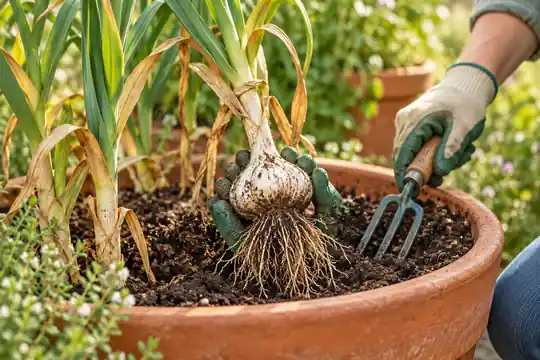
Loosen the surrounding mix carefully, keeping tools away from the bulb. Support the bulb as you lift it instead of hauling it out by its leaves. Keep the roots and foliage attached for curing and avoid bruising the harvest.
Cure and store the garlic
Move harvested bulbs to a dry, shaded place with good airflow. Spread them out so air can circulate instead of leaving them piled in a bucket. Keep them out of rain and strong direct sunlight.
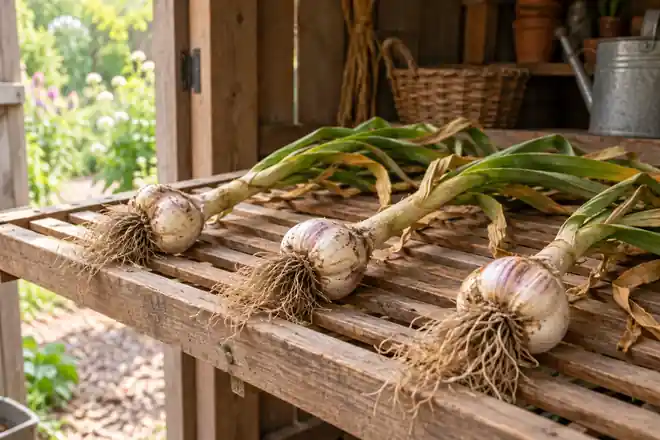
Curing takes weeks, depending on conditions. Minnesota describes around three to four weeks with the whole plant attached. Let the necks and outer skins dry before trimming for storage; a fixed number of days is less useful than checking the bulbs.
After curing, remove loose dry dirt gently without stripping the protective wrappers. Store sound bulbs in a dry, ventilated place suited to the variety. Keep damaged bulbs separate and inspect stored garlic periodically for softening or decay.
Common problems to check
- Soft cloves or persistently wet mix: inspect drainage, standing water and watering habits.
- Small bulbs: review variety suitability, sunlight, spacing and the planting season.
- Early yellowing: check moisture and root conditions before assuming harvest readiness or adding more fertiliser.
- Winter damage: review container exposure and protection with local guidance.
Frequently asked questions
Can you grow garlic bulbs indoors?
This guide is for outdoor bulb production. A warm windowsill does not automatically provide the seasonal conditions garlic needs for a normal divided bulb. Growing shoots indoors is a different goal and should not be treated as proof that a full bulb harvest will follow.
Can you plant supermarket garlic?
It may sprout, but sprouting does not confirm climate suitability or healthy planting stock. Garlic sold for planting from a reputable supplier gives you a named variety and more useful growing instructions.
How many garlic cloves fit in one pot?
Use the usable planting surface and your chosen spacing to decide. Mark the positions first and leave room away from the edges. A pot’s litre or gallon capacity alone is not enough to determine the number of cloves.
How long does garlic take to grow in containers?
Autumn-planted garlic is generally harvested in the following growing season. The exact interval depends on variety, climate and planting date. Judge readiness from leaf condition and a sample bulb instead of expecting every pot to finish after the same number of days.