Growing Potatoes in Bags: Planting to Harvest
Growing potatoes in bags starts with a sunny position, a container that drains, certified seed potatoes and a plan for keeping the growing medium moist. Choose an early variety for a first container crop, and match the number of seed potatoes to the bag’s dimensions rather than squeezing in every tuber you have.
This guide combines UK Royal Horticultural Society advice with US University of Maryland Extension guidance. It is research-based; SproutWish has not carried out a potato grow-bag trial. The two approaches below are separate examples, not a promise of the same harvest from every bag.
Choose a bag and a planting plan together
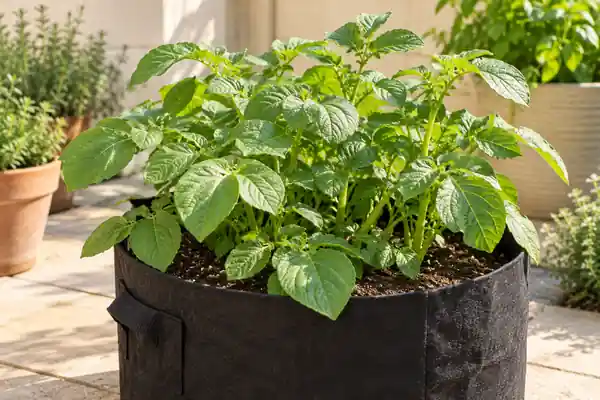
The RHS potato guide favours early varieties for containers. Its small-container starting point is at least 30 cm (12 inches) wide and deep, with one seed potato in a 30 cm pot. For a larger fabric-bag example, Maryland Grows’ Project Spudnik describes a 12-gallon bag approximately 16 inches wide and deep, planted with three to five seed potatoes or seed pieces.
| Approach | Container example | Planting reference |
|---|---|---|
| Small early-potato setup | At least 30 cm wide and deep | RHS: one seed potato in a 30 cm pot |
| Larger fabric-bag setup | Project Spudnik’s 12-gallon, 16-inch-wide bag | Three to five seed potatoes or pieces in that specific setup |
| A different bag or variety | Check filled width, depth and usable volume | Use the supplier’s crop instructions; do not scale solely from a gallon label |
Record the filled dimensions before ordering compost. A tall, narrow bag and a wider bag may carry the same capacity label while offering different planting space. Also check whether the retailer uses litres, US gallons or another capacity convention. These recommendations describe different growing setups; they do not establish a universal minimum bag size.
Buy seed potatoes and check local planting dates
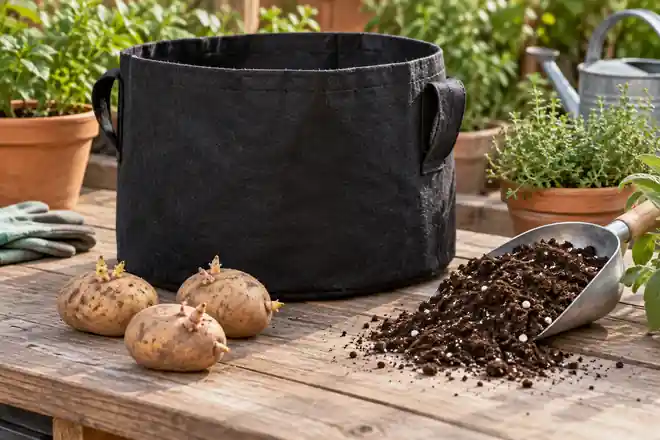
University of Maryland Extension recommends certified seed stock, because supermarket potatoes can carry disease without visible symptoms. Potatoes also need substantial direct sunlight: its guide specifies at least six hours, with eight to ten preferred.
Use your local growing calendar instead of copying a month from another country. Maryland’s spring planting advice belongs to that region, while UK timing varies with location and variety. Prolonged cold can delay or damage a planting. Keep the supplier’s instructions beside your local forecast when deciding when to start.
Make a short label for each bag: variety, planting date, container dimensions and number planted. That record will make next season’s decisions more useful than a vague memory of whether the crop did well.
Plant using one consistent method
For the RHS small-container method, start with around 15 cm (6 inches) of peat-free multipurpose compost and place the seed potato just below its surface. Add compost gradually as shoots grow, ending below the rim. Make sure repurposed bags have drainage holes.
The Project Spudnik method starts differently: about 4 inches of potting mix under the seed pieces, then about 3 inches above them. It adds more mix as the plants grow and leaves space at the top for watering. If following that approach, read its full instructions rather than combining depths from several guides.
Before filling, put the bag where it will be maintained and harvested. Check that you can reach the top and that excess water has somewhere suitable to go. For a wider planning checklist, see our container vegetable gardening guide.
Check moisture and feeding through the season
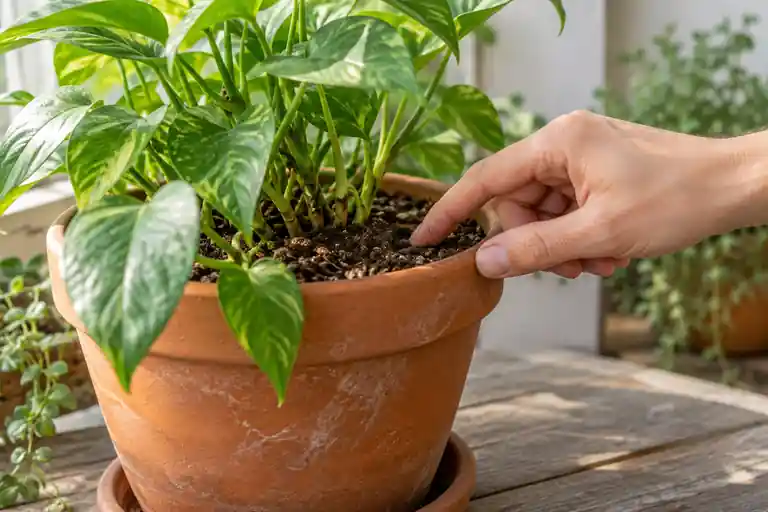
Project Spudnik warns that fabric bags can dry quickly in hot or windy weather. Check the growing medium often. Keep a note of how the bag behaves in your position, and follow fertiliser directions rather than guessing a stronger dose.
Rain alone does not prove that a bag is watered: the RHS notes that potato foliage can prevent rain reaching the compost. Inspect the medium itself. Our watering container plants guide explains the checks to make before choosing extra equipment.
Harvest without promising a fixed yield
Maryland Extension distinguishes tender new potatoes from a mature crop intended for storage. Handle tubers gently, keep them out of prolonged light and avoid washing potatoes before storage. For storage crops, its guidance allows two weeks after the plants die back for skins to develop. Read the linked guide for curing and storage conditions.
Plan where you will empty the bag before harvest day. A tray or suitable work area makes it easier to inspect what you grew and record the result. Compare your actual harvest with the number planted and your watering notes; no bag size guarantees a fixed number or weight of potatoes.
Common questions about growing potatoes in bags
Do I need to chit seed potatoes?
The RHS describes chitting as optional, with benefits for an earlier start to early varieties. Follow the supplier’s advice; lack of space for chitting does not automatically prevent a potato crop.
Does a tall potato tower mean a bigger harvest?
Do not assume that stacking more height produces layers of potatoes. Maryland Extension says potato towers do not usually work. Choose a documented container method and evaluate its results in your own space.
Can I use a tomato bag-size recommendation?
Use crop-specific guidance. Our tomato grow bag size guide helps explain capacity labels, but its plant-count recommendation is for tomatoes. The potato planting examples above have their own dimensions and spacing.