
Potting Mix for Container Vegetables: Choosing & Preparing
Potting mix for container vegetables should give roots space, moisture and air in the pot you actually use. For a first tomato, pepper or salad container, a ready-made mix labelled for outdoor containers is a practical starting point. Read its intended use and feeding instructions before buying extra ingredients.
This guide helps you choose and prepare the growing medium. For the wider project—crop, light, container and support—start with our container vegetable gardening plan.
Potting mix, potting soil and compost: what do the names mean?
In US garden centres, “potting soil” often means a prepared growing mix rather than soil dug from a garden. University of Maryland Extension explains that many container mixes are soilless blends. Common ingredients include coir, peat, composted bark, compost, perlite and vermiculite. A blend supports the plant while providing spaces for water and air.
UK “potting compost” means a prepared product for growing plants in pots. It is different from homemade garden compost, which is decomposed organic material. The RHS container vegetable guide recommends a suitable peat-free potting compost, such as a container or multi-purpose product. Formulated loam-based products are also used; their inclusion of loam does not make them equivalent to filling a pot with untreated garden soil.
Choose by the product’s intended use and instructions. Two bags with similar names can contain different blends. A photograph of a tomato on the front is less useful than the information on the back.
Read the bag before choosing potting mix for container vegetables
Compare these details while the bags are still on the shelf:
- Use: look for guidance covering pots, containers and the crop or plant stage you need. A seed-sowing mix serves a different job from a final growing container.
- Ingredients: identify the base materials and any added compost or mineral components. Ask the retailer about unclear wording.
- Added nutrients: record whether a starter feed or controlled-release fertilizer is included, and when further feeding is advised.
- Preparation: check whether moistening, expanding or another step is needed before use.
- Quantity: compare the declared volume in litres or cubic feet with the containers you plan to fill.
Keep a photo of the label and the purchase date. That gives you a reference when deciding how to feed, buying the same mix again or discussing a problem with a garden centre.
Why plain garden soil is a poor default for pots
Maryland’s growing-media guidance warns that ordinary soil can be too dense for good air and water movement in containers. Choose a light, loose medium instead of filling your first vegetable pot with soil from a bed. Commercially formulated soil-based potting composts are a separate option.
Do not assume a product sold for improving garden beds is ready to use as the entire contents of a pot. If its label does not answer that question, ask before purchase.
Should you add compost, perlite or other ingredients?
A complete container mix may be usable as supplied. Start there rather than buying several amendments without a clear purpose. Maryland lists both a soilless mix alone and an equal-volume blend of soilless mix with compost as possible vegetable growing media. Those are options, not a requirement to alter every bagged product.
Adding an ingredient changes the blend you bought. If you choose to make your own, use a documented formulation and measure by volume. Write down the materials and proportions so you can repeat or adjust it. One bucket of each ingredient is an equal-volume mix; equal bag weights are not the same measurement.
For a purpose-built self-watering planter, follow its specified growing-medium instructions. The mix must work with that container’s water-delivery system. Keep the container manual with the bag label.
Work out how much growing mix to buy
Use the manufacturer’s fill guidance where available. Otherwise, add the usable capacities of your pots in a single unit. For example, a 40-litre container plus a 35-litre container totals 75 litres before allowing for plant root balls and space below the rims. Two 50-litre bags provide 100 litres, leaving some mix for topping up or another pot.
This is a purchasing estimate, not a guarantee of an exact fill. Tapered pots, root balls and the level you fill to change the amount used. If a grow bag is described in gallons, check which gallon is meant before comparing it with litre-labelled compost. Our tomato grow bag size guide explains the units and plant-size decision. For potato bags, use the staged planting approach in our potato growing guide when planning the total supply.
Moisten the mix before filling the container
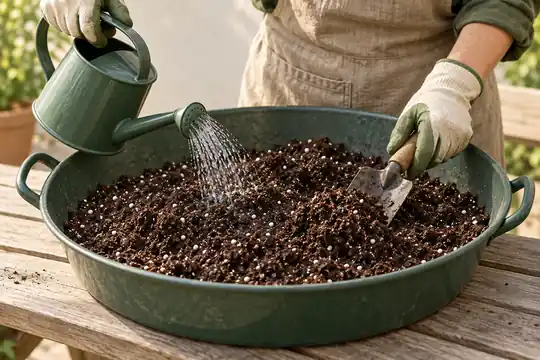
Illinois Extension’s container guidance recommends slightly moistening bagged media before filling the pot. This also gives you a chance to break up clumps and check that the mix is evenly prepared.
- Read the preparation instructions and place the amount you need in a clean tub.
- Add water gradually, folding the mix with a trowel so dry pockets become evenly moist.
- Stop before making a muddy slurry. Follow any product-specific instructions for compressed or expanding material.
Fill the pot and leave watering space
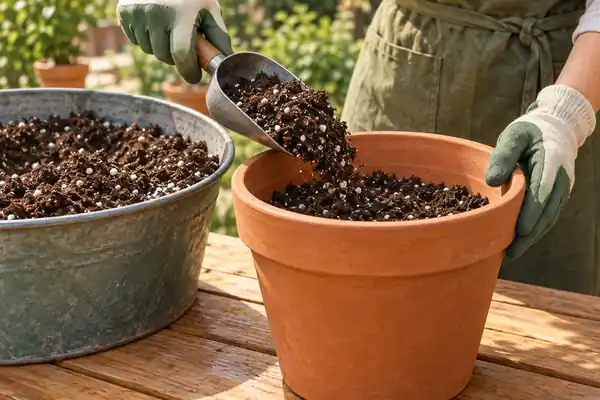
Put the prepared mix into an ordinary container with clear drainage holes. Illinois recommends leaving about an inch (2.5 cm) below the rim to help water soak in instead of spilling over. Allow for the root ball when preparing a planting space, and use crop-specific instructions for sowing or transplanting.
Skip a gravel layer under the growing mix. Illinois Extension explains that gravel does not improve drainage inside an individual pot. Keep the outlet clear and empty collected drainage water from saucers.
Before planting, use our vegetable container drainage guide to check ordinary pot outlets, saucers and self-watering overflows.
Plan feeding and moisture checks together
Added fertilizer does not mean a container is supplied for an unlimited growing season. University of Minnesota Extension notes that repeated watering can leach nutrients, even from mixes containing slow-release feed. Follow the product labels and the crop’s needs instead of combining several feeds at their full rates.
A dry-looking surface is not enough evidence to water. The RHS peat-free growing tips advise checking below the surface; some mixes remain moist deeper down. Lift a manageable pot to learn how its weight changes. Our container watering checks help you build an observation routine.
Can you reuse potting mix next season?
Maryland advises removing old plant material and refreshing saved media with fresh growing medium and/or compost. Do not save media from pots where root disease was a problem. The physical structure and nutrient supply change over time, so reusing mix needs a preparation and feeding plan.
Label stored material with its previous crop and any problems you noticed. For an uncertain batch, ask a local extension service or garden adviser before putting a new edible crop into it. Keep fresh bagged compost according to its storage instructions; RHS recommends using it in the growing season you buy it.
Frequently asked questions
Is potting soil the same as potting mix?
The names are often used interchangeably on US packaging. Check the actual ingredients and intended use. A ready-made container medium can carry either name; plain garden soil is a different material.
Can I use only compost for container vegetables?
Maryland lists compost alone as one possible growing medium, but compost quality and subsequent feeding still matter. For a first pot, a labelled container blend gives you preparation and care instructions to follow.
Do vegetables need a special branded potting mix?
Compare suitability and instructions rather than assuming a premium name solves every growing problem. A suitable mix still needs an appropriate container, adequate light and regular care.
Choose the mix you can identify, prepare and maintain, then keep notes through the season. Explore our Container Vegetables guides for the next part of your growing plan.


