Grow Bags vs Pots for Vegetables: Which Fits Your Space?
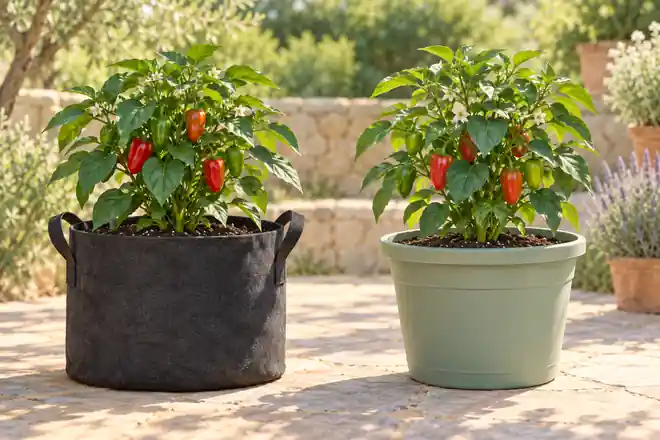
Grow bags vs pots for vegetables is a choice about how you will manage the plant, not simply which container looks better. Fabric bags suit seasonal growing and compact storage. A suitable plastic pot can be easier to manage when rapid drying is a concern. Terracotta has a different watering and winter-care profile from plastic, so “pots” should not be treated as one material.
Begin with the crop, available light and access to water. Our container vegetable gardening plan covers those first decisions. This comparison helps you choose the container itself.
Grow bags vs pots for vegetables: a practical comparison
| Decision | Fabric grow bag | Rigid pot |
|---|---|---|
| Moisture | Porous fabric can dry quickly; check the mix regularly. | Plastic and glazed pots lose less water through their walls than porous materials. Terracotta dries faster. |
| Root boundary | Exposed roots can be air-pruned at the bag edge. | A solid wall gives a different root boundary; adequate root space still matters. |
| Empty storage | Many reusable fabric bags fold flat. | Some pots stack, but check their shape and storage space. |
| Moving | Light when empty; a filled bag is a different load. Check handles and instructions. | Weight varies greatly between plastic, clay and other materials. |
| Support | Plan the filled footprint and plant support before planting. | Check base width, shape and stability, especially with tall crops. |
Use the table as a shortlist. It does not predict a harvest or give one material a universal advantage.
Check what “grow bag” means before buying
This guide mainly compares reusable fabric containers with rigid pots. In UK gardening, a growing-bag can also mean a horizontal bag already filled with compost. The RHS growing-bag guide describes opening a panel in a horizontal bag for herbs and salad leaves. That is a different product from an empty fabric bag you fill yourself.
Read the listing for material, whether growing mix is included, usable dimensions and intended reuse. Do not compare a filled compost bag with an empty fabric container using only the advertised price.
Which container will need more watering?
Illinois Extension explains that porous fabric and terracotta dry faster than non-porous plastic or glazed ceramic. This is the main maintenance tradeoff to consider if your patio gets hot or you cannot check plants often.
A fabric bag can be workable when you have convenient water access and time to inspect the mix. If moisture loss is already difficult to manage, a suitably sized plastic pot is a useful alternative to consider. Neither choice removes the need to check the root zone.
Weather, plant size and growing mix also affect watering. Use our container watering checks rather than copying a fixed schedule from another garden.
For a practical care routine, follow our grow bag watering guide to check moisture, apply water gently and manage runoff.
Do fabric grow bags give roots an advantage?
University of Maryland Extension describes air pruning: roots reaching open air at a fabric bag edge stop extending and branch within the growing mix. This differs from a root encountering a solid container wall.
That mechanism does not make a small bag an adequate home for a large plant. Compare depth, volume and the space needed by the mature crop. A bag and pot with similar capacity can also have very different proportions.
Compare usable dimensions, not just the label
Illinois Extension’s vegetable-container guidance highlights diameter, depth and individual plant space requirements. Those details help you judge whether the container fits the intended crop and planting density.
- Identify the crop and variety before selecting a size.
- Open an empty bag into its intended shape, or check the pot’s internal dimensions.
- Measure usable depth and width; allow for watering space below the rim.
- Compare capacities in the same unit and check whether a gallon label means US or imperial gallons.
- Check the filled footprint against the place where the container will stand.
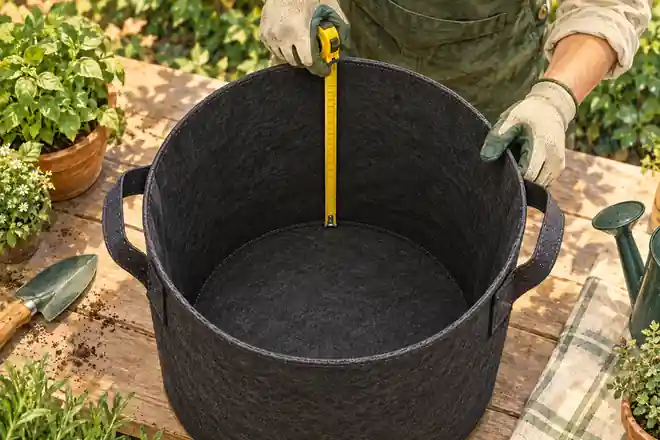
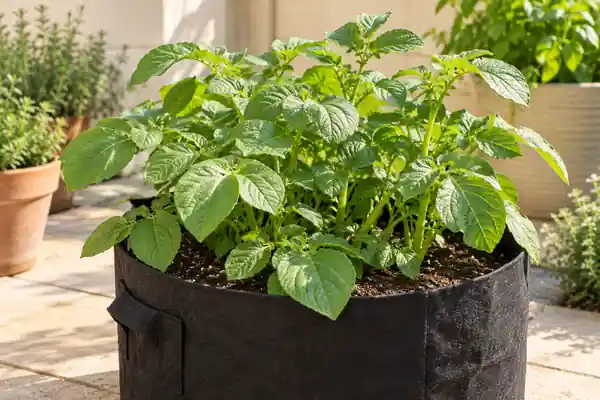
For tomatoes, use our tomato grow bag size guide to connect container capacity with plant type and support. For potatoes, follow the planting approach in our potato bag guide when planning the growing space.
Plan drainage, placement and support together
An ordinary rigid pot needs functioning outlets. A permeable bag still needs a place where runoff can leave and be managed. Check what lies beneath either container, and avoid leaving the growing container standing in collected water. Our vegetable container drainage guide covers outlets, saucers and reservoir overflows.
Arrange supports for tall crops before planting. Maryland notes that a wider, shorter container can be more stable than a tall, narrow one of the same volume. Handles alone do not tell you how safely a filled bag can be moved. Follow the product’s load and handling guidance.
On a balcony, confirm building rules and load limits before placing filled containers. Leave space to reach the plants, watering area and runoff without repeatedly moving heavy pots.
Heat exposure and winter storage
Illinois Extension’s material guide notes that dark containers absorb more heat and that moisture freezing in porous pottery can cause cracks. Consider the container’s colour and exposure as well as its material.
Inspect your actual growing position during hot weather. For stored clay pots, follow the manufacturer’s frost guidance and protect them as needed. A fabric label does not establish a product’s lifespan or winter-storage requirements; check those instructions separately.
Compare the full setup cost and reuse plan
Write a short shopping list for each option: container, growing mix, crop support and any surface protection or watering equipment. Compare actual prices for the size you need. A cheaper container can still require more mix or an additional support arrangement.
Choose suitable growing media with our potting mix selection guide. Keep its preparation and feeding label with the container instructions.
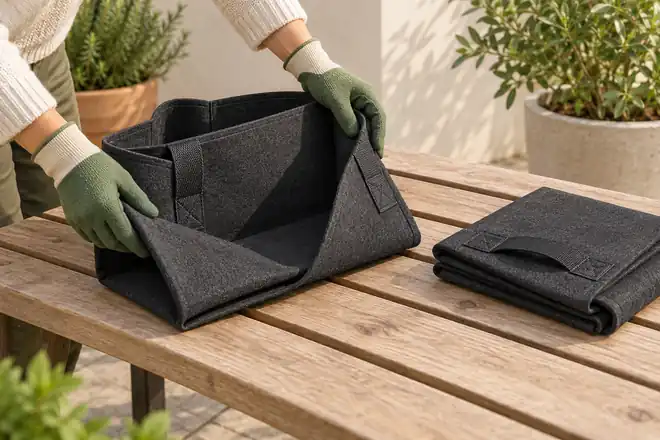
Illinois Extension notes that fabric bags are convenient to store because they fold flat. For a reusable bag, inspect seams and handles after emptying, follow its cleaning instructions, and let it dry before storage. Inspect rigid pots for cracks or degraded material before reusing them.
Choose for the garden you can maintain
- Seasonal containers with limited storage: shortlist a reusable fabric bag if you can manage its watering needs.
- Hot conditions with difficult moisture management: consider an appropriately sized plastic pot and review the growing position.
- A permanent display: compare a rigid pot’s weight, drainage and winter-care requirements with your space.
- Tall or heavily supported crops: decide the footprint and support system first, then choose a compatible container.
Start with a manageable number of containers. Record which material you used, the crop, mix and moisture observations. Your notes will help you choose the next container without assuming someone else’s conditions match yours.
Frequently asked questions
Are grow bags better than plastic pots for vegetables?
They offer different advantages. Fabric bags allow air pruning and can fold for storage; plastic pots can be easier to manage where fast drying is a problem. Match either option to the crop’s root space and your care routine.
Can I use the same potting mix in bags and pots?
A suitable container mix can be used in either ordinary setup when its instructions allow it. Follow separate growing-medium instructions for purpose-built reservoir planters. Material changes do not justify guessing a new fertilizer or watering rate.
Can I reuse fabric grow bags every year?
Check the product’s reuse guidance and its condition after each crop. Clean and store it as directed, and replace damaged bags. There is no single reliable lifespan for every fabric or construction.
For a small vegetable garden, choose between grow bags and pots by usable root space, watering access and a practical storage plan. Explore our Container Vegetables guides for the next part of your setup.