
Regrowing Green Onions in Water or Soil: A Practical Guide
Regrowing green onions starts with the rooted white base, not a loose green leaf. Keep a healthy base upright in shallow water, give it a bright position, and watch for new leaves. You can then move a growing plant into potting mix for a more substantial container project. For another kitchen-scrap project with different growth expectations, see our celery regrowing guide.
This guide covers grocery-store scallion scraps in water and soil. It is a useful way to use a small windowsill, but a few saved bases will not provide an unlimited supply of onions. Start with a small batch you can inspect and care for easily.
Can you regrow store-bought green onions?
Yes, when the base is alive and the roots are still attached. Illinois Extension’s scrap-growing guidance describes saving the white rooted ends and standing them in a shallow dish of water in a sunny window. The new growth comes from that retained base.
Names can be confusing. In US shops these may be labelled green onions or scallions; UK gardeners often use spring onions or salad onions. The RHS salad-onion guide includes varieties of both Allium cepa and Allium fistulosum. Your supermarket bunch may not identify the variety, so treat its long-term growth and hardiness as unknown.
Onion chives are a different crop. If your goal is a rooted clump that produces fine leaves, see our guide to growing chives indoors rather than trying to root detached chive leaves.
Water or soil: choose your starting method
| Method | Useful for | Main care task |
|---|---|---|
| Shallow water | Seeing roots and new shoots without filling a pot immediately | Keep the vessel clean and roots supplied with fresh water |
| Potting mix | Giving rooted plants a container in which to continue growing | Balance moisture, drainage, light and nutrition |
| Fresh seed or young plants | Starting a named variety for your local season | Follow the variety’s sowing calendar and spacing |
Plain water does not turn a kitchen glass into a complete hydroponic system. Iowa State’s kitchen-scrap guide explains that regrowing bases eventually exhaust their reserves. Soil is an alternative to continuing the same water-only experiment; it still requires appropriate light and care.
What you need
- Firm green-onion bases with their roots attached
- A clean small glass or shallow container and fresh water
- Clean scissors or a sharp kitchen knife
- For potting: a container with drainage holes, a saucer and fresh vegetable potting mix
Pick a location before cutting the bunch. The container should be stable, easy to reach and away from a stove, heater or a pane that becomes very hot. Our windowsill garden setup guide helps you think through light, working space and protection for the surface underneath.
How to regrow green onions in water
1. Keep the rooted ends
Use the upper green parts in cooking and retain a useful section of firm white stem with the roots intact. Do not cut through or remove the root-bearing bottom. There is no advantage in starting with soft, damaged or decaying material; choose a different base if you are unsure about its condition.
2. Stand the bases in shallow water
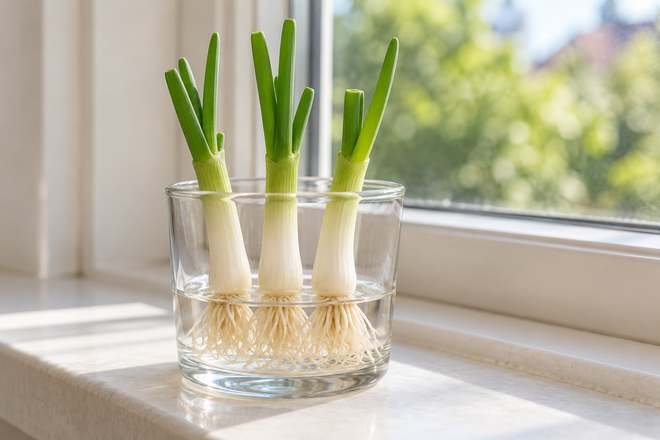
Arrange the bases roots-down. Add enough water to keep the roots submerged while the upper stems remain out of the water. A smaller vessel may hold a few bases upright more easily than a wide bowl. Avoid packing them so tightly that you cannot remove one for inspection.
3. Give them light and check the water
Place the container in a bright window. Inspect it daily so the roots do not dry as the water level falls. Replace the water regularly and sooner if it becomes cloudy; clean the vessel when changing it. Do not keep topping up visibly dirty water around an unhealthy base.
4. Look for healthy growth before cutting
Regrowth speed varies with the condition of the scraps and the growing position. Look for fresh upright leaves and sound bases rather than judging success by a fixed day on the calendar. A photo showing quick growth in someone else’s kitchen is not a timetable for yours.
Remove a failed base promptly instead of leaving it mixed with healthy ones. If the plant becomes soft or develops an unpleasant smell, discard it and clean the container before beginning again. Do not try to rescue decaying planting material by adding fertiliser.
Moving rooted green onions into soil
You can begin with rooted scraps in a pot or transfer a water-grown plant once it is growing well. Illinois Extension’s green-onion project describes the progression from soaking the bases to planting them in soil.
For a container, use fresh potting mix rather than dense soil scooped from the garden. Maryland Extension’s container-growing guidance explains why container volume, growing medium and drainage affect plant growth. Our potting-mix guide for container vegetables covers the practical choices.
- Moisten the mix so it is evenly damp, without making it muddy.
- Make a hole deep enough for the existing roots. Lower them in gently rather than forcing them into a shallow pocket.
- Firm the mix around the lower base, leaving the upper stem and green shoots above it. Give neighbouring plants room to grow.
- Water the newly filled pot and let excess water drain away. Empty the saucer before returning it to the windowsill.
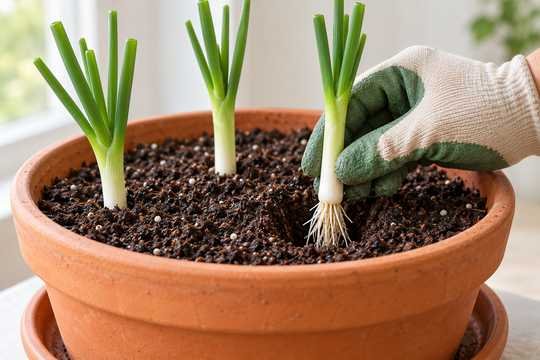
For a fuller crop, the RHS recommends a large container at least 30 cm (12 in) wide for salad onions. A few scraps do not require that pot to be crowded with plants. Choose enough usable depth for the roots and enough width to keep bases accessible. Check the drainage outlets before filling it.
Light, watering and feeding after potting
Minnesota Extension’s scallion guide identifies full sun as best for onion growth. A bright-looking room can still give a plant little useful light. If leaves become pale or lean strongly towards the glass, review the position before assuming the pot needs more feed.
Check the growing mix before watering. Aim for moisture around the roots without leaving the container saturated; small pots can change quickly in a warm, sunny window. The Maryland container-maintenance guide treats watering and nutrient supply as continuing tasks. Use our container-watering checks to build a routine around the pot’s condition.
Read the potting-mix label before adding fertiliser. If it already contains starter nutrients, extra feed may not be needed immediately. For longer growth, use a fertiliser labelled for edible container crops at its recommended rate. Cloudy water, damaged roots and poor light each need their own correction; stronger feed is not a general cure.
Harvesting regrown green onions
Once there is useful healthy growth, use clean scissors to take some of the green leaves while retaining the rooted base and remaining foliage. Wait for recovery before cutting again. If you pull out and use the whole plant, that base is no longer in the pot to regrow.
Wash harvested leaves before using them. Check their condition as you would any other homegrown produce. Replace declining scraps with fresh rooted bases or start a named bunching-onion variety from seed when you want to build a larger planting.
Common problems and what to check
| What you notice | First checks |
|---|---|
| Cloudy water or an unpleasant smell | Inspect each base, discard decaying material and clean the vessel |
| Thin or leaning leaves | Review light, crowding and how often you have been harvesting |
| Yellow leaves in a wet pot | Check drainage and root condition before watering or feeding again |
| Little new growth | Check that the root-bearing base is intact and the growing position is suitable |
A symptom is a starting point for inspection, not a diagnosis. Similar-looking damage can have several causes. For an established outdoor crop with continuing decline, local Extension or garden advice is more useful than applying an unrelated treatment.
Frequently asked questions
Can green onions regrow without roots?
The reliable kitchen-scrap method starts with the intact rooted white base. A detached green leaf does not contain the same growing base. For a straightforward attempt, select another onion with roots still attached.
How many times can you regrow the same green onions?
There is no dependable number for every bunch. Plant condition, light, nutrition and the amount removed at each harvest all matter. Keep healthy growth, allow recovery between cuts and replace bases as they decline.
Can you keep regrowing green onions in water forever?
No. Water-only growth uses the plant’s stored reserves and eventually weakens. Continue a short observation project in clean shallow water, or move healthy growing plants into potting mix and care for them as a container crop.
Can you move the pot outdoors?
Yes, when local conditions suit the plant. Acclimatise indoor growth gradually rather than moving it straight into strong sun or harsh weather. Unknown supermarket varieties should not be assumed to have the winter hardiness of a named local cultivar.
Start with a few healthy bases
For regrowing green onions indoors, a small, clean setup is easy to observe: retain the roots, keep the water shallow, provide good light and choose soil when you want to continue the container project. Add more plants only when the first small batch is growing well. For the next step, use our container vegetable gardening plan to organise a sunny pot or a small group of crops.