
Frost Protection for Container Vegetables: Covers & Care
How do you protect container vegetables from frost? Move portable pots into a sheltered, frost-free location when possible; otherwise cover plants before nightfall with suitable frost cloth, keeping it secured and off delicate leaves where practical. Remove or ventilate covers as temperatures rise. Frost protection for container vegetables begins before the temperature drops. Check the local forecast, identify the crops most at risk and decide whether to cover them, move the pots or harvest what is ready. A cover can help during a brief cold event, but it cannot guarantee that a tender plant survives a prolonged freeze.
For a balcony or patio garden, plan for both the leaves and the exposed container. If you are overwintering garlic, also read our guide to growing garlic in containers. This guide takes you from an evening preparation check to the following morning, with separate advice for short frost events and longer winter conditions.
Check the forecast before frost arrives
Watch overnight lows, local frost or freeze alerts, wind and how long the cold is expected to last. Iowa State Extension explains that a leaf surface can reach freezing even while the measured air temperature is slightly above it. Do not wait for ice to appear before acting.
Freezing point is 32°F (0°C), but that number is not a universal safe limit for every crop or location. A sheltered wall and an exposed balcony can experience different conditions. A thermometer near the plants can help you compare your growing spot with the forecast.
Prepare covers and a practical moving route in daylight. If several cold nights are forecast, make a plan that includes daytime checks and enough light for any plants you move for more than a brief overnight stay.
Which vegetable pots need protection first?
Prioritise warm-season vegetables such as tomatoes, peppers, beans and cucumbers when cold threatens. Young transplants and plants recently moved from indoor conditions also deserve attention. Do not assume that a large plant or a pot against the house is automatically safe.
University of Maryland’s fall vegetable guidance distinguishes cold-hardy crops, including kale and spinach, from crops such as radishes and chard that tolerate lighter frosts. Those categories help set priorities, but variety, establishment and the intensity of the cold still matter.
- Tender fruiting crops: plan shelter, covering or an end-of-season harvest.
- Established cool-season greens: assess the forecast and crop tolerance before choosing protection.
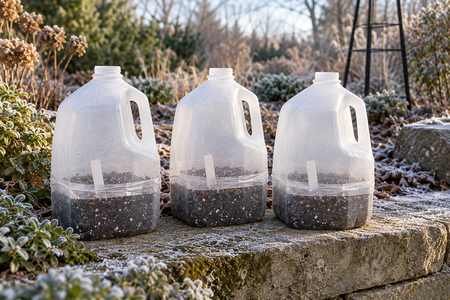
- New seedlings and transplants: allow for their stage of growth and acclimation. For outdoor seed starting, our milk-jug winter sowing guide explains local timing, ventilation and moving seedlings into pots.
- Overwintering crops: use a crop-specific winter plan instead of treating every pot alike.
For garlic, planting season and winter conditions are part of its normal growing cycle. Our growing garlic in containers guide covers variety choice and winter planning for bulbs.
Why containers need a separate cold-weather plan
In pots, the root zone is above ground and exposed through the container walls. Maryland’s container vegetable guidance highlights the way container media responds to temperature swings. In-ground crop hardiness is not a complete answer for a small pot in an exposed position.
The container itself matters too. A cold event may affect the growing mix, roots and pot material differently. Plan where a pot will sit and how you will access it without lifting a heavy, wet container at the last moment.
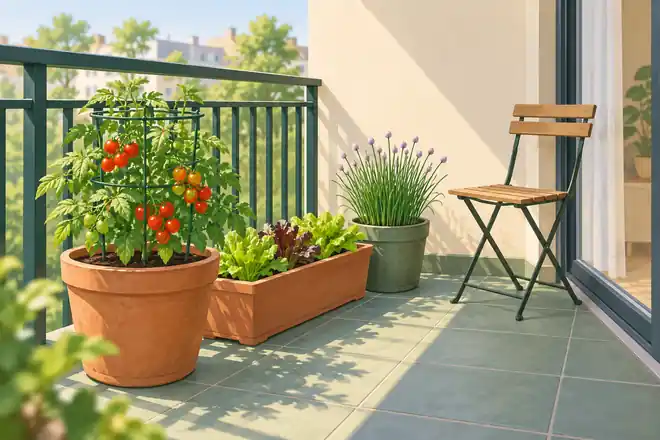
Use our container vegetable gardening plan to consider access and mature plant size. Our balcony vegetable garden ideas also cover practical layout and exposure.
Choose a frost cover suited to the job
Look for horticultural fleece, frost cloth or row cover sold for cold protection. Check the product’s weight, intended use and stated protection. The RHS guide to fleece and crop covers explains the tradeoff: heavier fleece offers more insulation while lighter material admits more light.
Insect mesh, shade cloth and fleece are different materials. A cover chosen to exclude insects should not automatically be treated as a frost blanket. Keep usable fabric, but inspect it for holes and make sure it is wide enough for the whole frame.
A sheet can serve as a temporary overnight cover when properly supported. Clear polythene needs different management: it can trap heat and moisture on sunny days. Avoid treating an ordinary plastic bag placed directly on foliage as a complete protection system.
How to cover potted vegetables overnight
University of Maryland’s row-cover guidance recommends supports for medium and heavy fabric and describes anchoring its edges. Adapt that method to a pot with a stable frame, adequate clearance and a cover that encloses the container rather than just its leaves.
- Position the pot where you can reach it and secure the cover.
- Set a stable hoop or support above the foliage without damaging roots or stems.
- Drape the material with enough slack to avoid crushing the plant.
- Extend the cover down around the container to the ground or supporting surface.
- Anchor the lower edges with suitable weights or clips for your frame, closing obvious gaps.
- Check that fabric cannot rub against delicate growth or blow loose overnight.
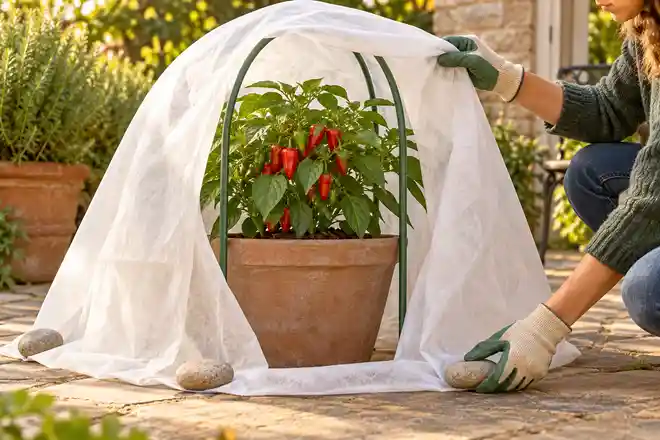
For a container on a balcony, do not assume the same warmth is available as beneath a cover over a garden bed. The surface, root volume and exposure differ. Use covering as one part of the plan, and check how your actual setup performs.
If a tall tomato plant and its support cannot be enclosed without damage, moving it may be impractical too. Harvest suitable produce before the cold event rather than relying on a loose piece of fabric over the top.
Shelter and insulate the pot
The RHS advice on preventing winter damage recommends sheltered positions, grouping containers and insulating their sides with materials such as straw or bubble polythene. This targets the exposed root zone. It does not replace protection for frost-sensitive shoots.
Wrap the outer container securely while keeping drainage outlets clear. Avoid enclosing the leaves in pot insulation or turning the container into a sealed, waterlogged bundle. Choose a stable location with access for checking moisture.
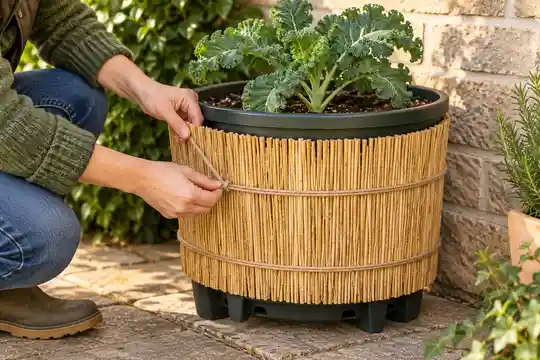
Our drainage guide explains outlet clearance. A shelter that blocks rain can still leave the mix dry, while a poorly draining pot can remain wet through a cold spell.
A garage, porch or greenhouse is useful only if its actual conditions suit the crop. An unheated structure can still freeze. For a short overnight move, check the temperature inside; for a longer stay, consider light and ongoing care as well.
Check moisture without soaking the pot
Check the growing mix before watering. Maryland’s container-maintenance advice stresses that moisture needs depend on conditions. Cooler weather may reduce demand, but wind, shelter and container size still affect drying.
Water a pot that needs it and allow excess water to escape. Do not flood every container just because frost is forecast, and do not keep an ordinary saucer full of standing water.
Continue the observation routine in our watering container plants guide. A cloth covering the plant does not tell you whether the root zone is wet or dry.
What to do the following morning
Inspect the forecast and conditions before opening the cover. University of Minnesota’s season-extension guidance explains why supported covers and daytime ventilation matter: a cover can flap against foliage in wind and trap excessive warmth in sunshine.
- Once conditions allow, remove or open a temporary overnight cover.
- Check plants, drainage and growing-mix moisture.
- Vent enclosed structures as daytime warmth builds.
- Keep protection ready if another cold night is expected.
- Dry and store covers when the cold event has passed.
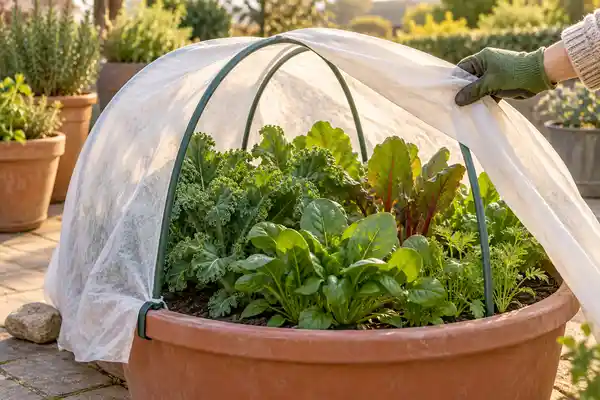
Do not leave an opaque blanket over vegetables throughout a bright day. Purpose-made breathable covers may remain over some crops, but they still require monitoring. Pollination requirements also matter when using covers beyond a short frost event.
When covering is not enough
A deeper or longer freeze calls for a different decision from a brief frost. Iowa State notes that ordinary covering becomes unreliable as temperatures fall well below freezing, particularly when the cold lasts for hours. Product specifications and crop tolerance do not turn that into a guaranteed survival temperature.
For tender vegetables near the end of their season, harvesting may be more practical than repeatedly covering a declining plant. For spring transplants, delaying planting or keeping them in appropriate shelter can be better than trying to rescue an early outdoor planting.
If leaves become water-soaked, dark or collapsed, assess the plant after the event rather than immediately cutting everything back. The RHS frost-damage guide discusses injury and recovery. Recovery depends on what remains alive; badly frozen annual vegetables will not all regrow.
Frequently asked questions
Should I cover vegetable pots when the forecast is above freezing?
Yes, protection may be appropriate for sensitive crops when local frost is forecast. Plant surfaces can cool below the measured air temperature. Use local alerts, crop sensitivity and your growing spot rather than a single app reading.
Can I use bubble wrap over the leaves?
Use pot insulation around the container’s sides while keeping outlets open. For foliage, choose an appropriate cover and support it as needed. Clear plastic around leaves needs careful ventilation and should not be confused with breathable fleece.
Does wrapping a pot protect the whole plant?
No. Wrapping helps insulate the exposed root zone. A tender plant’s leaves and stems may still need covering or suitable shelter.
Can fleece keep vegetables growing all winter?
Fleece can reduce cold exposure, but it does not provide a guaranteed winter harvest. Climate, crop, cover management, light and temperature determine what is realistic. Build a local crop-specific winter plan rather than relying on a single layer of fabric.