Container Vegetable Gardening: Plan Your First Pot
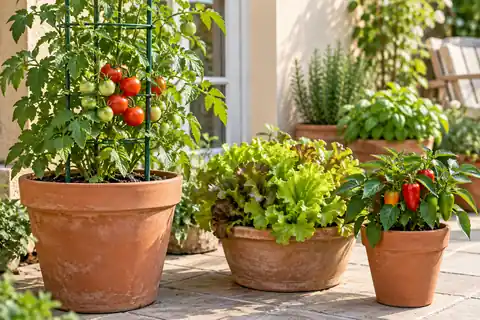
Container vegetable gardening lets you plan an edible garden around a balcony, patio or small backyard. Start with one crop, then choose the container, growing mix and position for that crop’s mature needs.
Research-based beginner guide; no hands-on trial is claimed.
Plan the space before the purchase
Measure the usable space and note sunlight, wind, access to water and room to reach the plant. Leave enough working space to inspect leaves, water and harvest without moving heavy pots every time.
For balconies, check the building’s rules and loading limits. A container becomes heavier when filled and watered; choosing a pot is also a practical space and access decision.
Match the container to the crop
The right size depends on the plant and variety. A compact crop and a vigorous climbing or fruiting plant should not be treated as the same project. Use crop-specific guidance before choosing a pot or grow bag.
The RHS advises that restricted containers can create moisture and nutrient problems. University of Maryland Extension also highlights the importance of sufficient root room. A seedling’s current size is not a reliable guide to its eventual container needs.
Use a suitable growing mix and drainage
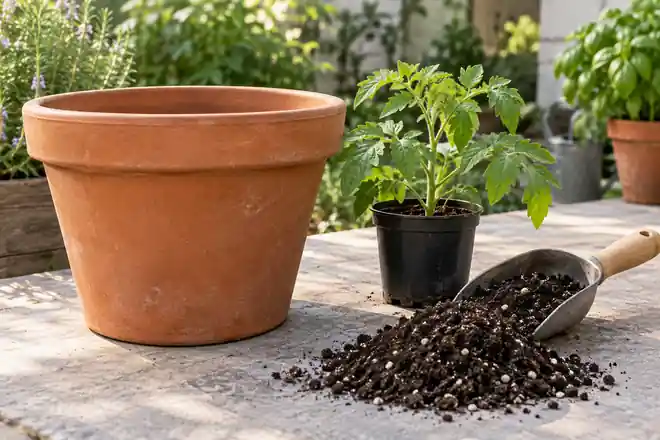
Select a growing mix intended for containers. UK products often use the term “container compost”; US products may be labelled “potting mix.” Check what a particular product contains and whether it suits your crop.
Ordinary pots need drainage. Purpose-built self-watering containers have a reservoir system instead, so follow their instructions. University of Maryland Extension advises against adding stones or gravel as a bottom layer: they use root space and can worsen drainage.
Create a one-container project plan
- Crop and variety: choose something you want to eat.
- Container: record its volume, dimensions and drainage arrangement.
- Position: note the light and exposure.
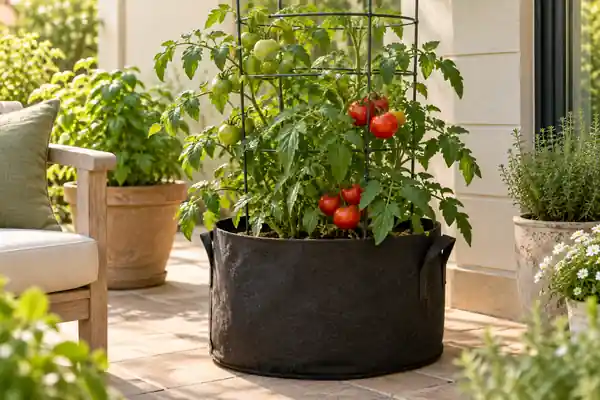
- Support: check whether the mature plant will need a cage, stake or trellis.
- Season: use local sowing and frost guidance.
- Care: make time to check moisture and plant condition.
Keeping the first project small makes the result easier to understand. After the season, record what worked, what was awkward and what you would change. That is more useful than buying a second set of supplies without learning from the first.
Avoid these planning mistakes
- Buying the crop before checking the available light.
- Choosing a decorative container without planning drainage.
- Underestimating mature growth and access for care.
- Using another region’s planting calendar without checking local conditions.
- Relying on a fixed watering schedule regardless of weather.
Continue your growing plan
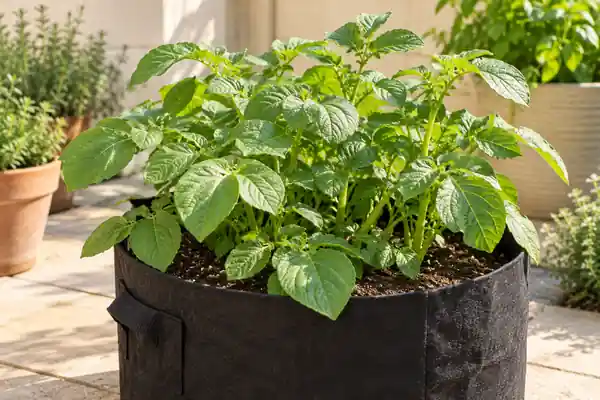
For specific container crops, compare tomato grow bag sizes and follow our potato bag planting guide. Use the container watering checks to plan care around the growing mix and weather.
Use our beginner checklist and explore Watering & Tools for moisture management. For a windowsill project, see our herb garden setup guide.