Fungus Gnats in Indoor Herbs: Identification & Control
Fungus gnats in indoor herbs often show up as tiny dark flies near potting mix, windows or a grow-light shelf. Start by identifying the insect and finding the pot where it is breeding. Then adjust moisture and drainage, monitor the adults and check whether young plants need extra attention.
Because basil, parsley and other kitchen herbs are grown for eating, any treatment decision also needs to account for the crop. This guide explains a practical care-first approach, how to use sticky cards and when to seek help with a persistent problem.
First, check that the flies are fungus gnats
Look at the pot when you water or gently move it. Iowa State Extension suggests watching for small flies running over the mix and up the pot sides as a clue to the breeding source. A fly at the kitchen window alone does not identify which pot, drain or other source it came from.
The RHS fungus gnat guide describes adults as small dark flies that move over compost or fly slowly around plants. Their larvae are pale, slender and have black heads. Use the guide’s photographs or a local diagnostic service for identification; the presence of a tiny insect does not by itself establish a plant-damaging infestation.
Check nearby pots as well as the herb you noticed first. If activity centres on fruit, food waste or a drain, investigate that source before treating the herb shelf. A close photograph or a trapped specimen can help an adviser distinguish different small flies.
Are they harming the herbs?
UC IPM distinguishes nuisance adults from larvae living in growing media. Large larval populations can damage roots, especially in seedlings and young plants. Established herbs may remain healthy despite a few flying adults. Check the plant’s growth and roots rather than judging severity solely by the number of flies at a window.
Wilting has several possible causes. Check the mix before adding more water: a plant with saturated, unhealthy roots can wilt too. Note whether seedlings are failing, cuttings are deteriorating or mature leaves are simply being harvested faster than they regrow.
1. Find and record the breeding source
Inspect one pot at a time, including its mix surface, drainage openings, saucer and decorative outer container. Look for wet debris and standing water. University of Maryland Extension recommends locating the plant or drain source before choosing a response.
Keep a simple note of the pot, watering date, surface condition and adult activity. Leave a suspect pot away from unaffected plants while you investigate, with enough light for the herb. Check the rest of the collection so you do not keep moving an overlooked source between shelves.
2. Adjust watering without wilting the herb
Allow the surface mix to become drier between waterings where the herb’s needs allow. Check beneath the surface and compare the weight of the pot before watering again. Minnesota Extension advises surface drying without allowing plants to wilt. That balance matters more than adopting a fixed number of dry days.
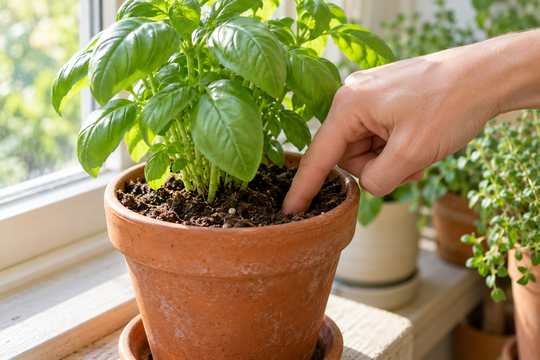
Herbs differ in water use and tolerance. A small basil plant, a woody rosemary and a tray of seedlings need individual checks. Maryland’s indoor-herb guidance explains that some herbs need to dry between waterings and that cooler conditions can reduce watering needs.
Use our indoor basil guide or indoor rosemary guide for the plant’s wider care requirements. Our container watering guide covers checking moisture and watering thoroughly when needed. Avoid repeatedly wetting an already damp surface simply because a calendar says to water.
3. Use yellow sticky cards to monitor adults
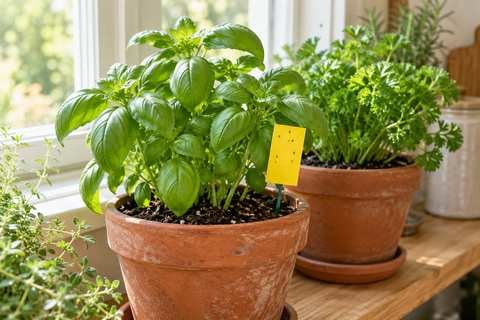
Set a small yellow sticky card near the potting mix, following the trap instructions. Keep the adhesive clear of edible leaves and place it where you can inspect it easily. Handle the nonsticky edge or holder when positioning it.
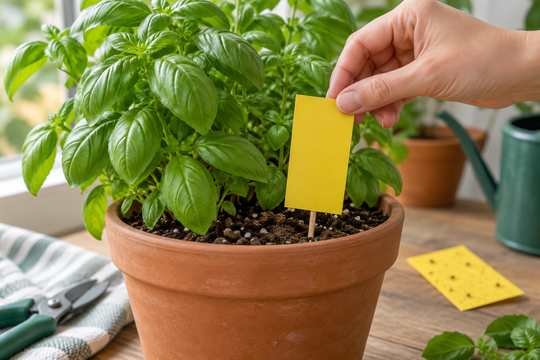
Record the date and compare new catches over similar intervals. Photographing the same card before replacing it helps you track a change. Cards catch flying adults, so a catch confirms activity around that position; identification still matters.
Minnesota Extension cautions that sticky traps should not be the only management method. Continue checking the wet growing medium where immature stages develop. Keep cards close to the affected indoor pots; the RHS notes that sticky traps can also catch nontarget insects.
4. Clear debris and check drainage
Remove fallen leaves and dead stems from the mix surface, and clean the shelf and saucers. Lift the nursery pot out of any decorative cover and check that excess water can leave freely. Empty collected water after watering rather than leaving the pot standing in it.
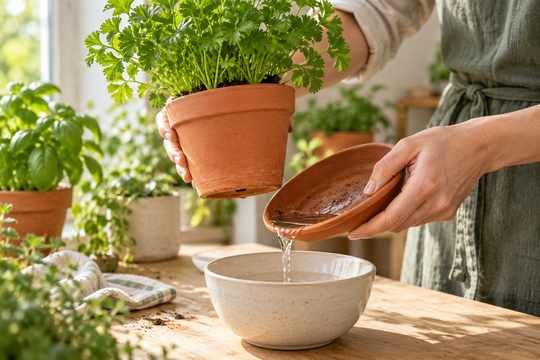
Check the outlets before adding more holes or repotting. Our container drainage guide explains drainage paths and blockages. If you use a reservoir planter, review its filling instructions and the mix moisture as well; our self-watering herb pot guide covers setup and care checks.
Review the position of your shelf too. Light and temperature influence growth, which changes how quickly a pot uses water. A sunny-season routine may keep the same pot too wet during a dimmer period. Our windowsill herb garden guide helps you assess the overall setup.
5. Consider repotting when the mix is part of the problem
If the growing medium stays waterlogged or a problem persists, assess whether fresh mix and a clean, properly sized pot would improve conditions. The RHS includes repotting with fresh compost among its options. Choose a container mix suited to the herb, and keep infested material away from the indoor growing area.
Handle roots gently and avoid adding a new stress to a weak plant without a clear reason. Use our potting mix guide to compare drainage and water retention. Reusing the same damp, infested mix in another indoor pot simply moves the problem.
When additional control needs advice
If young plants are deteriorating or activity stays high after care changes, confirm the identification with a local extension service, RHS adviser or qualified horticultural professional. Include photographs, the herb species and your watering observations. Iowa State does not recommend routine insecticide treatment for houseplant fungus gnats.
Extension and RHS guidance discuss larval controls such as Bacillus thuringiensis subsp. israelensis (Bti) and the nematode Steinernema feltiae. These target different life stages from sticky cards. A named organism alone does not establish that a particular product is appropriate for your kitchen herb pot.
Before using a product, check its current instructions for the edible crop, indoor use, target pest, application method and any harvest interval. UC IPM’s pesticide guidance explains why the container label matters. US and UK product options can differ. Follow the actual product directions, including moisture requirements for live biological controls, rather than combining them with an indiscriminate drying routine.
Track improvement and prevent a repeat
Compare fresh trap catches, mix condition and plant growth over time. Several stages can be present together, so finding a few adults after a care change does not automatically mean it failed. Continue monitoring instead of repeatedly switching treatments after each sighting.
Check new herbs before placing them among established pots. Minnesota Extension recommends keeping newly acquired indoor plants separate for one to two weeks while watching for pests. Store spare mix closed and keep the shelf clear of wet plant debris. Record a successful routine for each herb instead of watering every pot alike.
Frequently asked questions
Why do fungus gnats keep returning to my basil pot?
Persistent moisture, debris or another nearby breeding pot can keep the problem going. Check the actual mix and drainage, identify the insect and monitor nearby pots. A sticky card alone does not resolve the breeding conditions.
Should I stop watering until all the gnats disappear?
Keep the herb healthy while reducing excess moisture. Let the surface dry as the plant tolerates, then water when the root zone needs it. Avoid letting a thirsty herb wilt while waiting for every adult fly to disappear.
Do yellow sticky traps remove larvae?
They capture flying adults. Larvae live in the growing medium, so pair monitoring with moisture, drainage and debris checks. Ask for crop-appropriate advice if seedlings or cuttings are being damaged.
Can I use the same treatment as on ornamental houseplants?
Check the specific product instructions for your edible herb and indoor setting. An ornamental-plant recommendation does not by itself establish suitability for leaves you intend to harvest.