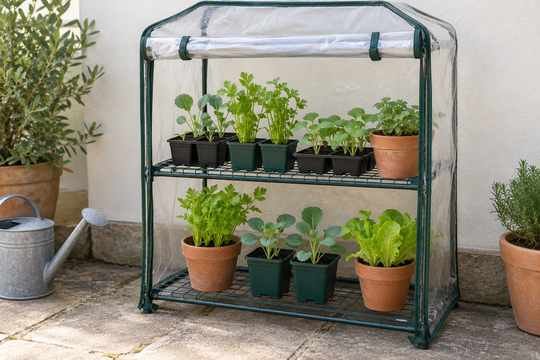
Mini Greenhouse Uses for Small Spaces: A Practical Guide
The most useful mini greenhouse uses are growing on young plants, gradually hardening off seedlings and giving selected crops temporary shelter. A small covered shelf can fit a patio or sheltered balcony, but it needs active ventilation, temperature checks and a plan for cold nights. An unheated plastic cover does not guarantee frost-free conditions.
Decide what job you need it to do before filling every shelf. Raising seedlings for later planting is different from keeping mature vegetables inside all season. This guide focuses on managing a compact outdoor structure, including when opening it—or moving plants out—is the right choice.
Match the structure to the task
A mini greenhouse usually stands upright with shelves and a clear cover. A cold frame is generally a lower box with an opening lid. The RHS guide to coldframes and mini-greenhouses explains how both can help where a full greenhouse will not fit. Shelf space is useful, but upper trays can shade lower ones.
| Task | Potential use | Important limit |
|---|---|---|
| Growing on young plants | Temporary space for established seedlings in suitable weather | Some seeds need warmer germination conditions than the structure provides |
| Hardening off | Gradually increase exposure to outdoor conditions | Opening a cover once is not a complete acclimatisation programme |
| Short-season shelter | Reduce exposure to unsettled weather for selected plants | A cover alone cannot make tender plants frost-hardy |
| Small edible pots | Grow a few crops suited to the available conditions | Mature leaf spread and root space still matter |
For starting seed indoors, use our indoor seed-starting guide. If your main aim is sowing hardy seed in outdoor recycled containers, our winter-sowing guide covers that separate method. A zipped shelf house and a winter-sowing container should not automatically share the same routine.
Place it where you can reach, check and ventilate it
Use a stable, sheltered position with enough light for the plants you intend to grow. Leave room to open the cover fully, lift a tray and water without stretching over plants. A bright wall-side site may suit some setups, but check the actual shadows and reflected heat through the day.
Read the manufacturer’s instructions for assembly, anchoring, shelf loads and storm conditions. Do not assume a few light pots make a covered frame secure in wind. Keep routes clear and ensure water can drain without pooling around the structure. Our balcony growing guide helps you think through the available space.
Before adding a full collection of plants, run the empty setup through a few typical days. Place a maximum–minimum thermometer at plant height, out of direct solar heating where its instructions require. Compare the reading with the outdoor forecast. A warm afternoon reading tells you little about the lowest overnight temperature.
Use 1: grow on seedlings after germination
Once seedlings are established, a mini greenhouse can provide temporary protected space if its conditions match the crop. A warm-season tomato seedling and a hardy kale seedling do not have identical temperature needs. Keep labels and group plants by requirements so that one plant’s care does not become a compromise for everything inside.
The RHS advice on greenhouse vegetables distinguishes germination from growing on in a light, frost-free place. An unheated structure may be too cold for the latter early in the season. Check seed-packet guidance and your own readings before moving plants from indoors.
Space pots so leaves are not pressed against the cover or tangled with the tray above. Check whether lower shelves receive enough light; rotating positions cannot compensate for deep shade all day. Remove a shelf only if the structure is designed to allow it. Plan where plants will go when they outgrow this temporary nursery.
Use 2: harden off plants gradually
Hardening off means gradually acclimatising plants to outdoor light, wind and temperature. RHS hardening-off guidance stresses that this does not turn frost-sensitive plants into hardy ones. Use the mini greenhouse as part of a transition, not as proof that a plant is ready for any night outdoors.
- Begin with short periods in a sheltered position during suitable weather.
- Increase ventilation and outdoor exposure gradually, watching the plants.
- Move trays outside the cover for progressively longer suitable periods.
- Bring tender plants to genuinely suitable shelter if cold conditions threaten.
- Plant out only when the crop, forecast and growing site are ready.
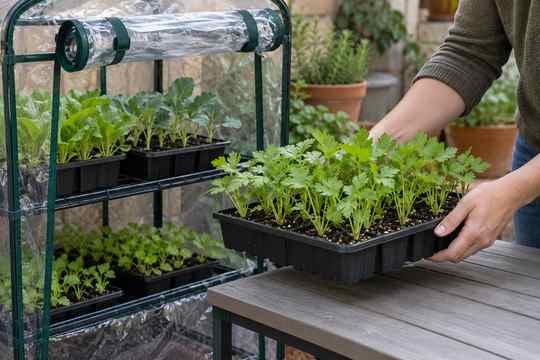
The University of Connecticut seed-starting guide describes starting in a protected spot and increasing outdoor exposure over roughly two weeks. Treat the duration as a guide to a process. Sudden wind, stronger sunshine or a cold spell may require a slower transition, while wilting is a signal to reassess conditions.
Use 3: provide limited seasonal shelter
In spring or autumn, a cover can help shelter selected plants during unsettled conditions. For winter cropping, separate survival from active growth: a hardy plant that remains alive may produce very little new foliage in short, cold days. Mature container crops still need the appropriate pot size and room for leaves.
Cold-frame guidance from Nebraska Extension describes using protected structures for cold-tolerant greens and season extension. Those benefits depend on crop and conditions, not a universal number of extra growing weeks. Start with a small trial of an appropriate crop rather than putting all your seedlings at risk.
Our container frost-protection guide explains forecast-based planning. If the inside minimum will be too cold for a plant, choose a better protected location. Do not improvise with candles or unsuitable indoor electrical equipment inside a plastic-covered unit.
Ventilation: the most important daily decision
A small enclosure can overheat rapidly even when the outdoor air feels mild. RHS ventilation and shading advice applies to plastic structures as well as glasshouses. Open vents or roll up the front as conditions require, securing the cover so it cannot fall back across the opening.
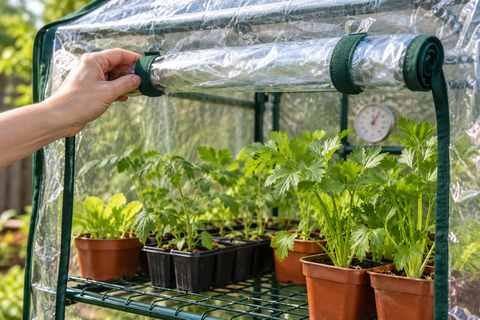
Use the thermometer and the requirements of the actual crop to decide what to do. Shading may help with strong sun, but it does not replace fresh-air movement. On a hot day, removing plants to a more suitable spot may be better than trying to keep an unsuitable enclosure closed.
Iowa State Extension’s cold-frame guide describes temperature management as an active process requiring frequent checks. A compact shelf house also needs attention when the weather changes. If you cannot check it during bright weather, choose a setup and ventilation arrangement that can remain appropriate while you are away.
Water, hygiene and a manageable routine
Check pots individually instead of watering everything because the cover looks misty. Condensation on plastic is not a measurement of root-zone moisture. Pots under a cover may receive no rain, and different shelf positions can dry at different rates. Use our container watering checks before choosing a schedule.
Water as needed early enough for excess moisture to clear before closing for a cool night. RHS damping-off guidance identifies crowding, poor air circulation and wet conditions as important risks around seedlings. Use clean trays and suitable commercial seed medium, avoid overwatering and remove failed plants promptly.
| Check | What to look for | Decision |
|---|---|---|
| Morning | Forecast, overnight minimum, pot moisture | Open as appropriate and water only pots that need it |
| Bright or changeable weather | Temperature at plant height, ventilation and plant condition | Increase airflow, adjust shade or move vulnerable trays |
| Before evening | Expected minimum and each crop’s tolerance | Use suitable shelter; close only when overheating is no longer a risk |
| Regular tidy-up | Dead leaves, pests, damaged cover and shaded trays | Clean, repair and reduce crowding |
Frequently asked questions
Will a mini greenhouse stop all frost?
No. An unheated cover gives limited protection and can become too cold for tender crops. Read the inside minimum and use crop-specific protection rather than assuming the plastic guarantees safety.
Should I keep the front zipped all day?
Only when conditions suit that choice. A closed cover can overheat in sun. Ventilate according to readings and plant needs, not just the calendar.
Can I grow vegetables inside it permanently?
Some suitable small crops may fit, but check pot capacity, mature leaf spread, light and seasonal temperatures. Many seedlings will need to move elsewhere as they grow.
Is a mini greenhouse useful on a shaded balcony?
A clear cover does not create sunlight. Observe the available light first; deep shade may prevent useful vegetable growth even if the enclosure is warmer.
Give your mini greenhouse one clear job
The best mini greenhouse uses fit the space, crop and time you can give it. Start with a manageable nursery or hardening-off project, record temperature changes and keep a backup location ready. Use our garden planner to organise crop choices, then confirm timing and protection with local guidance.