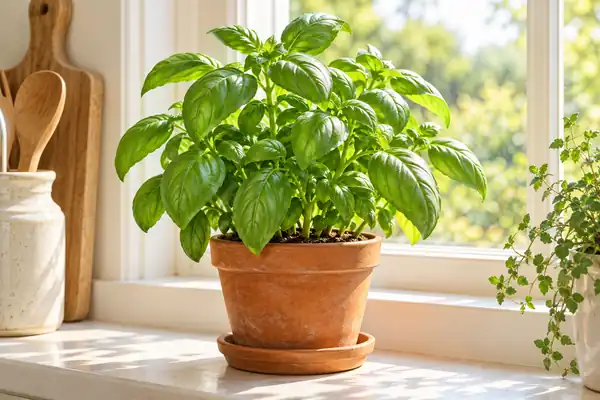
Growing Basil Indoors in Pots: Light, Watering & Pruning
Growing basil indoors starts with strong light, warmth and a pot that drains. Once the plant is growing steadily, regular small harvests help you maintain useful leafy growth. A crowded supermarket pot may need attention before it can become a reliable kitchen herb.
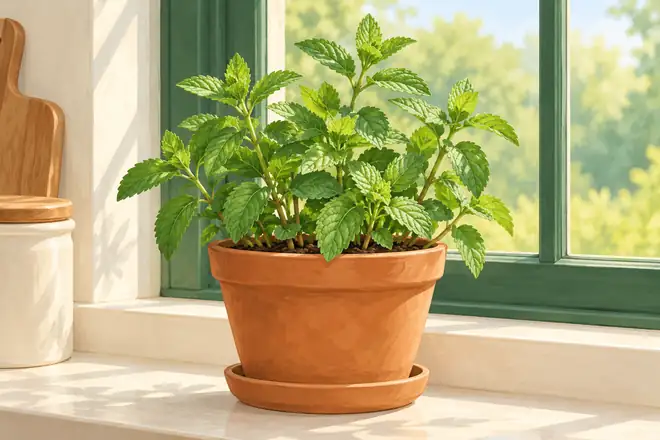
This guide focuses on sweet basil, Ocimum basilicum, in containers. Choose the variety for the leaves you want to cook with and the space you have. For planning several herbs, our windowsill herb garden setup guide covers the overall arrangement.
Choose how to start your indoor basil
You have three practical options:
- A nursery plant: inspect the leaves and stems, check the label, and choose a plant you can accommodate as it grows.
- Seeds: useful when you want a particular variety or a replacement crop. Allow space for seedlings as well as the mature plant.
- A supermarket pot: convenient for immediate picking, but often crowded with many thin seedlings. The RHS basil guide explains that these pots are intended for short-term harvests; dividing and repotting may help them survive.
Start with one manageable plant rather than several varieties needing attention at once. Label it with the variety and date so you can compare growth with changes in light and watering.
Give basil strong light and steady warmth
University of Minnesota Extension describes basil as a tender annual needing a sunny position with six to eight hours of bright light. Observe direct light reaching your actual pot over a full day. A window shaded by another building can look bright while providing little useful sunlight.
If the window falls short, use supplemental lighting. Iowa State’s indoor herb guidance suggests a timer running grow lights for 12–16 hours daily. Follow the fixture’s distance instructions and leave a dark period. Different lights and windows provide different intensities, so watch the plant’s growth rather than treating the timer alone as proof of adequate light.
Basil dislikes chilly conditions. Keep leaves away from cold window glass and avoid a draughty sill. A radiator blowing directly at the pot can create a different problem: compost that dries unexpectedly fast. Record the location before changing several parts of your setup.
Use a draining pot and suitable growing mix
Choose a pot with bottom holes and a free-draining container potting mix. UK bags usually use the term potting compost. Match the pot to the existing root ball and leave room below the rim for watering. Iowa State cautions that oversized containers can stay wet too long.
Use a saucer to protect the sill, then empty drainage water. If your decorative pot has no holes, keep basil in a removable inner pot. Grow it separately from other herb species so you can adjust care without watering every plant together.
Repot a crowded supermarket basil pot
Check for unhealthy leaves or damaged stems first. Repotting gives roots and shoots more space; it does not cure an unidentified disease or a dark growing spot.
- Prepare clean pots with holes and fresh container mix before removing the clump.
- Ease the root ball out and gently separate a few small groups where the roots allow. Support the root ball and avoid pulling plants apart by their stems.
- Set each group into its prepared pot with the stem bases near their previous level. Fill around the roots without packing the mix hard.
- Water gently, allow drainage, and keep checking moisture while the plants settle. Wait for steady new growth before taking a large harvest.

Starting basil from seed
Follow the packet for sowing depth and variety-specific instructions. RHS recommends warm indoor conditions around 20°C (68°F), damp seed compost and thin sowing. Once seedlings have several leaves, move them into individual small pots and increase container size as they grow.
Keep a simple sowing note: date, location and when seedlings appear. If the first batch struggles, that record lets you change one condition for the next attempt. A second sowing also gives you a replacement when the older plant becomes less productive.
Water after checking the compost
Basil prefers moist, well-drained growing conditions. Feel the mix below the surface and lift the pot to learn its weight. If it is still wet underneath, check drainage before adding water. If it is drying, water the mix and let surplus drain away. RHS recommends avoiding splashing the leaves.
Our container watering checks explain how to assess moisture before choosing tools. Keep basil on its own routine: the care described in our indoor rosemary guide should not be copied automatically to a leafy basil pot.
Read the potting mix label before feeding because nutrients may already be included. Container basil may benefit from a balanced liquid feed used according to its label. University of Maryland Extension cautions that heavy fertilization can reduce flavor. Correct weak light or persistently wet compost before adding more feed.
Prune and harvest above a leaf pair
Minnesota recommends cutting a harvested stem just above a pair of leaves. Those remaining leaves and the growing points near them support further growth. Inspect the stem before cutting rather than removing leaves randomly until the plant is bare.
To turn a healthy harvested shoot into a new plant, follow our step-by-step guide to propagating basil from cuttings.
- Choose a healthy leafy stem with several leaves below the intended cut.
- Find a pair of opposite leaves and snip the stem just above them with clean scissors.
- Take a small harvest, leaving plenty of foliage. Allow new growth before another substantial cut.
- For continued leaf production, remove emerging flower tips. Plan a replacement crop as an older annual declines.

Troubleshoot before changing everything
If tiny flies gather around the potting mix, see our guide to identifying and managing fungus gnats in indoor herbs for moisture checks, sticky-card monitoring and edible-crop considerations.
- Long, sparse growth: review light at leaf level and crowding before increasing fertilizer.
- Wilting: check the compost first. Dry and wet root conditions need different responses.
- Yellowing or damaged leaves: check moisture, temperature and pests. Leaf color alone does not identify the cause.
- Suspected disease: keep the affected pot separate and seek a diagnosis. Maryland notes that airflow and avoiding crowding help reduce downy mildew risk; resistant cultivars are another option.
Frequently asked questions
Can I grow basil indoors through winter?
Yes, with adequate light and warmth. Short winter days may require a grow light. Basil is an annual and eventually declines even indoors, so plan fresh plants rather than expecting one pot to last indefinitely.
How often should I water indoor basil?
Check the compost and pot weight instead of assigning a fixed day. Light, heating, pot size and growth affect how quickly the mix dries. Keep drainage clear and avoid leaving the pot in water.
Will supermarket basil keep growing?
It may continue if you address crowding and provide suitable care, but recovery is not guaranteed. Compare the space and work involved with starting a nursery plant or a fresh sowing.
For another leafy crop, see our indoor cilantro and coriander guide. Explore the Indoor Herbs guides to choose your next small-space project.