Growing Rosemary Indoors: Light, Watering & Winter Care
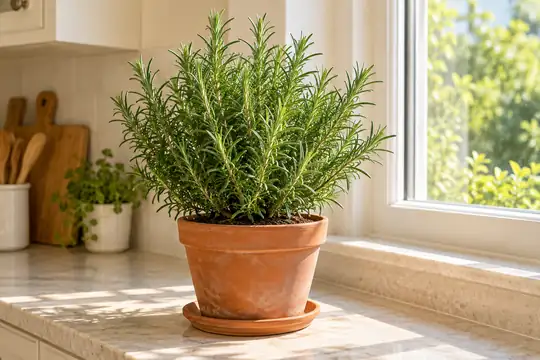
Growing rosemary indoors starts with a sunny position, a pot that drains freely and watering guided by the potting mix. Rosemary can live inside, but a dim kitchen corner is a difficult home for this sun-loving shrub. Check your growing spot before buying a plant, particularly if you want to keep it through winter.
This guide focuses on one rosemary plant in a container. For planning several herbs, start with our windowsill herb garden guide.
Can rosemary grow indoors year-round?
Yes, when its light and root conditions are suitable. Indoor survival and useful new growth are different goals: a plant may remain alive through winter without producing enough shoots for regular harvesting. A summer outdoors can also be helpful for perennial herbs when you have an appropriate spot.
Rosemary is an evergreen shrub, botanically Salvia rosmarinus; older labels may say Rosmarinus officinalis. Start with a healthy young plant or rooted cutting for a quicker kitchen herb than seed. The RHS rosemary guide explains why seed-grown plants take much longer to become harvestable.
Choose light before choosing a pot
Observe direct sunlight at leaf level. A window facing south or west is worth checking in US and UK homes, but orientation alone does not guarantee enough light: nearby buildings, trees and deep window recesses can shade it.
University of Maryland Extension recommends at least five hours of sun for an indoor herb position and supplemental lighting during winter. If your window falls short, use a suitable grow light rather than expecting a room lamp to support the plant.
Follow the grow light manufacturer’s distance and coverage instructions. Maryland’s indoor-herb guidance gives 14–16 hours daily for winter supplemental lighting; use a timer and allow a dark period. Watch new shoots: thin, stretched growth is a reason to reassess the light, rather than immediately adding fertiliser.
Prepare a container with drainage
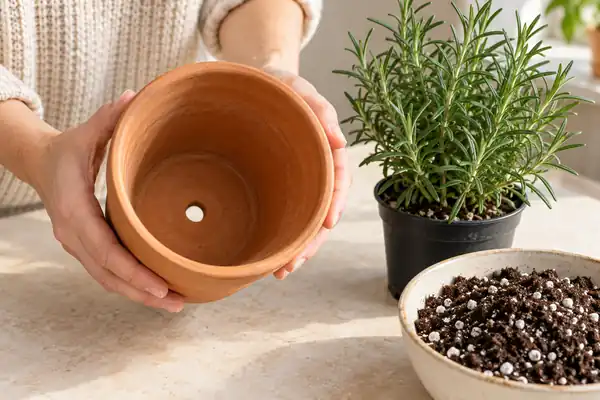
Pick a pot with open drainage holes and room for the existing root ball. Keep a nursery pot inside a decorative cover only if you can remove it to water and empty trapped water afterward. A saucer protects furniture; it should not become a permanent reservoir around the roots.
Use a freely draining container potting mix, called potting compost in the UK. Avoid substituting dense garden soil. Check both the mix and the drainage holes when a pot stays wet for a long time. An oversized pot of persistently wet mix is not an improvement over a well-matched smaller container.
Water rosemary by checking the mix
Do not assign every indoor rosemary a weekly watering day. Pot material, root growth, room conditions and light change how quickly moisture is used. Check below the surface as well as noticing the pot’s weight.
University of Minnesota Extension uses dryness about half an inch below the surface as a general indoor-herb watering check. Treat that as a useful observation, not proof that the whole root zone is dry. A damp, heavy pot needs more time; a dry surface with a very light pot needs closer attention.
When watering is needed, wet the growing mix evenly and let excess water drain. Empty the saucer or outer cover. Avoid both constantly saturated roots and repeatedly leaving the plant severely dried out. Our container watering guide explains how to combine moisture and drainage checks.
Keep winter care realistic
Choose a cool, sunny indoor place away from blasts of heating air. Keep foliage clear of icy glass and give the plant space for air movement. Illinois Extension’s rosemary guidance warns that dry indoor conditions can cause brown tips, yet simply adding more water can create root problems.
If growth slows, reduce harvesting and reassess watering rather than maintaining the summer routine. For a plant moving inside, check foliage and stems for pests before placing it beside other herbs. Monitor the forecast and move it before damaging cold arrives.
US winter protection depends on your location and cultivar. In the UK, established rosemary can often remain outside, but a container’s exposed roots and a wet growing medium need particular care. An indoor move is not automatically better than a suitable sheltered outdoor position.
Feed and harvest gently
During active growth, follow an appropriate container-herb fertiliser label and account for any feed already in the potting mix. More fertiliser will not compensate for insufficient light. Keep feeding modest when growth is slow.
Snip small amounts of leafy new growth with clean scissors, leaving plenty of foliage. Avoid a large harvest from a recently moved or struggling plant. Penn State’s rosemary guide covers harvesting and the importance of airflow and avoiding overwatering.
Checks for common indoor rosemary problems
- Brown or crispy tips: check dryness in the root zone, heating vents and light. Brown tips alone do not tell you to water more.
- Decline while the mix stays wet: empty standing water and inspect drainage. Persistent wetness can contribute to root rot; damaged roots may not recover just because watering stops.
- Thin, leaning shoots: reassess sunlight and grow-light coverage.
- Powdery coating or visible insects: separate the plant from other herbs and identify the problem before treatment. For an edible plant, use only a suitable labelled treatment and follow harvest restrictions.
Questions about growing rosemary indoors
Can rosemary grow indoors without a grow light?
A genuinely sunny window can work. If direct light is inadequate, particularly in winter, supplemental lighting is a more realistic plan than relying on brightness to the human eye.
How often should I water indoor rosemary?
Check the mix and the pot rather than following a universal interval. Let it dry sufficiently between waterings while avoiding prolonged severe dryness.
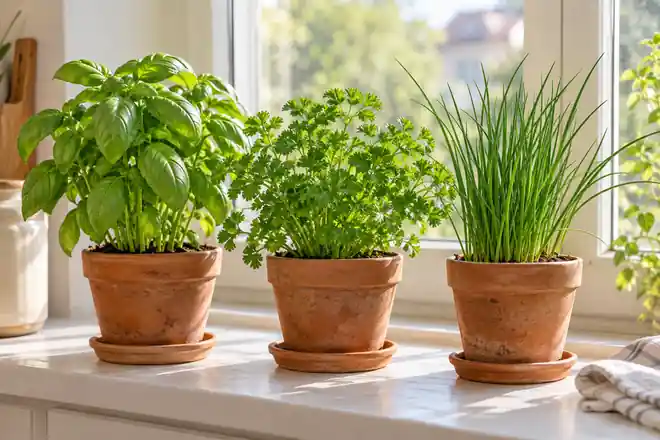
Can I keep rosemary beside basil?
You can keep separate pots nearby if the position suits both plants. Separate containers let you adjust watering individually instead of treating all herbs alike.
Start with a spot you can maintain
For growing rosemary indoors in winter, decide how you will provide light before choosing a care schedule. Begin with one healthy plant, a draining pot and regular observations. Explore our Indoor Herbs guides for the next part of your small-space herb garden.