
Winter Rain Protection for Balcony Pots: Stop Waterlogging
Winter rain protection for balcony pots matters as much as frost protection in a wet UK winter or a rainy Pacific Northwest winter. A container can have perfectly healthy leaves and still suffer root damage when the compost stays saturated and oxygen cannot reach the roots.
Quick answer: Plants transpire less in short winter days, so their compost dries slowly. If drainage holes are blocked, rainwater accumulates and roots sit in saturated conditions. Even hardy plants can decline. The aim is to reduce persistent waterlogging, not to keep every pot completely dry.
Why Winter Rain Causes More Trouble in Pots
Plants transpire less in short winter days, so their compost dries slowly. If drainage holes are blocked, rainwater accumulates and roots sit in saturated conditions. Even hardy plants can decline. The aim is to reduce persistent waterlogging, not to keep every pot completely dry.
Start With a Fast Drainage Check
After rain, look for puddled water, blocked holes, mossy compost and heavy pots that stay wet for days. Gently tilt a manageable pot to make sure excess water can run out. Check saucers and decorative cachepots that collect rain. Lift the pot onto feet or a stable stand so drainage holes are not sealed against the patio.
Choose Shelter Without Blocking Airflow
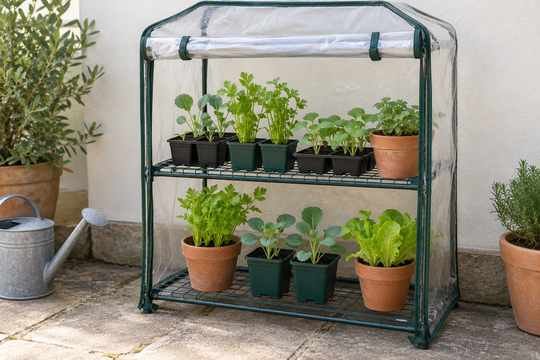
Move the most sensitive pots beneath a transparent porch roof or an outdoor shelving unit with a rain cover, while leaving sides ventilated. Avoid sealing live plants in plastic: condensation and stale air can encourage disease. Make sure any canopy is secure and approved for balcony use. Do not drill into rented buildings or attach coverings to railings without permission.
Raise Pots Above Standing Water
Use wide, stable pot feet or blocks appropriate to the weight. Avoid small unstable risers on windy balconies. Never obstruct communal drains, fire exits or walkways. A modest elevation is often enough to let water escape after storms.
Check Potting Mix and Containers
Drainage holes are essential; gravel at the bottom does not replace them. Use a free-draining container mix suitable for the crop. Large terracotta pots can crack in freeze-thaw conditions, while metal pots may expose roots to rapid temperature swings. Choose winter protection based on plant needs and local climate.
Watering During Cold Wet Weather
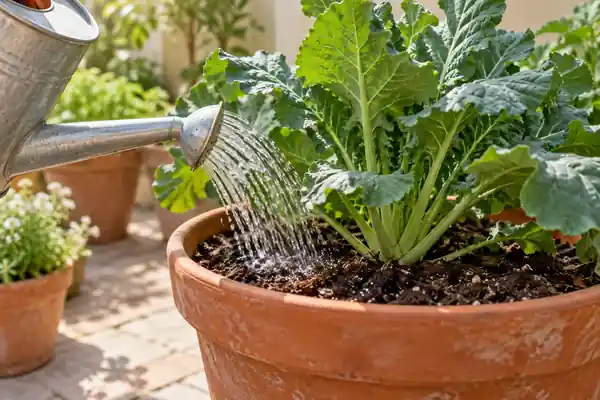
Do not add water on an automatic summer schedule. Check below the surface with a finger or moisture meter and water only when needed. Evergreen herbs such as rosemary may require occasional water in sheltered dry weather, but they dislike persistently sodden compost. Avoid fertilizing dormant plants heavily.
What to Do After a Heavy Storm
Empty full saucers, remove fallen leaves that block drains and check pots for instability. If a container has been standing in water, allow it to drain in a sheltered, breezy spot. Do not immediately repot a frozen plant; wait for safe, mild conditions and assess the roots if decline continues.
Wind, Frost and Winter Rain Together
In cold regions, insulation around pot sides helps roots, but plastic wrapping must not seal drainage openings. Breathable horticultural fleece provides limited frost protection; remove it during mild spells. On exposed balconies, secure every cover against gusts and avoid heavy waterlogged planters on railings.
Plant-Specific Decisions
Rosemary, thyme and Mediterranean herbs need particularly free-draining conditions. Strawberries can stay dormant but their roots should not sit in water. Cool-season greens tolerate some cold but not long-term saturation. A plant-specific winter plan is safer than one rule for every pot.
Common Winter Drainage Mistakes
- Leaving pots inside decorative containers without drainage.
- Keeping water-filled saucers in place all winter.
- Wrapping the pot and sealing the holes.
- Putting all plants under an airtight plastic cover.
- Ignoring balcony weight, wind exposure and communal drains.
Frequently Asked Questions
Should I bring every balcony plant indoors during heavy rain?
No. Hardy plants often remain outside with good drainage and shelter. Move the most rain-sensitive containers according to their needs.
Are pot feet necessary?
Not always, but they help if the base seals against the ground or water pools underneath.
Can bubble wrap protect pots from rain?
It can insulate the sides in frost, but it should not be wrapped over drainage holes or used as an airtight plant enclosure.
What if compost stays wet for a week?
Check drainage, shelter, temperature and plant condition; never assume more watering is needed.
Related Sproutwish Guides
- Overwintering Rosemary in Pots
- Frost Protection for Container Vegetables
- Drainage Holes for Vegetable Containers
Final Thoughts
Winter Rain Protection for Balcony Pots: Stop Waterlogging helps small-space gardeners make informed choices. Adjust for temperature, daylight, drainage and each plant’s requirements rather than relying on a fixed calendar.