
Growing Ginger in Pots: Planting, Care & Harvest
Growing ginger in pots works best when you can provide several months of warmth, a broad container with drainage, and steady moisture without waterlogging. Start with culinary ginger, Zingiber officinale, and treat the rhizome as planting material rather than a quick kitchen-scrap crop. In a cool climate, a movable pot lets you protect it as the seasons change.
For a small balcony, begin with one manageable container. Decide where the leafy plant will stand in summer and where the same pot can go when nights become cold. A successful start is useful only if you have room to keep the plant growing.
Ginger in pots: the essentials
| Decision | Practical starting point |
|---|---|
| Plant identity | Culinary ginger, Zingiber officinale; check the nursery label |
| Container | A broad pot about 38 cm / 15 inches across, with unobstructed drainage |
| Position | Warm, bright and sheltered; filtered light is a useful starting position |
| Growing mix | Loose container potting mix that holds moisture but drains |
| Harvest plan | A crop measured in months; young ginger is harvested earlier than mature rhizomes |
Use our container gardening planning guide to check access, pot weight and the space you can actually maintain. Ginger foliage needs more headroom than a tray of salad leaves.
Choose the right ginger and planting date
UF/IFAS distinguishes edible ginger from ornamental gingers. Do not assume that every plant sold with “ginger” in its common name belongs in the kitchen. Buy clearly identified culinary planting stock, preferably from a supplier that states its plant-health standards.
Illinois Extension recommends disease-free rhizome sets and describes an indoor start before its local outdoor season. Its February–March example is not a planting calendar for every US state or the UK. Work backwards from your own warm-season window, available indoor conditions and the size of plant you can accommodate.
A supermarket piece may sprout, but appearance does not confirm freedom from disease or past treatment. If you experiment, keep it separate from your main planting stock. Choose firm material with visible healthy buds; reject soft, shrivelled or mouldy pieces.
Prepare a wide pot and suitable mix
Ginger spreads through branching underground stems, so usable width matters. A broad, stable pot is easier to manage than a narrow decorative vase. Make sure the filled container can be moved safely before choosing an oversized one. A small nursery plant can be moved into its larger growing pot as it develops.
Use fresh container mix rather than compacted garden soil. In UK shops this is generally called potting compost. Our container potting-mix guide explains the labels; RHS container-growing advice also stresses adequate root space, moisture and nutrients.
Keep drainage outlets clear and leave some watering space below the rim. A saucer can protect a surface, but empty collected water. Read our guide to container drainage holes before putting a nursery pot inside a sealed outer planter.
Plant ginger step by step
1. Check the buds and prepare any divisions
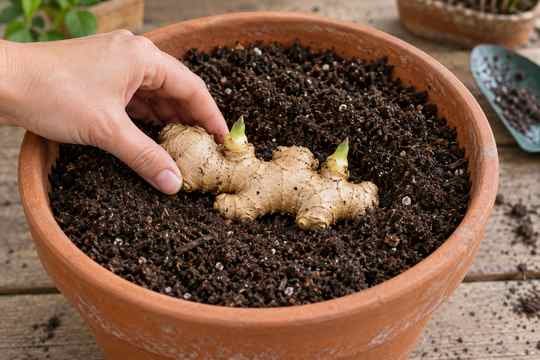
Look for swollen growing points on the rhizome. Planting a sound, suitably sized piece whole avoids making unnecessary wounds. If dividing a larger piece, use a clean blade and retain healthy buds on each section. NC State Extension recommends allowing cut surfaces to dry for a day or two before planting.
2. Position the rhizome and cover lightly
Moisten the mix, then lay the rhizome horizontally with the buds pointing upwards. Cover it lightly, following the supplier’s depth directions; avoid burying a newly planted piece deeply in wet mix. Water gently and allow excess to escape. Label the pot with the planting date so you do not keep disturbing it to check progress.
3. Keep it warm while roots and shoots establish
Choose a consistently warm position away from a cold windowpane. Wisconsin Extension notes that ginger needs warm growing media and that shoots may take weeks to appear. A calendar reminder to inspect the pot is more useful than repeatedly digging up the rhizome.
Before active growth, avoid soaking a container that is using little water. Once leaves develop, increase attention to root-zone moisture. If the mix stays cold and wet, correct those conditions rather than watering again because a set number of days has passed.
Care through the growing season
Start in bright filtered light, especially on a hot balcony. Introduce outdoor conditions gradually after an indoor start. The best exposure changes with climate: a position that works in a cool northern summer may scorch leaves in strong southern sunshine. Review the plant’s response rather than copying a single universal sun-hours rule.
Keep the mix moist during active growth without leaving it saturated. Check below the surface and compare the pot’s weight with its weight after watering. Our container watering guide explains why hot weather, pot material and plant size change the routine.
Check what fertiliser is already included in the mix. Feed actively growing plants with a suitable product at its labelled rate; do not stack several feeds to speed up the harvest. Look under leaves and around stems for pests, particularly when moving a pot back indoors. Identify a problem before using any treatment, and ensure any product is labelled for the edible crop and location.
Harvesting young or mature ginger
Young ginger is tender and thin-skinned; mature ginger develops a firmer skin and more fibrous texture. UC Master Gardeners gives approximate harvest windows of five to eight months for young ginger and nine to twelve months for mature rhizomes. These are planning ranges, not guaranteed dates for an indoor pot.
Gently move some mix aside near the edge to inspect development. For a full harvest, loosen the root ball carefully rather than pulling hard on the stems. Take only sound rhizomes. If retaining a division, keep healthy buds and enough living material for the next cycle.

Handle the delicate skin gently. Clean harvested culinary ginger before use, refrigerate the portion intended for eating, and use it promptly. Keep planting divisions separate from kitchen storage; a piece reserved for planting needs a different storage plan from a piece kept for cooking.
Cold weather and common problems
Do not wait for frost to move a container into protection. NC State advises bringing potted ginger indoors before temperatures fall below about 10°C / 50°F. A plant that becomes leafless and dormant uses much less water; distinguish that seasonal change from a soft, rotting rhizome.
| What you notice | What to check first |
|---|---|
| No shoots yet | Elapsed time, viable buds and growing-mix warmth; avoid constant disturbance |
| Brown leaf edges | Harsh sun, drying mix and hot or windy exposure |
| Yellow leaves | Seasonal slowdown, moisture and feeding history; colour alone is not a diagnosis |
| Soft or foul-smelling rhizome | Rot or damaged stock; remove affected material and review hygiene and drainage |
Frequently asked questions
Can I grow ginger indoors all year?
You can keep a container indoors if it has suitable warmth, light and space. Growth may slow or stop in winter; indoor ownership does not guarantee uninterrupted harvests.
Is a deep pot or a wide pot better for ginger?
Give the branching rhizomes adequate width as well as enough root depth. Check the usable dimensions and drainage rather than judging a container by its decorative shape.
Can I grow ginger from a grocery-store piece?
Sometimes, but it is less predictable than clearly identified, healthy planting stock. A sprout does not prove the material is free of disease.
Can I plant ginger in autumn?
Only if you can supply the conditions it needs through the coming months. In a cool US or UK home, planning the warm growing period first is usually more useful than planting immediately.
For a manageable first attempt at growing ginger in pots, choose healthy stock and one movable container, then keep a simple record of light, moisture and growth. Use the SproutWish Garden Planner to organise a mixed container garden; confirm ginger’s local timing separately.