Balcony Vegetable Garden Ideas for Small Spaces
The most useful balcony vegetable garden ideas start with the balcony you actually have: its sunlight, wind, available floor space and the route you use every day. A few well-chosen containers can give you fresh leaves, herbs or seasonal vegetables without turning the space into an obstacle course.
Choose one or two crops first, then build a layout around their mature needs. This guide focuses on arranging a small balcony and matching crops to its conditions. Our container vegetable gardening guide covers the general first-pot planning checklist.
Check the balcony before buying planters
Measure the usable area with the door open and furniture in its normal position. Leave a clear route for walking, carrying water and reaching the plants. Check building or rental rules for containers, attachments, drainage and permitted loads; a balcony’s appearance does not tell you its structural capacity.
RHS balcony guidance highlights weight restrictions and exposed growing conditions. Account for wet growing mix, containers, stored water and people when discussing your plan with the building manager. Large planters or construction changes may need professional assessment; there is no universal safe weight limit for every balcony.
Also check how you will bring supplies upstairs, move a full pot and dispose of used growing mix. These practical details can favour a smaller garden you can maintain comfortably over a large installation.
Match the crops to sunlight and exposure
Observe direct sunlight at several times of day. Nearby buildings and the balcony above can shade a south-facing space, so compass direction alone is not enough. Note where light reaches the actual leaves, rather than just the railing or outer edge.
Fruiting crops such as tomatoes and peppers generally need a sunnier position than leafy crops. On a balcony with less direct sun, try a small planting of suitable salad leaves before committing most of the floor to fruiting vegetables. Deep shade is a different situation from a bright space with a few hours of sun. For a bright balcony spot with room for a generous pot, our Swiss chard container guide explains baby-leaf and mature-plant options.
As a starting reference, Maryland Extension recommends 6–8 hours of direct sun for warm-season crops such as tomatoes and peppers, and 3–5 hours for cool-season crops such as lettuce and spinach. Check the crop, season and variety as well; these ranges do not guarantee a harvest in every balcony microclimate.
In its balcony edible-growing advice, the RHS suggests compact crops and notes that low-growing plants can reduce wind damage in exposed locations. Choose a sheltered position for young plants, and avoid adding a large screen without checking its fixing and wind-load requirements. For cold nights, our frost protection guide for container vegetables explains supported covers, pot insulation and morning checks.
6 balcony vegetable garden ideas to adapt
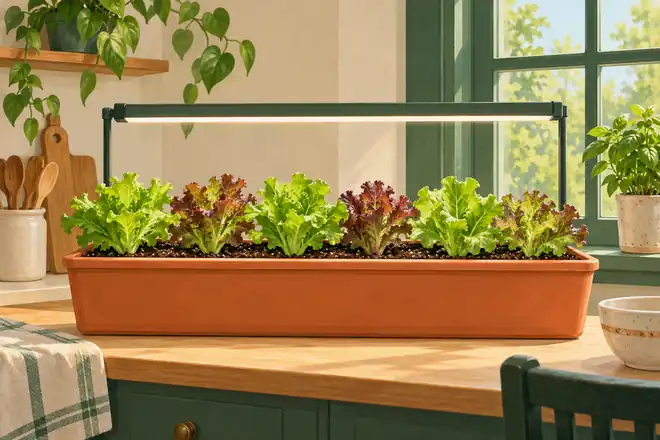
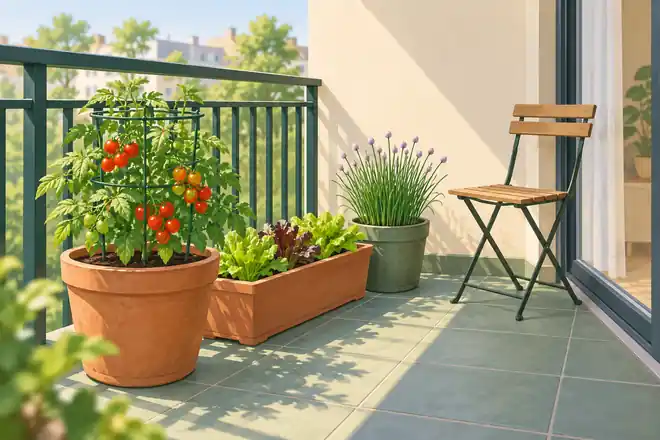
1. A salad planter along the inside edge
A floor-standing rectangular container can make an orderly starting point for lettuce or other suitable salad leaves. Keep it inside the balcony and within easy reach. Follow the crop’s sowing depth and spacing, and allow room to harvest without leaning over the railing.
2. One compact tomato in the sunniest position
Choose a compact or bush variety and plan its container and support together. A small plant label does not mean the mature plant needs a tiny pot. Allow foliage to spread without blocking the door or shading all the greens. Our tomato container size guide explains how plant type affects capacity and support space. For a sunny spot with space for spreading leaves, see our container zucchini guide for pot size and pollination checks.
3. A few pots grouped by care needs
Group reachable containers without packing their leaves together. This makes it easier to inspect them while keeping each crop’s root zone separate. Leave room to lift or turn a pot, and avoid placing a smaller sun-loving crop permanently behind a taller one.
4. A small herb stand beside the vegetables
A stable stand can hold a few herbs while the larger vegetable pots stay on the floor. Check light at each level and make sure runoff does not fall onto lower leaves. Our vertical herb garden guide covers tier arrangements, individual pots and watering access.
5. A compact climbing crop with its own support
Where conditions and permitted space allow, a suitable pea or compact cucumber variety can use vertical room. Plan the mature vine, support and container as one unit. Keep the structure secure within the balcony; do not use a railing as an attachment point without permission and suitable design. Our container vegetable trellis guide compares support types, installation and gentle vine training.
6. A replacement planter for successive sowings
Leave space for a second small sowing rather than filling every corner immediately. For crops suited to successive sowing, the replacement can develop while you harvest the first planting. Use your local sowing season and seed packet instructions; a balcony does not remove temperature or day-length limits.
Which vegetables fit a small balcony?
Look for varieties described as compact, dwarf or bush, then read their actual size and care requirements. These labels help narrow the options but do not make every crop suitable for the same container. The RHS vegetable-container guide includes salad leaves, radishes, dwarf beans, peas, tomatoes and peppers among possible container crops.
| Crop idea | Why consider it? | Main check |
|---|---|---|
| Leaf lettuce or suitable salad leaves | Useful small harvests from a reachable planter | Season, light and room between plants |
| Radishes | Can fit a modest sowing container | Root depth, spacing and suitable weather |
| Dwarf or bush beans | Less climbing space than tall bean types | Warmth, sunlight and mature spread |
| Compact tomatoes | A focused crop for a sunny balcony | Root volume, support and watering access |
| Peppers or chillies | Can suit a sunny, sheltered position | Warm growing season and adequate container space |
| Peas | Vertical growth may suit an appropriate layout | Variety height, season and secure support |
Pick crops you enjoy eating and can inspect regularly. A productive balcony does not have to grow a little of everything. Save large sprawling plants for a situation where their eventual size, light and weight requirements can genuinely be met.
Set up the first containers in three stages
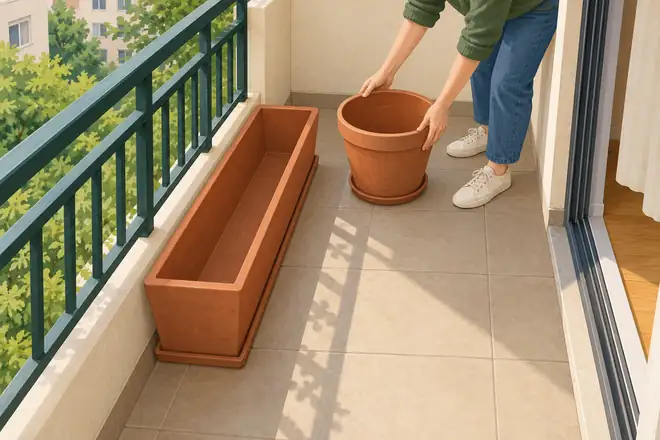
1. Try the arrangement with empty pots
Place empty containers in the proposed positions, then walk through the space carrying a watering can. Open the door fully and try reaching the back of each pot. Keep the path clear even after you imagine mature foliage and supports in place.
2. Prepare drainage, growing mix and planting
Use containers with usable root space and a growing medium intended for the crop and container. US labels commonly say potting mix; UK labels often say potting compost. Our container vegetable potting mix guide explains product labels and preparation.
University of Maryland Extension advises matching both container depth and volume to the plant and avoiding gravel layers that take away root space and can worsen drainage. Inspect ordinary drainage holes or the specified overflow on a reservoir planter. Leave watering room below the rim and keep supports away from roots when installing them.
Sow or plant according to crop instructions. Seedlings raised in protected conditions may need gradual acclimation to outdoor sun and wind. Maryland’s transplant guidance explains hardening-off; adjust the process to the crop and current weather rather than moving tender plants straight into an exposed position.
3. Test watering and runoff
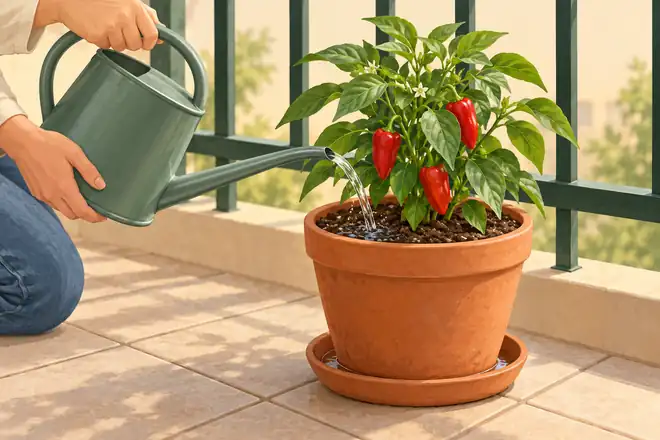
Water gently into the growing mix and watch where excess water goes. Protect the balcony surface and the space below with appropriate collection, then empty unwanted water after drainage. Do not cover building drains or leave ordinary pots standing in full saucers.
Check again after moving a pot or adding a support. Our container drainage guide helps distinguish ordinary outlets from self-watering overflows.
Build care around the balcony’s conditions
Check moisture frequently while learning the setup, especially in hot or windy weather. An overhang can keep rain out of a pot even during a wet week. Water when the crop and growing mix need it rather than assuming every container needs the same daily amount.
Maryland’s container maintenance advice explains that feeding depends on the plants, container size, watering and fertiliser. Follow the growing-medium and product instructions. Our container watering guide gives a practical checking routine.
Inspect young growth and the undersides of leaves when watering. Record changes in light, wind exposure and moisture before changing several things at once. Harvest according to the crop, remove finished plants and reassess the arrangement for the next season. Browse our Container Vegetables guides for crop-specific next steps.
Frequently asked questions
Can I grow vegetables on a shaded balcony?
Some leafy crops may suit less direct sun than fruiting crops, but shade varies. Observe the light and try a small planting of a suitable crop. A deeply shaded balcony may not support the vegetables you want to grow.
Are grow bags better than pots on a balcony?
Choose around root space, stability, watering and runoff management. Fabric and solid-sided containers behave differently, and a lighter empty container can still be heavy when filled and wet. Neither material is the best choice for every balcony.
Should I hang planters outside the railing?
Keep containers within your balcony and follow building rules. Any railing or wall attachment needs an appropriate permitted design; do not assume a decorative holder is suitable for a filled planter exposed to wind.
How many plants should I start with?
Start with one or two crop choices that fit your conditions and available containers. Use the variety’s spacing and root requirements to decide plant numbers. Expand once watering, access and growth are manageable.