Growing Beets in Containers: Sowing, Thinning & Harvest
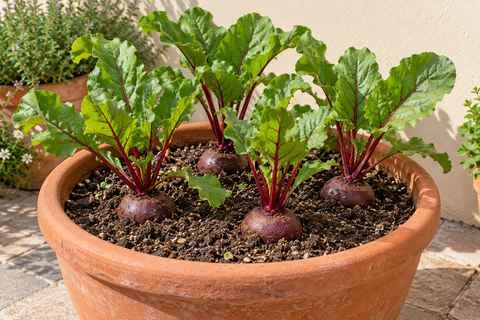
Growing beets in containers works best with a round-rooted variety, a broad pot of loose growing mix and seedlings thinned before they crowd each other. Sow for a cool growing period, keep moisture reasonably even and harvest roots while they are tender. The leaves are edible too, but taking too many leaves reduces the plant’s ability to develop its root.
Known as beetroot in the UK, this crop is Beta vulgaris. A small planter can provide a modest picking of roots and greens; it will not produce an unlimited supply. Plan the root size you want before deciding how many plants to keep.
Choose round roots and a suitable season
Round or globe types are a straightforward choice for pots because they need less vertical room than long, cylindrical varieties. Red, golden, white and striped roots are available. Read the packet for mature size, bolting resistance and whether the variety is recommended for baby roots.
The RHS beetroot guide recommends rounded varieties for containers. A bolt-resistant variety can be useful for earlier sowing, but it does not make every temperature suitable. Prolonged cold followed by changing conditions can encourage a flower stalk instead of the crop you wanted.
UK sowing commonly runs from spring to midsummer. In the US, spring and late-summer sowings are common in cooler regions, while mild-winter areas may grow beets through different cool-season windows. Do not copy Iowa’s calendar into a southern US garden or assume November is a suitable starting month everywhere.
Use your local extension calendar and count back from likely severe cold or heat. Our Garden Planner can help organise broad seasonal estimates, but it is not a verified city-specific planting calendar. Confirm its suggestions against local conditions.
Size the container for the roots you want
Start with a broad container around 40cm (16in) across and, as a practical roomy choice for globe types, about 25–30cm (10–12in) of usable growing depth. Check the actual interior, allowing space beneath the rim for watering. A long-rooted cultivar may need a deeper container than this example.
The wider surface lets you place roots at their final spacing without squeezing plants against the sides. A trough can be useful if it provides adequate depth and room for your chosen spacing. Container volume alone does not tell you how many beet plants fit: usable width and the intended harvest size matter too.
Use a sound container suitable for edible plants with clear drainage outlets. Avoid pots that previously held chemicals, and keep the container stable on a level surface. Our vegetable container drainage guide explains outlet clearance and saucers. A layer of gravel is not a substitute for functioning drainage.
Prepare a loose mix and direct sow
Fill with a formulated vegetable potting mix, or peat-free multipurpose container compost in UK terminology. Ordinary compacted garden soil can make a pot difficult to water and drain. Moisten the mix before sowing, break up large clumps and level it without packing it hard.
Our potting mix guide explains bag labels and initial fertiliser charges. Read that charge before planning extra feed. You do not need to turn the pot into a rich pile of manure to grow good roots.
Direct sowing into the final pot keeps root handling simple. Make shallow sowing positions according to the packet. Iowa State University Extension recommends a depth of ½in (about 1.3cm), while RHS outdoor guidance uses 1in (2.5cm). Follow the instructions for your seed and growing method rather than treating both depths as one universal rule.
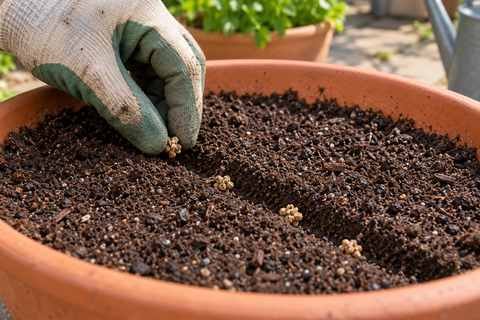
Cover gently, label the variety and date, then water with a fine flow. Keep the sowing layer moist while seedlings emerge. A surface that repeatedly dries into a hard crust can interfere with establishment; flooding it afterward does not reliably repair the damage.
Thin seed clusters into well-spaced plants
The rough corky object in many beet packets contains several seeds, so a carefully placed cluster can still produce several seedlings. Some packets contain monogerm seed; check the label rather than assuming every sowing needs the same treatment.
For individual roots, inspect each position as seedlings develop. Keep a vigorous plant and snip weaker neighbours at mix level with clean small scissors, avoiding disturbance to the retained roots. Our container carrot guide covers another crop where early spacing matters, although beet seed clusters behave differently from carrot seed.
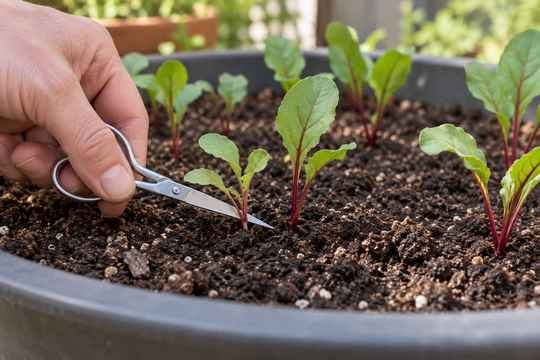
Iowa State recommends roughly 3–4in (7.5–10cm) between plants for root development. Use the packet’s final spacing for your cultivar and intended size. Wider spacing is generally more useful for ordinary individual roots than leaving every seedling simply because it has germinated.
There is also a deliberate clump-growing approach for smaller roots. That is a different plan from accidentally crowding a pot. For a first container, single retained plants make it easier to see which roots have enough room and when they are ready.
Light, water and feed for steady growth
Place the pot in a sunny position with good access for watering. Watch how nearby containers change the light as their foliage grows. Some light shade may be manageable, but a deeply shaded corner is unlikely to produce the same root growth as a well-lit site.
Keep moisture reasonably consistent without leaving the mix saturated. Feel below the surface before watering, then apply water gently enough for it to soak through. Empty standing water from a saucer. Container care needs more frequent observation than an in-ground weekly watering recommendation suggests.
Use our container watering guide to adjust for rain, wind and heat. Small pots and porous terracotta can dry rapidly; a cool damp spell may greatly reduce demand. A calendar reminder should prompt a check, not force water into an already wet pot.
If the mix’s starter nutrients are depleted during active growth, use a suitable container vegetable fertiliser according to its label. Avoid repeated high-nitrogen feeding to chase large leaves. Yellowing or poor roots can also come from crowding, cold or water problems, so diagnose before adding more nutrients. Do not add borax or micronutrients speculatively.
Check pests and common growing problems
Look for slugs around young plants and examine leaves for aphids or pale tunnels caused by leaf miners. Identify the actual pest before choosing control. Small container plantings are easy to inspect by hand; remove affected material where appropriate and avoid damaging the remaining foliage unnecessarily.
The University of Wisconsin container guidance emphasises appropriate spacing for root crops and careful water and nutrient management. A crowded, stressed pot cannot be fixed simply by changing its position once.
| Problem | Check first | Useful response |
|---|---|---|
| Patchy emergence | Depth, seed age, dry sowing layer | Correct the conditions before resowing gaps |
| Many leaves, little root | Spacing, shade, nitrogen and maturity | Thin appropriately and stop unnecessary feeding |
| Flower stalk appears | Season, temperature history, variety | Harvest usable growth and choose a better-timed next sowing |
| Hard, fibrous roots | Age, water stress, cultivar | Harvest the next batch younger and maintain moisture |
Harvest roots and greens without wasting the crop
Use the packet’s maturity estimate as a reminder to inspect, not a guaranteed harvest date. Check the root’s visible shoulder and gently clear a little loose mix if needed. Lift one sample when it reaches a useful baby-root size rather than leaving the entire pot to become oversized.
Ease a root from the loosened mix while holding near the base of the foliage. Do not lever tools through neighbouring roots. If roots are your priority, take only a few outer leaves from established plants and retain most foliage. Repeated heavy leaf harvests compete with root production; choose a separate pot for greens if that is your main goal.
Wash hands and tools, rinse harvested produce under running water and discard rotten material. FDA produce-cleaning advice recommends plain running water rather than soap. Refrigerate greens promptly and store roots separately if keeping them. This growing guide does not replace a tested preservation recipe for canning or pickling.
Frequently asked questions
How many beets fit in one pot?
Lay out the packet’s final spacing on the usable surface. Root size and cultivar decide the number, not a fixed “beets per gallon” rule. Keep fewer plants if the space is uncertain.
Can I grow beetroot just for leaves?
Yes. Be clear that frequent leaf picking can reduce the root crop. A dedicated greens pot avoids expecting large roots from plants that are repeatedly stripped.
Must I transplant seedlings?
No. Direct sowing is convenient in a final container. Module-raised seedlings are possible, but move them young with minimal root disturbance and avoid twisting their roots into a shallow hole.
Can beets stay outdoors all winter?
That depends on local cold and protection. Container roots have less insulation than garden soil. In a freezing climate, plan timely harvesting rather than assuming a pot will remain productive through winter.
Give each root room
A round-rooted variety, a loose mix, timely thinning and steady moisture form a useful first beet container. Harvest a sample while it is tender, then use what you learn about spacing and local timing for the next sowing.