
Watering Grow Bags: Moisture Checks & a Practical Routine
Watering grow bags starts with checking the growing mix, then applying water where the roots can use it. Fabric containers can dry quickly, especially as plants get larger or the weather becomes hot and windy. Check regularly, but let the mix and crop guide whether you actually water.
This guide covers ordinary fabric bags filled with container growing mix. For choosing the container itself, compare our grow bags and pots for vegetables. A purpose-built reservoir planter needs its own filling and maintenance instructions.
How often should you water grow bags?
Quick answer: Check a fabric grow bag daily in hot or windy weather, but add water only when the growing mix needs it. The right frequency depends on crop size, container volume, drainage, and weather—not a fixed calendar schedule.
There is no reliable schedule for every bag. Illinois Extension recommends checking containers daily and explains that fabric dries faster than plastic or glazed pots. Treat a daily check as a useful starting routine, rather than a command to add water every day.
Choose a convenient checking time and revisit the bag during hot, windy conditions if it is drying quickly. Check each bag separately: neighbouring containers may hold different crops or volumes of mix.
Check moisture below the surface
The RHS peat-free growing tips explain that some composts look dry on top while remaining damp lower down. Surface colour alone is a poor watering trigger.
- Look at the plant and note recent rain, heat and wind.
- Gently feel accessible growing mix below the surface, away from the main stem. Avoid digging into the root ball.
- Compare more than one accessible spot if water appears to have wetted only part of the bag.
- For a small, safely manageable container, learn how its weight changes between watered and drier conditions. Leave heavy or supported bags in place.
- Use the crop’s moisture requirements and mix instructions to decide whether watering is needed.
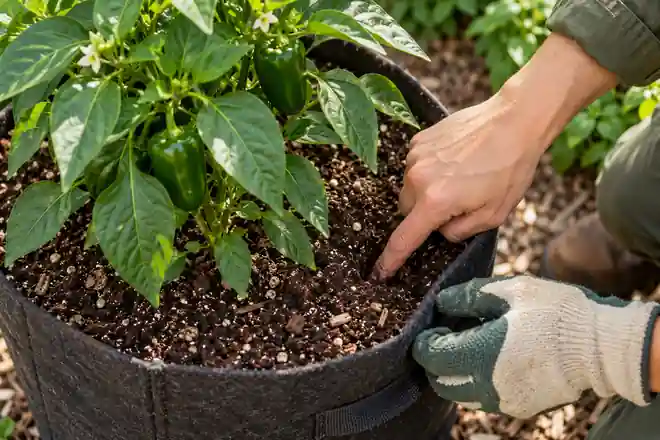
Keep the method consistent so you can recognise a change. Our general container watering checks explain how observations fit into a wider care routine.
Water slowly across the growing mix
The RHS container watering guide recommends slow watering close to the compost, directing water at the growing medium rather than the foliage. Aim for useful wetting without unnecessary runoff.
- Check that the bag is stable and runoff can leave its base.
- Fill a watering can to a manageable weight, or use a gentle hose flow.
- Apply water low over the exposed mix, moving around the planting area so you do not wet only one narrow spot.
- Pause if water pools on the surface, letting it soak in before continuing where needed.
- Observe drainage and recheck accessible mix. Avoid continuing a heavy flow simply to produce more runoff.

Do not turn drainage into a litres-per-bag rule. A newly planted bag and the same bag holding a mature crop will not necessarily need the same amount.
Why the same bag needs different amounts through the season
University of Maryland Extension identifies plant type, plant size, container volume and growing position as factors affecting water demand. Plants generally need more water as they grow and temperatures rise.
Record the crop and variety, bag size, growing mix and position before trying to change the routine. For tomatoes, our tomato bag sizing guide helps you review root space and plant type. For potatoes, follow our potato growing guide alongside your moisture checks.
If one bag repeatedly dries much faster than the others, inspect its size and exposure before assuming the solution is a stronger watering flow.
Rain, wind and hot patio conditions
A shower is not proof that the root zone is wet. Check the mix after rain, particularly under a roof or where foliage intercepts water. Plan access so you can reach the growing medium without disturbing stems or supports.
Maryland’s water-conservation guidance recommends some protection from afternoon heat and wind for container vegetables. Review the bag’s exposure while still meeting the crop’s light requirements.
For a new arrangement, place the bags where watering and inspection are convenient. If changing an established position, plan how to move the filled container safely and check the support again. During a heatwave, extra observation is more useful than blindly doubling yesterday’s water.
What if water escapes but the mix stays dry?
Maryland warns that very dry growing media can shrink away from the container edge, allowing water to bypass the mix. A quick stream escaping from a bag does not necessarily show that its contents are evenly moist.
Check for dry pockets and gaps, then rewet gradually using repeated gentle applications as needed. Avoid blasting the surface. For a large planted bag, keep it stable; do not attempt to lift it into a tub because advice for small pots mentions soaking.
Prevent a repeat by reviewing the mix and checking routine. Our container potting mix guide covers preparation and bag-label instructions.
Can you overwater a fabric grow bag?
Fabric does not make overwatering impossible. Repeated watering while the root zone is already wet, unsuitable mix or trapped runoff can still cause problems. Check what is underneath the bag and empty collected drainage water from catch trays.
Use our container drainage guide to review clearance and runoff. Wilting alone cannot tell you whether a plant needs water. Check the mix and conditions first; persistent decline needs crop-specific advice or a local diagnosis.
Make watering easier without losing the checks
- Keep access clear: leave room for the can, hose and moisture check.
- Reduce unnecessary evaporation: Illinois recommends surface mulch for containers. Use a material suitable for your crop and keep the checking area accessible.
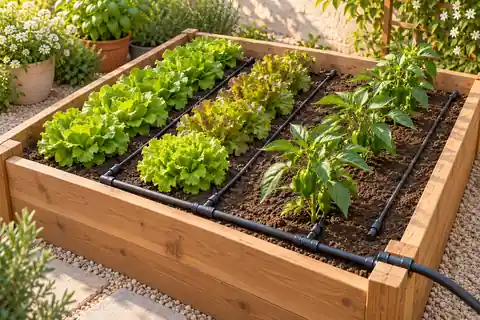
- Review drip equipment: test placement, delivery and wetting before relying on it; check the mix after a cycle.
- Arrange holiday care: show the helper the moisture-check method and runoff arrangement. Do not rely on one unusually heavy watering before leaving.
Keep a short log: date, conditions, moisture observation, whether you watered and any uneven wetting. It can reveal whether the problem is access, exposure or an inconsistent routine.
Frequently asked questions
Should I water grow bags every day?
Check daily as a starting routine, but water according to the crop and mix. Hot, windy weather or a large plant may require more frequent checks; damp conditions may require less water.
Is bottom watering best for fabric grow bags?
Do not assume a standing-water tray is suitable for every bag. Start with controlled watering of the growing mix and manage runoff. Follow the specific instructions if the bag is part of a designed wicking or reservoir system.
How many litres does a grow bag need?
There is no universal amount based only on its advertised capacity. Plant size, current moisture, mix and weather change the requirement. Use the watering and checking method to learn what your setup needs.
For watering vegetable grow bags in a small space, build a routine around moisture checks, gentle application and clear runoff. Explore our Watering & Tools guides for the next care decision.