
Automatic Watering System for Container Plants: Choose & Test
An automatic watering system for container plants can make a small patio or balcony easier to care for, but the useful starting point is your water source and the needs of each pot. A timer controls when water runs; it does not prove that every root zone received enough water.
This guide compares tap-fed drip irrigation, reservoir pumps, gravity-fed kits and self-watering containers. Use it to plan a compatible setup, test delivery and arrange checks before leaving plants unattended. For deciding whether a pot needs water, start with our container watering guide.
Which automatic watering system suits your containers?
| System | Water source | Check before choosing |
|---|---|---|
| Tap timer and drip kit | Outdoor tap or spigot | Pressure, connections, permitted use and individual pot coverage |
| Reservoir pump kit | Stored water plus the specified power supply | Usable reserve, pump instructions and intended indoor or outdoor use |
| Gravity-fed kit | Raised stored-water container | Explicit low-pressure compatibility, support and changing water level |
| Self-watering container | Built-in reservoir | Plant suitability, overflow, growing mix and refill access |
There is no single best system for every group of pots. Write down the number of containers, crops, growing mix, sun exposure and available water source. Keep a route open for checking plants and maintaining tubing. Our container vegetable planning guide helps you organise the space before adding equipment.
Tap timer and drip irrigation for patio pots
A tap-fed arrangement uses a controller to start and stop water, tubing to carry it and emitters to deliver it to the growing medium. University of Maryland Extension explains that drip irrigation can be controlled with automatic timers and highlights filtration, pressure regulation and protection of the water supply.
Choose compatible parts from the kit instructions rather than mixing fittings by appearance. Check the tap connection, tubing sizes, operating pressure and number of outlets supported. A countdown timer that needs restarting is different from a programmable controller that repeats a schedule: confirm which function the unit provides.
Utah State University’s drip irrigation guide explains why emitters need filtration and an appropriate pressure regulator. Its pressure and flow examples describe particular irrigation arrangements; do not transfer them into a universal setting for balcony pots. Follow the selected equipment’s ratings, and check applicable backflow requirements with your water supplier.
Automatic watering without an outdoor tap
Reservoir and pump systems
A pump kit draws from stored water and feeds connected pots. The power source, delivery limits and permitted location depend on the product. GARDENA’s holiday watering set is one manufacturer example combining a reservoir with a pump; it illustrates the arrangement rather than a product tested by SproutWish.
Check the manual for container placement, pump operation, outlet capacity and protection of electrical components. A solar-powered pump still needs appropriate light and a suitable reserve. For example, Hozelock’s Solar Select product information describes a solar pump arrangement. Verify the current manual for the specific model before buying or setting it up.
Gravity-fed drip kits
Choose a gravity kit only when its instructions explicitly support your stored-water arrangement. Do not assume a tap-fed dripper will work with a bucket. Follow the specified height, tube length and installation limits. Support a filled reservoir securely and leave a clear path for refilling; avoid improvising a heavy container on a narrow balcony railing.
Testing matters as the reservoir empties. Note whether the farther pots still receive water near the refill point. If delivery becomes unreliable, review compatibility and placement instead of increasing the reservoir height without guidance.
Self-watering pots and wick arrangements
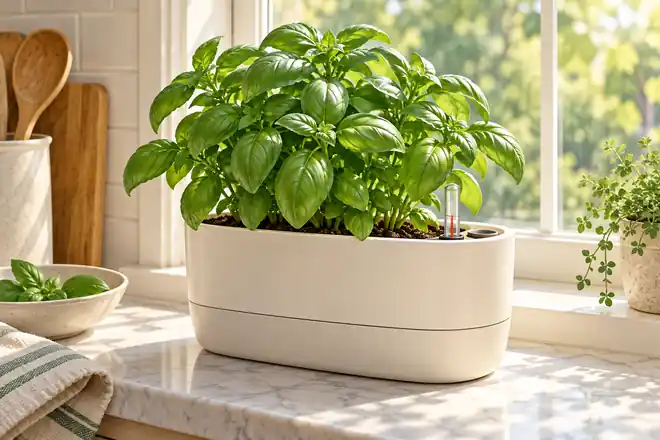
Self-watering pots for herbs manage a reserve inside the container. Maryland’s self-watering container guide describes a platform above the reservoir, an overflow and movement of water into the growing medium. The reserve needs replenishing; “self-watering” does not mean a permanent water supply.
Choose the plant and mix for that container’s instructions. An ordinary pot standing in a deep saucer is a different arrangement. Our container drainage guide explains outlets and reservoir overflows.
The RHS houseplant holiday guide discusses wick methods and warns about small reserves, slipping wicks and overestimated water needs. That guidance concerns houseplants; it should not become a blanket recommendation for outdoor vegetables or every indoor herb. Avoid moving a plant into an unfamiliar reservoir setup just before a trip.
Set up and test your container watering system
- Map the pots. Mark the water source, tube route and access to each container. Separate groups that need different care.
- Check the instructions. Confirm compatible fittings, operating limits, power requirements and the method for stopping water.
- Position the outlets. Secure tubing so the emitter wets accessible growing medium. Keep the route clear of foot traffic and away from the plant’s main stem.
- Run an observed test. Check connections and every outlet. Look for water escaping onto the floor or bypassing dry mix.
- Check the result in each pot. Feel accessible mix in more than one spot and confirm that drainage or overflow works.
- Recheck over several days. Observe the plants, mix and supply level through normal conditions before relying on unattended operation.
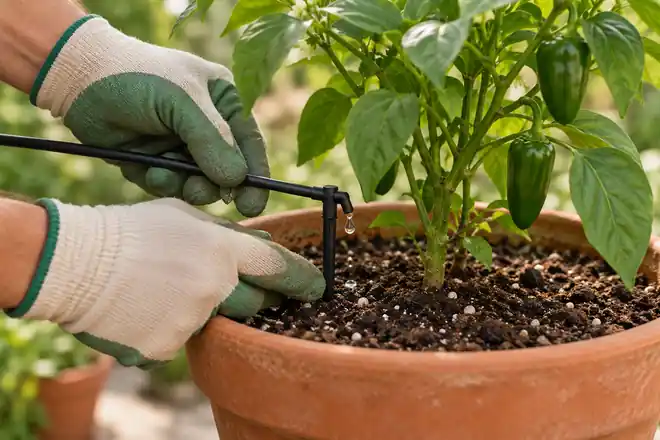
The RHS container watering guide recommends regular moisture checks and explains how warmth, wind and light rain affect containers. Use those observations to review the schedule. For fabric containers, our grow bag watering routine covers checking and uneven wetting.
Measure delivery before estimating a reservoir
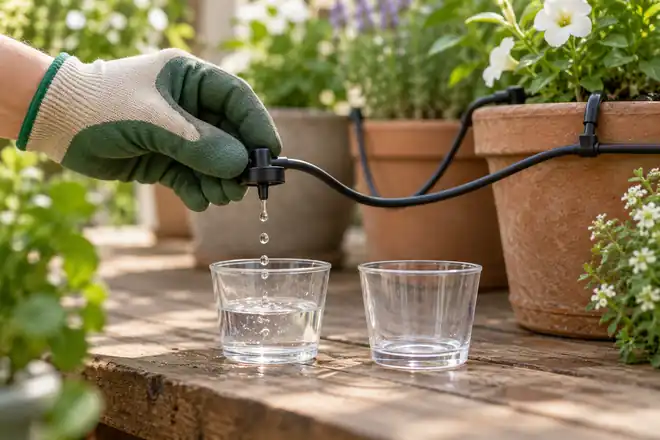
As a practical checking method, collect water from an outlet in a small measuring container during an observed cycle, following the kit’s instructions. Compare nearer and farther outlets. Return each emitter to its secured position afterward. The volume collected shows delivery at that moment; it does not prove that the pot’s whole root zone became moist.
Record the actual total used across the connected pots over a representative day. Compare that with the usable reserve above the pump’s minimum level or the gravity kit’s refill point. Keep additional capacity for changing conditions and arrange someone to check supplies. Avoid an exact “days away” promise from reservoir capacity alone.
Maintenance and holiday checks
Utah State University’s maintenance guidance covers clogged or missing emitters, secure connections and pinched tubing. Inspect these alongside your pots. Clean filters as directed, check batteries or power, and revisit settings when growth or weather changes.
Before a trip, show a helper how to stop the system, refill stored water and recognise a dry or persistently wet pot. The RHS holiday garden guide recommends a trusted waterer and checking local water-provider restrictions before using automated irrigation. Follow current local rules rather than assuming every drip system is exempt.
Frequently asked questions
How long should a drip system run for container plants?
Start with the equipment instructions and an observed test. Emitter delivery, pot size, growing mix, crop and weather differ. Check the resulting moisture and adjust; a universal number of minutes would hide those differences.
Can one automatic watering system serve mixed pots?
It can if the kit supports the layout and delivers suitable amounts to each pot. Check individual containers rather than judging the whole group from one plant. Separate watering groups when a shared cycle cannot meet their different needs.
Can automatic watering overwater containers?
Yes. A repeating cycle can add water while the mix is already wet. Check moisture, clear drainage and the response after rain, and review the schedule when conditions change.
Choosing an automatic watering system for container plants is easier when you match the source, equipment and pots, then verify what the setup actually delivers. Continue with our Watering & Tools guides to build a routine you can maintain.