Winter Balcony Plant Watering: How to Avoid Soggy Pots
Winter balcony pots often stay wet for longer than expected. Cooler air slows evaporation, shorter days reduce plant growth, and a pot that drained well in summer can remain soggy in November. The goal is not to stop watering completely: it is to water only when the root zone actually needs it.
Quick winter watering check
Push a finger about 2–3 cm into the potting mix. If it feels moist, wait and check again. For larger containers, a wooden skewer pushed deeper can help reveal moisture below the surface. Lift a small pot after watering, then again as it dries, to learn its weight. Check the drainage holes and empty saucers so roots are not standing in water.
Why balcony pots dry more slowly
Short days and cool temperatures mean many plants use less water. Sheltered balconies can stay damp for days, while exposed pots may dry quickly in cold wind. Container material also matters: porous terracotta often loses moisture faster than plastic or glazed ceramic. A single weekly watering schedule will not suit every pot.
How to water without waterlogging
- Check moisture before reaching for the watering can.
- Water in the morning when practical, so the surface is less wet overnight.
- Pour slowly onto the potting mix rather than soaking foliage.
- Allow excess water to drain fully, then empty the saucer.
- Recheck after heavy rain; an uncovered container may not need additional water.
Adjust for different plants
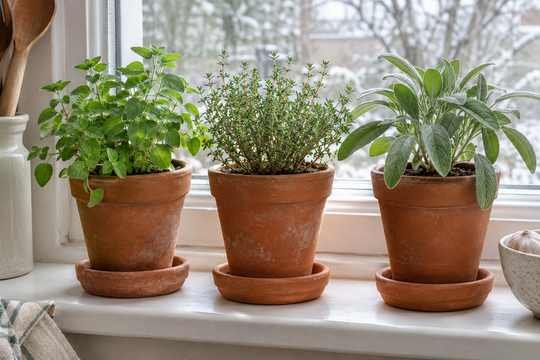
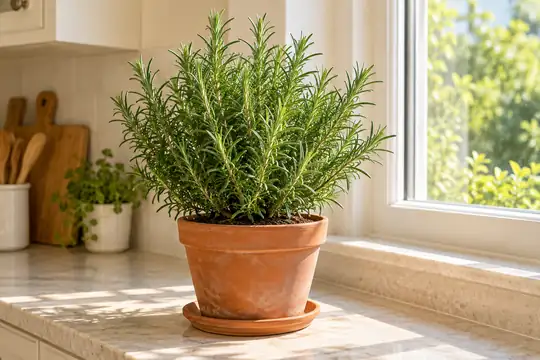
Rosemary, thyme and sage generally dislike constantly wet roots, particularly in cool weather. Leafy winter greens may need more consistent moisture while actively growing, but should still drain freely. Newly planted seedlings need closer checks than established, slow-growing herbs. For herb-specific advice, see our oregano, thyme and sage comparison.
Fix a pot that stays soggy
Remove standing water and move the pot out of persistent rain if possible. Make sure drainage holes are open; do not add a gravel layer as a substitute for drainage. If the mix is compacted, repot into fresh, well-draining container compost when conditions permit. If roots smell rotten or have turned soft and dark, remove badly affected tissue and reassess whether the plant can recover. Read our winter rain protection guide for additional balcony solutions.
What if the leaves are yellow?
Yellow leaves alone cannot diagnose overwatering: insufficient light, cold stress, nutrient problems and pests can look similar. Inspect soil moisture and roots before making changes. Our yellow herb leaves troubleshooting guide explains how to check symptoms in order.
Frequently asked questions
Should I water balcony plants every week in winter?
Not automatically. Check each pot first; temperature, wind, rainfall, plant type and container size all change its water needs.
Can winter rain replace watering?
Yes, if rain actually reaches and wets the potting mix. Sheltered balcony pots may remain dry even during rainy weather.
Should I mist herbs in winter?
Misting is not a substitute for watering the root zone and can leave leaves wet in cool conditions. Focus on correct soil moisture and airflow.
For a healthy small-space garden, make the moisture check your routine rather than watering by the calendar.