Herbs That Grow Together in One Pot: Pairings & Care
Herbs that grow together in one pot need more than a good flavour match. They must share the available light, growing mix, water and root space. Rosemary and thyme are a useful starting pair for a sunny, freely draining planter. Parsley and chives offer another option where the mix can stay evenly moist without becoming waterlogged.
Start with two plants, check their mature sizes and choose a container that gives both room. A mixed planter is easier to maintain when the herbs suit the same conditions. For the wider location and lighting decisions, use our windowsill herb garden guide.
Quick guide: which herbs can share a pot?
The combinations below group herbs by compatible growing needs. They are a starting point for planning; the exact variety, season and space still determine whether a shared container makes sense. Pairing herbs does not remove the need to check for pests or provide enough root room.
| Combination | Why consider it | What to watch |
|---|---|---|
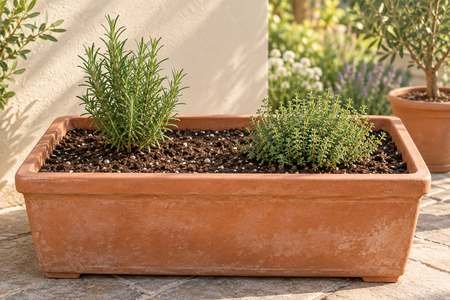
| Rosemary + thyme | Sun-loving herbs suited to free-draining conditions | Rosemary can become much larger; allow for its mature spread |
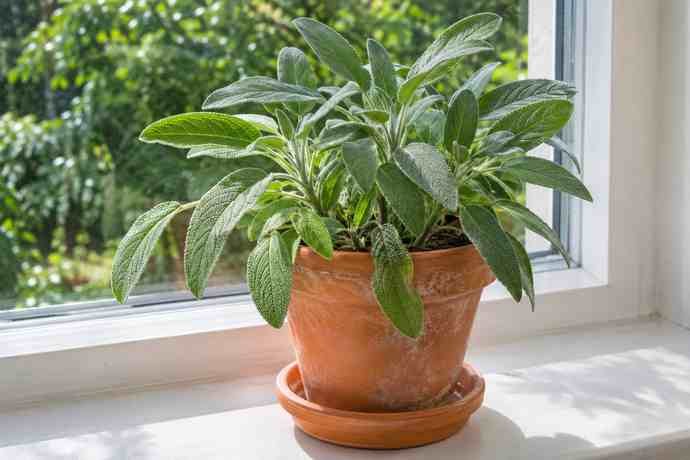
| Sage + thyme | A sunny, well-drained herb grouping | Choose a compact culinary sage and keep it from shading thyme |
| Parsley + chives | Both can suit sun or partial shade and moisture-retentive, draining mix | Give parsley depth and leave room for the chive clump |
| Basil + parsley | A possible warm-season pairing with regular moisture checks | Provide enough light and warmth for basil; replace or separate plants as needs change |
| Mint + other herbs | Usually simpler as neighbouring pots | Mint spreads aggressively; give it its own root space |
Match water, light and growing habit first
Read the labels for the actual plants you intend to buy. Compare their preferred light, mature height and spread, and moisture needs. Two small nursery pots can look comfortable together while hiding very different long-term requirements.
University of Minnesota Extension recommends spacing herbs for their mature size and notes that crowding reduces air circulation. Use the plant’s expected growth to decide how many herbs to combine, rather than filling every visible gap on planting day.
Think about lifespan as well. Basil is usually grown as an annual, parsley produces leaves before flowering in its second year, and woody herbs can occupy a pot for much longer. Leave access to remove a finished plant without having to dismantle the whole arrangement.
Sunny pairing: rosemary and thyme
The RHS rosemary guide identifies thyme and sage as suitable sun-loving neighbours. Rosemary likes warmth and free drainage, making a young compact plant a reasonable partner for thyme when the container has enough space.
Place the taller plant where it will not shade the thyme, based on the direction of light at your site. Keep their crowns clear and let the thyme retain its own growing area. Read our indoor rosemary guide if the planter will spend time inside.
RHS thyme guidance emphasises sun and free-draining conditions, with excess damp particularly troublesome in winter. That does not mean leaving newly planted herbs completely dry. Check their root zones while they establish, and review drainage after heavy rain.
A shared pot may be a temporary home as rosemary grows. If you want a long-lived rosemary specimen in a modest container, growing it alone can make future care easier. You can still arrange a separate thyme pot beside it for a coordinated display.
Leafy pairing: parsley and chives
Parsley and chives are a practical combination to consider because their individual care preferences overlap. RHS parsley guidance describes it as suitable for containers in sun or partial shade. RHS chive guidance also allows sun or partial shade and recommends keeping container-grown plants evenly moist during active growth.
Give parsley sufficient depth and space the chive clump so its expanding leaves do not crowd the parsley. Choose a position bright enough for useful growth; partial shade outdoors is not equivalent to a dark kitchen corner. Our guides to growing parsley indoors and indoor chives explain their separate care needs.
If one herb repeatedly needs water while the other remains wet, review the mix and roots. Moving them into separate containers is a sensible adjustment. A matching appearance is less useful than a routine that keeps both plants growing well.
Can basil and parsley grow together?
They can be considered for a warm-season planter if you can meet basil’s light and temperature needs while keeping both root zones appropriately moist. The RHS basil guide describes basil as a tender herb that needs warmth and sunshine. Parsley’s ability to tolerate partial shade does not make a shaded location suitable for basil.
Use young plants with room to develop, avoid letting the faster canopy shade its neighbour and reassess as weather cools. For plant-specific pruning and watering, see our indoor basil guide. Keeping basil in a separate pot is convenient if it needs moving into warmth before the parsley.
Herbs to keep in separate pots
University of Maryland Extension describes mint as an aggressive spreader. Give mint its own container so you can manage its roots and renew the plant without disturbing neighbours. Our indoor mint guide covers ongoing care.
Rosemary or thyme with frequently watered leafy herbs can also become awkward in a small shared root zone. These are care mismatches to manage, rather than a list of plants that poison one another. If your favourite herbs have different requirements, group separate pots on a shelf and water each one individually.
1. Choose a container for both mature plants
Check the usable internal width and depth, not just the decorative outer dimensions. Allow space for both root systems and for reaching the mix when watering. A deep rectangular planter may make access easier than a narrow crowded bowl, but its actual capacity must suit the plants.
The RHS container-herb guide recommends sufficient root depth and well-drained growing media. Individual minimum pot sizes are not instructions to fit several mature herbs into that same volume. Start with fewer plants or select a larger container when their spacing requirements do not fit.

Confirm that drainage holes are open and excess water can escape. Use our container drainage guide for outlet checks. On a balcony, account for the filled planter’s weight and building rules before positioning a heavy container.
2. Arrange the plants before removing their pots
Set the nursery pots in the intended positions to compare spacing and height. Turn the arrangement toward the available light and check that each herb remains accessible. Leave open growing space rather than creating an instantly full display.

If there is not enough room, return one plant to a separate pot now. This dry run also makes it easier to choose which herb sits nearest the edge for harvesting. Mark or photograph the intended positions before lifting the nursery pots out.
3. Plant and settle the root balls
Choose growing mix suited to the herb group and the container. Remove plants gently from their nursery pots, keeping the root balls supported. Set them at their previous growing depth, fill around them and firm gently so that the crowns are not buried.

Water to settle the mix and allow excess water to drain. Follow the individual plants’ establishment needs while checking the whole container. Our container watering guide explains how to use moisture observations instead of a fixed weekly schedule.
Keep the combination workable as it grows
Check moisture in more than one part of the planter, especially near each root ball. Review whether the taller herb is shading the smaller one, whether foliage is becoming crowded and whether water is draining freely. Harvest according to each plant’s growth rather than cutting both equally. For a small surplus, follow our guide to drying homegrown herbs in a small kitchen.
Indoors, review light at leaf level and keep the planter away from unsuitable temperature extremes. Maryland’s indoor-herb guidance highlights differing herb needs and reduced watering demand in cooler conditions. Our herb grow-light guide helps assess supplemental lighting.
If you plan to move the planter for winter, compare the needs of every herb first. US growing zones and UK exposures differ, so a locally suitable rosemary variety and a tender basil should not automatically share one winter-care plan. Separate pots offer flexibility when the seasons pull care requirements apart.
Frequently asked questions
What are good herbs to plant together for a beginner?
Start with two herbs whose light, moisture and mature-space needs match. Rosemary and thyme are a useful sunny, free-draining option. Parsley and chives are worth considering for a bright planter with more consistent moisture. Check the specific varieties before choosing the pot.
Can all kitchen herbs grow in one large container?
A large container provides space but does not make every herb’s needs identical. Mint can spread, woody herbs can outgrow neighbours and tender plants may need different winter conditions. Select a compatible small group or use separate pots.
How many herbs can I put in a pot?
Use the mature size and spacing of each selected variety together with the container’s usable root volume. Two plants are a manageable starting arrangement, not a rule that any pot can hold two herbs. Leave room for growth and watering access.
Can I leave nursery pots inside one decorative planter?
Keeping separate inner pots can make moving and watering herbs easier. Ensure each inner pot drains and remove collected water from the outer planter. Keep the inner pots accessible; standing water beneath them defeats the benefit of separate drainage.
Choose a pairing you can care for together
The best herbs that grow together in one pot share a workable watering routine, suitable light and enough space to mature. Begin with a simple pairing, check how both plants respond and separate them when their needs diverge. A small herb planter that stays healthy is more useful than a crowded collection that is difficult to maintain.