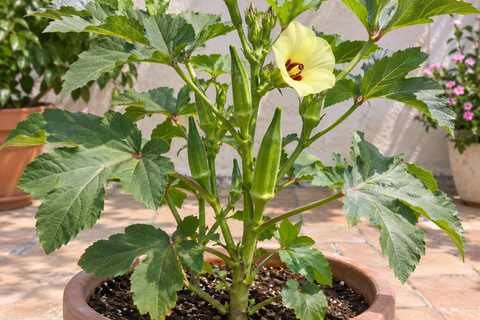
Growing Okra in Containers: Pot Size, Warmth and Harvest
Growing okra in containers works best with one compact plant in a deep pot of at least five US gallons (about 19 litres). Put the pot in full sun, sow when the mix is warm, and pick the pods while they are small and tender. A sunny balcony can work in a hot summer. In a cool UK summer, a greenhouse or polytunnel is usually a more reliable place to try.
Okra (Abelmoschus esculentus) is a warm-season crop grown for its young pods. It is not a good substitute for greens on a shady balcony. If you are choosing which crop gets the warmest corner, look at the hours of direct sun and how long the site stays warm before you order seed.
Pick a pot deep enough for one plant
The LSU AgCenter container guidance recommends five gallons or larger because okra develops a deep taproot. The RHS okra guide suggests a pot at least 30 cm (12 inches) wide and deep. Use both as checks: a very tapered container can meet the rim width but hold less mix than you expect. Use one plant in the minimum size, or give a vigorous variety a bigger pot and more room above it.
Choose a container with drainage holes and enough stability for an upright plant. A fabric bag can work if it is deep, but it may need closer attention in windy weather. Leave some space below the rim for watering and fill the pot with a loose vegetable potting mix. In the UK, choose a peat-free potting compost intended for containers. Avoid using heavy garden soil on its own. Our vegetable potting mix guide explains how to choose a mix that holds moisture without staying sodden.
| Growing spot | Best first move | What to watch |
|---|---|---|
| Hot sunny US patio | Direct sow in the final pot once the mix warms | Fast drying and heavy runoff |
| Short US summer | Pick an early cultivar and consider a young transplant | Cold nights and root disturbance |
| Cool or exposed UK garden | Plan to grow under cover | Ventilation on hot days and cold nights at the ends of the season |
Look for a compact or early cultivar on the seed packet. Compact is a useful clue about height and width, while early describes how quickly a plant may reach harvest under suitable conditions. Neither label makes okra cold tolerant. If the pot will sit on a balcony, position it on a stable surface with safe drainage and check that you will be able to reach the pods without leaning over the railing.
Sow after the container mix warms
In much of the US, direct sowing after frost is the simplest option. LSU advises waiting until the soil is at least 65°F (about 18°C), with warmer conditions preferable. A pot can warm up in afternoon sun and cool again overnight, so check that the warmth is sustained. The Clemson Extension okra guide gives a regional example; use your own Extension service and local frost dates to adapt the timing.
Sow according to the seed packet. If you sow more than one seed in the final pot, thin to one strong seedling by snipping the extras at mix level rather than pulling beside the remaining roots. Keep the mix lightly moist during germination. Do not let the container sit in a tray of water.
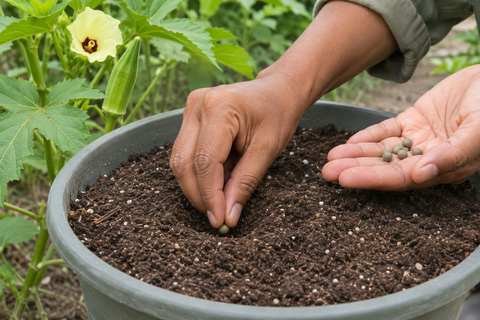
If your season is short, start indoors in individual pots under good light, then move the young plant with its root ball intact. Follow the RHS guidance for starting indoors if you plan to grow under cover in the UK. An outdoor UK patio needs a long, warm summer and a sheltered sunny position. The garden planner can help compare possible crops and layouts; use local advice and actual temperatures for sowing dates.
Water the root zone and check the label before feeding
Water when the mix is starting to dry below the surface. Pour slowly so the root zone gets wet, then let the extra water drain. Hot wind and a larger plant can make the same pot dry faster later in the season. If water runs out immediately while the centre still feels dry, water more slowly in two passes. See our container watering guide for a simple moisture check.
Check whether your mix already contains a starter feed. Once that supply has run its course, use a fertiliser labelled for container vegetables according to its directions. Weak growth can also come from cold, root crowding or too little light. Check those first before increasing feed. If you grow eggplant in pots alongside okra, give each crop its own pot so they can develop without competing for root space.
Check the underside of leaves for insects and watch the growing tip for distortion. A few leaf holes do not identify the pest by themselves. Look for the insect or for fresh damage before treating, and use local advice for edible crops. If an upright plant rocks in the wind, move the pot to a sheltered spot or tie the stem loosely to a stake. Do not tighten a tie around a growing stem.
On a hot patio, check the pot before the hottest part of the day and again later if the plant is carrying pods. Brief afternoon droop does not always mean the roots are dry. Feel the mix before watering. If it is moist and the plant perks up as the air cools, keep observing instead of adding another drink to an already wet container.
Pick young pods before they become fibrous
Check plants regularly once pods start forming. For many varieties, a pod around two to four inches (5–10 cm) long is a useful starting point, but use the variety description and pick before the pods turn tough. Some cultivars stay tender at a different length. Support the pod and snip its short stem with clean shears; avoid pulling on the branch. Gloves and sleeves can help if the plant irritates your skin.
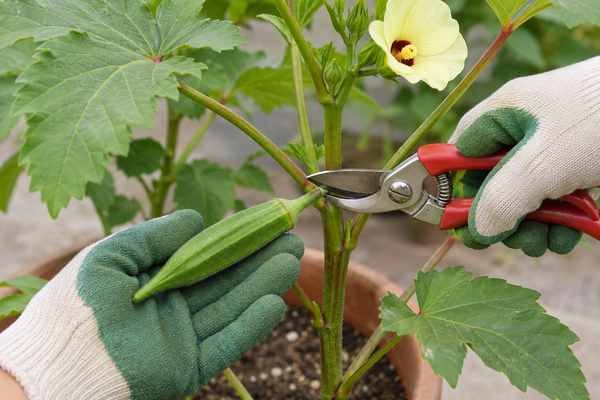
Use firm, undamaged pods for cooking. Rinse them under running water before preparing, following the FDA produce handling guidance. If a pod is already woody, picking it smaller next time is more useful than trying to judge ripeness by colour alone.
Frequently asked questions
Can two plants share a five-gallon pot?
Give that pot to one plant. If you want two, separate pots make it easier to provide enough root space, water each plant and position them for sun.
Can I grow okra on a windowsill?
A typical windowsill is a poor place to finish an okra plant. It needs sustained warmth, strong light and space above a deep pot. If you are starting a seedling indoors, plan where the mature plant will go before sowing.
Why is my okra growing leaves but no pods?
Check whether the plant has had enough time, warmth and direct light. Review nighttime temperatures and check whether a wall or railing shades it later in the day. More fertiliser is unlikely to fix a cool or shaded site.
Start with one plant in your warmest spot. Keep the pot evenly watered, give the roots room and check for tender pods frequently once the plant begins to set fruit.