Growing Eggplant in Pots: Container Size, Care and Harvest
Growing eggplant in pots starts with one compact plant, a container of at least 5 US gallons (about 19 litres), and a warm, sheltered spot with six to eight hours of direct sun. Use a loose potting mix, wait for reliably warm nights before moving the plant outside and pick the fruits while their skin is glossy. A small balcony can work if the pot has room to drain and you can reach it easily to water.
Eggplant and aubergine are two names for the same crop, Solanum melongena. This guide is for edible vegetable varieties sold for growing in gardens. A compact plant or one that bears smaller fruits may fit the space better than a vigorous variety selected for large fruits, particularly if the site warms up slowly.
Choose a pot and variety that fit together
The University of Maryland Extension container guide lists five gallons as a minimum for eggplant. That is a useful starting point for one plant; give a larger variety more room if you have it. A wide, stable pot can be easier to manage than a tall, tapered one, particularly on an exposed balcony. Check the capacity on the label rather than judging by the diameter alone.
| Where you grow | What to choose | What to check first |
|---|---|---|
| Sunny sheltered balcony | Compact or small-fruited variety | One plant per pot, with room for a support and access to water |
| Exposed patio | Sturdy wide pot in a sheltered position | Whether stems can be tied and runoff can drain safely |
| Cool summer or short season | Early variety or a sturdy nursery transplant | Whether there is enough warmth outdoors or space under cover |
Use a container with open drainage holes. A pot that has held chemicals or paint is unsuitable for food crops. Fill it with a potting mix intended for vegetables; in the UK, a good peat-free container compost is suitable. Garden soil alone can compact and hold too much water in a pot. See our guide to vegetable potting mix if you are choosing between bags. Leave a little space below the rim so water can soak in without washing the mix away.
Sow early or buy a transplant
Starting from seed lets you choose a cultivar for your space. Sow indoors using the depth and timing on your seed packet, then keep the mix warm and lightly moist. The University of Minnesota Extension suggests starting about eight weeks before planting outside. After emergence, give seedlings strong light and pot them on when roots need more room. Our indoor seed-starting guide helps you set up lighting and trays.
A nursery plant is a useful shortcut when your warm season is short or you lack a grow light. Choose a stocky plant with fresh growth and check both sides of its leaves. Skip plants with sticky patches, clusters of insects or stems that look pinched at the soil line. Keep the label so you can judge mature fruit colour and size later.
Wait for warmth before moving it out
In the US, use local frost dates as a starting point and watch the actual night forecast. Minnesota Extension advises waiting until nighttime lows are consistently above 50°F (10°C). In hotter parts of the US, ask local Extension about the best planting window. A warm day in early spring does not tell you how cold the pot will get that night.
In the UK, the RHS aubergine guide recommends a warm, sheltered spot in full sun for outdoor crops and notes that aubergines tend to crop better under cover. If your garden stays cool, a greenhouse may be a better fit than an exposed balcony. The SproutWish garden planner can help sketch a layout, but use your local forecast and growing advice for planting dates.
Transplant and support the stems
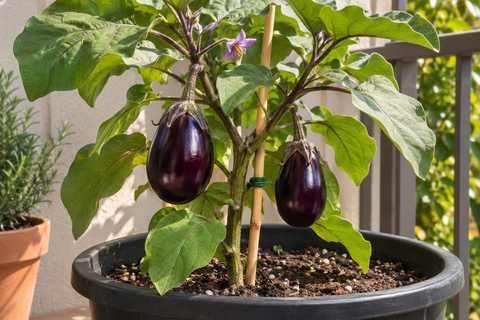
Harden off the plant gradually by increasing its time outdoors in a sheltered spot. Water the root ball before transplanting. Set it into the new mix at about the same level it grew at in the nursery pot, press the mix gently around it and water. Add a stake or small cage early while it is easy to work around the roots. Tie stems loosely so they have room to thicken.
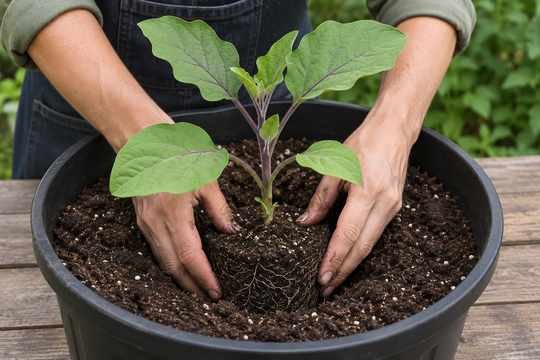
Set the container where the leaves can get direct light without being battered by wind. If you want another warm-season crop beside it, our sweet peppers in pots guide shows a similar one-plant setup. Give each crop its own pot so its roots have space and you can water them separately.
Water steadily and check the feed label
Feel below the surface instead of following a fixed watering calendar. When the mix is starting to dry, water slowly at its base until a little drains from the bottom. Check more often when it is windy or hot and when the plant is carrying fruit. If a saucer catches runoff, empty it so the pot does not sit in water. See our container watering guide for ways to judge moisture in different containers.
Check whether the potting mix already contains fertiliser. After the starter feed has run its course, use a product labelled for container vegetables at the recommended rate. If the plant looks weak, check light, root moisture and temperature before adding extra feed. Extra fertiliser does not fix cold roots or an outlet blocked by a saucer.
Inspect the plant when you water. Tiny round holes can point to flea beetles; sticky clusters on soft growth may indicate aphids. Look at the plant closely before choosing any control, and follow local advice for edible crops. If the plant flowers without setting fruit, review recent cold or extreme heat and whether the pot has swung between very dry and saturated.
Pick fruits while the skin is glossy
Look for the colour and size expected for your cultivar. Aubergines can be purple, striped, white or another colour, so dark purple is not a universal signal. Harvest a fruit while its skin is still glossy and the flesh feels firm. Support it with one hand and use clean pruners to cut the short stem above the calyx. Pulling can tear the branch; some plants also have prickly calyces.
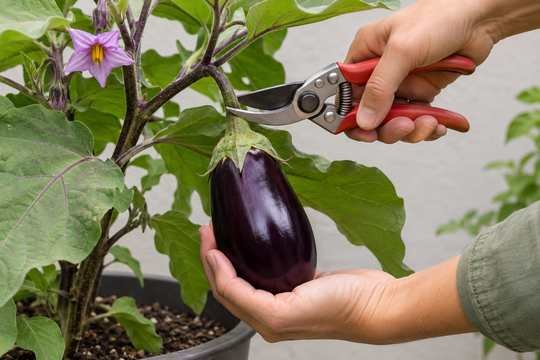
Wash the fruit under running water before cutting, following the FDA’s produce handling advice. If you are unsure when to pick a particular variety, try one fruit at the smaller end of its expected size and use the packet description and cooking quality to guide later picks.
Frequently asked questions
Can I put two eggplants in a five-gallon pot?
Give that pot to one plant. If you want two, use separate pots or a substantially larger container sized for both varieties. Individual pots are easier to shift and water independently.
Can eggplant grow on a balcony that gets afternoon sun only?
Count the hours of direct sun on the leaves. A bright balcony can still get too little direct sun if the railing or a neighbouring building shades the plant. If the spot gets much less than six hours, a leafy vegetable may be a better choice.
Why is the plant growing leaves but no fruit?
Check the overnight forecast, how much direct sun reaches the plant and whether the mix stays evenly moist. Also check whether the variety has had enough time to mature. A pot placed outside too early can lose time even when the plant survives.
Start with one plant in your warmest suitable spot. Keep its roots evenly moist, support the stems and judge harvest by the cultivar and the fruit’s gloss. If you have another sunny spot with room for a deep pot, see our guide to growing okra in containers.