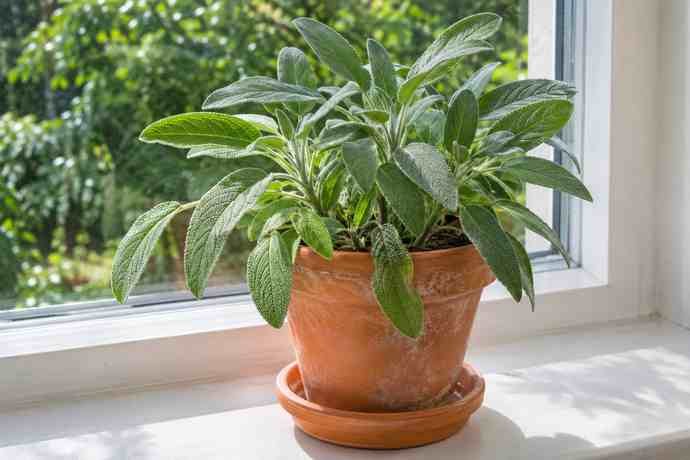
Sage Indoor Care: Light, Watering & Winter Tips
Growing sage indoors is easiest with a small, labelled common sage plant, a very bright window or suitable grow light, and a pot that drains freely. Let the mix dry somewhat between waterings without waiting for the leaves to wilt. Harvest a few leaves or soft shoot tips from an established plant, and ease off if growth slows in winter.
Sage indoor care at a glance
Choose common culinary sage (Salvia officinalis), give it strong light and keep drainage holes open. Let the mix dry somewhat between waterings, checking the root zone rather than watering by the calendar. Reduce watering and harvesting when winter growth slows. A dim shelf and frequent watering are a poor combination.
Start by checking where the plant will receive light. Sage may stay alive for a while in a dim room, but survival is different from producing enough leaves to harvest. If the only available spot is far from a bright window, set up a grow light before buying the plant.
Choose common culinary sage
Look for common or garden sage, Salvia officinalis, sold as a culinary herb. The RHS sage guide distinguishes it from other plants sold under names containing “sage”. Pineapple sage has a different flavour. Russian sage and unrelated plants with “sage” in their names should not be treated as substitutes based on that name alone.
Choose a plant with firm stems, healthy growing tips and no visible fine webbing or insects beneath the leaves. If you plan to eat the leaves, buy from a source that labels the plant for culinary use. Do not assume decorative nursery plants were treated with products suitable for edible crops.
Decide whether to buy, sow or take cuttings
| Starting option | Best use | What to allow for |
|---|---|---|
| Young culinary plant | One kitchen pot with the least setup | Time for the plant to settle in before cutting |
| Cutting from known culinary sage | A fresh plant from a parent you already use | Rooting and active new growth before leaf harvest |
| Seed | Starting several plants with good seedling light | More time and space before plants are ready to use |
The RHS suggests sowing indoors in spring if starting from seed. Use a moist seed-starting mix and the packet’s sowing depth. Give emerged seedlings bright light and enough airflow, and do not treat their small root balls like mature plants that can tolerate more drying between waterings.
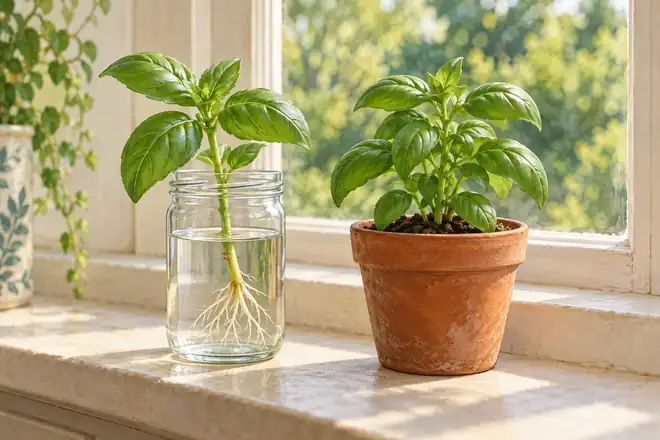
If an outdoor sage has grown large and woody, a young plant may fit a windowsill better than moving the entire shrub indoors. Illinois Extension’s sage guide describes rooting summer cuttings for winter use. A cutting is an option if you have a healthy parent, but it still needs time to establish.
Make the most of indoor light
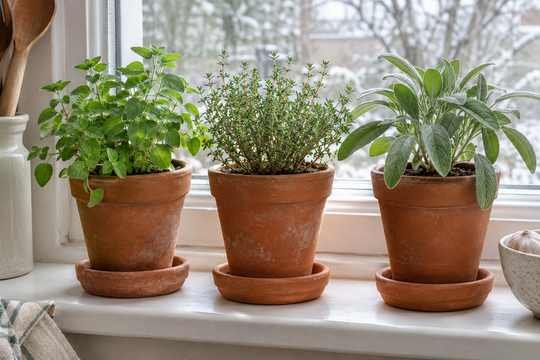
Choose the brightest window you can use safely. A south-facing window in the Northern Hemisphere is often a good first check, but nearby trees, roof overhangs and buildings can block direct light. Look at where sunlight falls on the leaves, not just whether the room seems bright.
Iowa State Extension notes that sage can need stronger light or more pest attention than some easier indoor herbs. Its general indoor herb guidance suggests a timer of around 12–16 hours when using supplemental light. Follow the lamp’s distance guidance and check the plant’s response rather than treating one lamp height as universal. Our herb grow-light guide explains the setup.
Short days in the UK or northern US can mean slower winter growth even in a decent window. A sunnier window in a mild US climate may warm up strongly in the afternoon. Keep foliage away from cold glass and heating vents, and use the conditions at the pot rather than an outdoor hardiness label to judge what the plant needs indoors.
Use a modest pot and free-draining mix
Choose a pot with holes and just enough room around the root ball for fresh mix. You can move up again when roots fill it. A large pot around a small plant stays wet for longer, particularly in a cool room. Terracotta can dry more quickly than plastic; either material can work if you check moisture before watering.
Use a loose mix intended for containers. In the UK, choose a free-draining peat-free compost suitable for potted herbs. Keep the drainage holes clear instead of layering stones beneath the mix. If you use an outer decorative pot, remove the inner container to water and tip out any collected runoff.
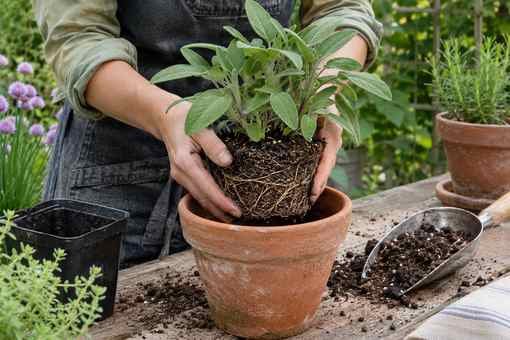
When repotting, hold the root ball rather than pulling on the stems. Place it so the previous mix surface is level with the new mix. Fill the sides gently, water to settle the mix and let excess escape. Our windowsill herb garden guide covers fitting pots and saucers into a small space.
Water by feel, and feed during active growth
Illinois Extension’s winter herb guidance recommends letting sage dry out between waterings without allowing the leaves to wilt. Check below the surface and lift the pot to learn what it feels like when moist versus dry. Water slowly until excess drains, then empty the saucer. Recheck sooner in a bright warm room, later when growth is slow and the pot stays heavy.
If the leaves droop, check the roots’ conditions before adding water. A light, dry pot and a heavy, wet one call for different responses. Our container watering guide gives a practical way to distinguish them.
Check the mix for a starter nutrient charge. During active growth, use a feed labelled for edible container herbs if needed, at the label rate. A plant putting out long pale shoots usually needs better light before it needs extra feed.
Check leaf undersides and shoot tips
When you bring a plant inside, inspect it before setting it beside other pots. Look for stippling, fine webbing or insects. If you find symptoms, separate the pot and identify the issue before treating it. Crop suitability and harvest intervals matter for any product used on edible leaves.
If small flies are coming from wet mix, start with our indoor herb fungus gnat guide. If leaves are yellowing and the pot remains wet, look for blocked outlets or a saucer that never empties. A drier watering routine will not help if the roots are still standing in water.
Harvest lightly from growing shoots
Pick healthy outer leaves or cut a short leafy tip just above a pair of leaves. Spread the cuts across the plant and leave plenty of green growth. Avoid cutting a slow-growing plant back to bare woody stems. If an old plant is mostly wood and no longer produces useful new shoots, replacing it or rooting a healthy cutting may be easier than hard pruning.
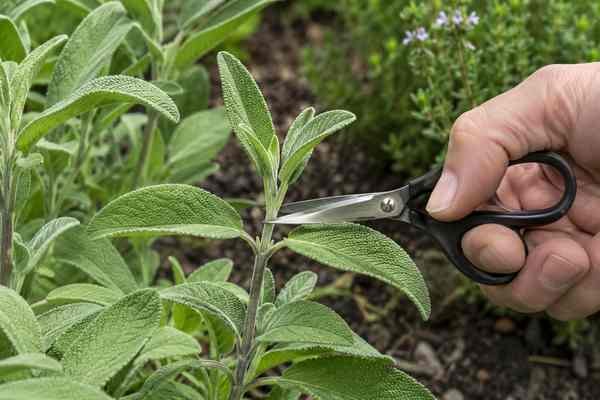
Use clean scissors and rinse leaves under running water before preparing them, following FDA produce advice. For surplus leaves, our herb drying guide covers drying and storage.
Frequently asked questions
Can sage and oregano share a windowsill?
Yes, if both receive enough light. Separate pots let you water each according to its needs. See our indoor oregano guide for its care routine.
Can sage stay indoors through winter?
It can, but expect slower growth if light is weak. Take fewer leaves, check the mix before watering and consider supplemental light if new growth stretches.
Can I move the pot outdoors in spring?
Yes. Let it adjust to outdoor sun and wind gradually and protect it from unsuitable weather while it acclimatises.
Give a young culinary sage plant the brightest spot you have, a draining pot and time to settle. Let new growth tell you how much to harvest.