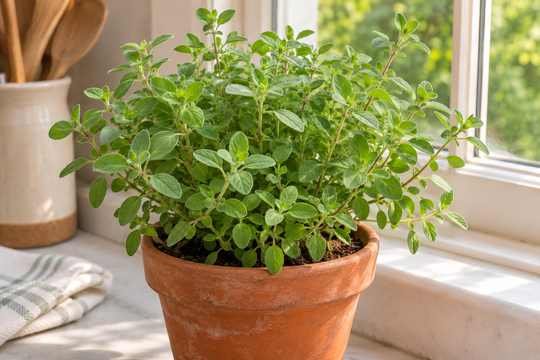
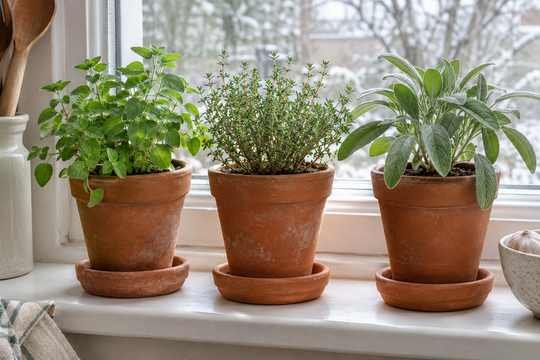
Oregano vs Thyme vs Sage: Which Herb Fits Your Windowsill?
Choose culinary thyme if you want small sprigs from a low-growing plant, oregano if you often cook tomato dishes, and common sage if you use a few larger leaves and have room for its growth. All three need strong light and freely draining roots. For oregano vs thyme vs sage on a small windowsill, start with the herb you already cook with and can give a suitable spot.
This is a buying decision guide for a single indoor pot, rather than a shared-planter design. Use labelled culinary plants: oregano, common thyme and common sage. A familiar fragrance is not enough to identify an unknown plant for eating.
The quick choice
| Your priority | Consider | What to check first |
|---|---|---|
| Small sprigs for soups and roasted vegetables | Culinary thyme | Enough light reaches its low foliage |
| Leafy tips for tomato dishes and pizza | Culinary oregano | The label identifies a culinary variety |
| A few larger aromatic leaves | Common sage | Room for a spreading, eventually woody plant |
None is a dependable low-light crop. If your only space is a dim shelf, solve the lighting problem before choosing among these herbs. Buying the smallest plant does not reduce its need for light.
Choose by your real cooking habits
Oregano: useful when you want leafy tips
Choose oregano if tomato sauces, beans and Mediterranean-style vegetables are frequent meals. Greek culinary oregano is commonly selected for its robust flavour, but oregano labels cover different species and cultivars. Buy for the intended culinary use rather than attractive foliage alone. Snip small leafy tips and leave a leafy framework to recover. The oregano indoor care guide covers plant selection and routine care.
Thyme: useful when a little goes a long way
Thyme provides small leaves along slender stems. A few green tips can suit soups and roasted vegetables without requiring a large handful. It can fit a modest pot, but compact size should not be confused with tolerance of shade. Keep the centre open enough to inspect and avoid repeatedly cutting into bare woody stems. Read the thyme indoor care guide before deciding where it will live.
Sage: useful for occasional larger leaves
Common culinary sage, Salvia officinalis, makes larger aromatic leaves and can eventually occupy more space than a small starter pot suggests. Choose it if you regularly use a few sage leaves with vegetables or other food. A tiny new plant cannot replace heavy picking quickly, especially indoors in winter. The sage indoor care guide explains light, watering and modest harvesting.
Compare the windowsill before comparing the pots
Look at where direct light falls over the day. Curtains, buildings and the window frame can shade a plant even when the room feels bright. A low thyme plant may receive different light from a taller sage on the same sill. Keep foliage clear of cold glass and avoid hot radiators beneath the pots.
If new stems stretch and leaf spacing increases, reassess light rather than feeding more. Use a suitable fixture according to its maker’s distance instructions; our herb grow-light setup guide covers placement and timers. Indoor winter harvests may remain modest even with attentive care.
Make a simple first-purchase plan
1. Pick one culinary use
Choose the herb you already buy most often. This gives the plant a practical purpose without expecting one pot to supply every meal.
2. Check the plant, not just the label
Look for healthy new growth, inspect leaf undersides and avoid a pot sitting in water. Keep a new plant apart from existing herbs while checking for pests.
3. Give it its own draining pot
A separate container lets you judge moisture and move the plant without disturbing others. Do not add stones beneath the mix as a substitute for drainage holes. Water as needed and let excess drain away.
4. Delay heavy harvesting
Allow the plant to settle and resume active growth. Start with a small picking, then watch replacement growth before taking more.

Water, mix and feeding: what changes after you buy
Use a free-draining container potting mix and a pot with open outlets. In the UK, choose a suitable peat-free potting compost; in the US, look for a mix intended for containers. A firm garden soil can compact in a small pot. Our container drainage guide explains why an outlet is essential even when a pot looks dry on top.
Check the upper mix and the pot’s weight before watering. These herbs generally benefit from letting the mix dry slightly between waterings, then watering thoroughly and allowing surplus water to escape. Do not leave the inner pot sitting in a decorative cachepot full of water. A small thyme plant, a leafy oregano and a root-filled sage pot can dry at different speeds on the same day.
Feed lightly when plants are actively producing new growth, after considering any fertiliser already included in the mix. Follow the product’s edible-container directions. In a dim US or UK winter, slow growth is a reason to review light and watering before adding nutrients. Iowa State Extension’s indoor herb guide recommends separate containers and restrained feeding, with no winter fertilising in its seasonal routine.
Seed or young plant, and what to do in winter
For a first windowsill, a healthy young plant is usually the simplest starting point. Oregano, thyme and sage can be raised from seed, but germination, variety and the time to a usable plant differ. Check the packet rather than applying one sowing depth to all three. Named cultivars may be best purchased as plants so you know what you are getting.
In both the UK and northern US, short winter days often limit replacement leaves. Supplemental light can help, but a warm room alone will not compensate for weak light. Southern US homes may receive stronger winter sun, while hot glass and dry heating airflow still need attention. If plants spend summer outdoors, check local frost conditions and acclimatise them gradually when moving them.
Inspect new growth and leaf undersides for aphids, mites or other pests. Isolate a suspect pot and identify the problem before treating edible leaves. Harvest small green tips with clean scissors and leave foliage to recover; avoid severe cuts into bare wood. Rinse picked herbs under running water before cooking. The RHS thyme guide and sage guide are useful for species-specific pruning and seasonal care.

What the comparison cannot promise
The RHS Mediterranean herb container guide groups these herbs by broadly compatible growing conditions. That does not mean they dry at identical rates in separate indoor pots. Container size, mix, root mass and light change how quickly each plant uses water.
A single starter plant is also not a guaranteed year-round grocery replacement. Judge success by healthy new growth and useful occasional pickings. If a herb struggles in your actual light, changing the variety without changing the conditions may repeat the problem.
Frequently asked questions
Which is easiest for a beginner?
There is no universal winner. A healthy culinary plant that matches your light and cooking needs is a better start than choosing by an “easy herb” label.
Can I swap the leaves in recipes?
The flavours differ. Follow the recipe or use a cautious amount suited to the dish; this growing comparison does not treat them as equal substitutes.
Should I buy all three together?
Only if you have enough suitable light and can check each pot separately. Start with one if the windowsill is untested.
Choose the herb you can support
For oregano vs thyme vs sage indoors, the useful decision is a culinary match backed by enough light, drainage and restrained harvesting. Start with one well-labelled plant, learn how its pot dries and expand only when the space supports healthy growth.