
Growing Cucumbers in Containers: From Planting to Picking
For growing cucumbers in containers, start with one outdoor variety in a draining pot of about five US gallons (19 litres) or more. Give it a sunny, sheltered position, wait until conditions are warm and keep the potting mix evenly moist once fruit starts developing. A compact variety is easier to fit on a narrow patio. A short trellis can make a vining variety easier to reach and pick.
Decide where the mature plant will go before buying seed. There should be room to water the pot, reach both sides of the foliage and keep the growing tips out of a walkway. A label that says “mini” can refer to fruit size, so check the expected vine length as well.
Choose the variety and container together
Check three things on the packet: whether the plant is suitable outdoors, how far it spreads and whether it needs pollination. The RHS cucumber guide distinguishes outdoor and greenhouse types. Choose for the conditions you can provide, rather than assuming a greenhouse cucumber will perform the same way on an exposed balcony.
| Type | When it fits | Check before sowing |
|---|---|---|
| Compact bush | A low pot where a tall support would obstruct access | Actual spread and whether short support helps |
| Outdoor vining | A sunny corner with a stable vertical support | Mature height and exposure to wind |
| Parthenocarpic | A suitable cultivar where pollinator access may be limited | Outdoor suitability and the breeder’s pollination instructions |
The RHS recommends a container at least 30 cm (12 inches) wide and deep. Colorado State Extension uses five US gallons as a minimum for cucumbers. Width, depth and volume describe different things: a strongly tapered pot may hold less mix than it appears to. Use those guides to choose a roomy container, particularly if hot weather or missed watering is likely.
Pick a pot with open drainage holes and a base that will stay steady as the vine gets heavier. Fill it with a loose vegetable potting mix or peat-free multipurpose compost. See our container potting mix guide for choosing a bag. Avoid filling the bottom with stones; they take up growing volume without fixing poor drainage.
Sow when the potting mix is warm
Cucumbers are tender. The University of Minnesota Extension advises direct sowing after frost risk has passed and soil is at least 70°F (21°C) an inch below the surface. A sunny afternoon can warm the top of a pot while the deeper mix and overnight air stay cold. Check conditions over more than one day if the forecast is unsettled.
In cooler parts of the US, outdoor sowing is often a late-spring decision; warmer regions may have earlier or additional windows. The RHS describes late May or early June for outdoor direct sowing in milder UK locations. These are examples, not dates for every patio. The Garden Planner offers broad estimates; check your local frost forecast and the seed packet before planting.
Direct sow into the final pot at the packet depth. Minnesota Extension uses about half an inch for garden sowing; follow the cultivar directions if they differ. If several seedlings emerge in one pot, keep the strongest and snip the extras near the surface instead of pulling them through the retained roots.
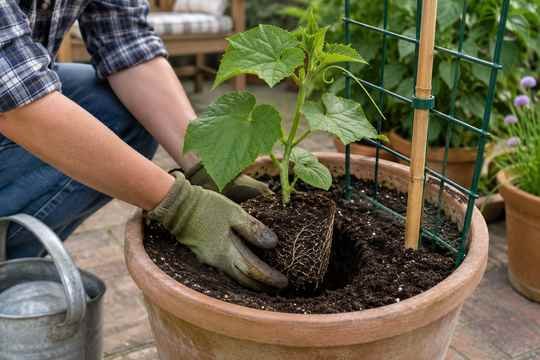
For a short growing season, start one seed per small pot indoors a few weeks ahead. Gradually acclimatise plants to outdoor light and wind before moving them out permanently. Water the seedling first, slide out the intact root ball and set it into the prepared mix at its previous depth. Do not tease apart cucumber roots just to make the plant look tidier.
Support the vine before it sprawls
Fit the support at planting time, while it is easy to avoid the root ball. A compact cultivar may only need a low frame. For a vining plant, choose sturdy mesh or another support that lets tendrils grip and leaves space to reach the fruit. Our container trellis guide covers the support options and stability checks. If your remaining sunny spot fits only one upright plant, consider growing sweet peppers in a separate pot.
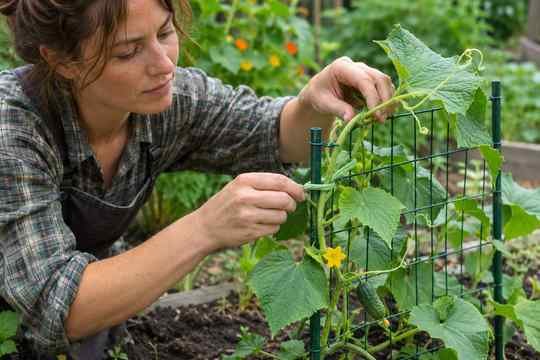
Guide flexible new growth towards the frame. Where a tie is needed, leave room for the stem to thicken and check it as the vine grows. Do not force a stiff stem through a small opening or let a developing cucumber wedge itself in the mesh. Keep pots and supports inside the balcony edge, and check building rules before adding heavy containers.
Keep water steady through flowering and fruiting
Feel the mix beneath the surface and water when it is beginning to dry. Soak the root zone evenly until excess drains out, then empty a full saucer. A fruiting plant in wind or heat can need daily checks. A recently transplanted seedling in a large, cool pot may need much less water.
Water at mix level so the foliage dries readily. If water races down the gap between dry mix and the pot wall, apply it in slower passes and check that the centre has moistened. Our container watering guide explains how to adjust your checks for weather and pot material.
Check whether the mix already contains fertiliser before feeding. Once its starter charge is used up, a feed labelled for fruiting container vegetables can support active growth. Follow its rate and timing. Feeding a wilted, waterlogged or cold plant more often will not correct the underlying problem.
Check flowers before diagnosing poor fruit set
On many outdoor cultivars, the first flowers are male and fall without producing fruit. Female flowers have a small cucumber-shaped ovary behind the petals. If your cultivar needs pollination, make sure insects can reach the flowers; remove an insect-excluding cover at flowering. If the label says fruit develops without pollination, follow that cultivar’s instructions rather than hand-pollinating as a routine.
| What you notice | What to check first |
|---|---|
| Flowers but no tiny cucumbers | Are they all male so far? Check the variety and wait for female flowers. |
| Small fruit stops growing | Review pollination needs, water swings and recent cold or heat. |
| Wilting with wet mix | Check drainage and roots before adding water. |
| White coating or spotted leaves | Identify the symptom before treating; inspect both leaf surfaces. |
Harvest while the fruit is tender
Use the packet’s picking size, which differs for snack, slicing and pickling cucumbers. Check under the foliage frequently, support the fruit and cut its stem cleanly rather than yanking the vine. Wash under running water before cutting or eating, following FDA produce guidance.
Frequently asked questions
Can two cucumbers share a five-gallon pot?
One plant is the more manageable starting point. Two plants compete for root space and moisture; use a substantially larger planter and the variety’s spacing guidance if you want several.
Will a cucumber grow without a trellis?
A bush type can spread over a clear area. A vining type may also trail, but it needs space away from foot traffic and the fruit can be harder to spot.
Why is the pot drying out so fast?
Check the mix volume, wind exposure and whether water reaches the middle of the root ball. A larger container and a more sheltered position can make moisture easier to manage.
Start with one suitable plant. Give it a warm start, a stable pot and enough space to reach the leaves and fruit. Then let the plant’s growth and the weather guide your watering.