
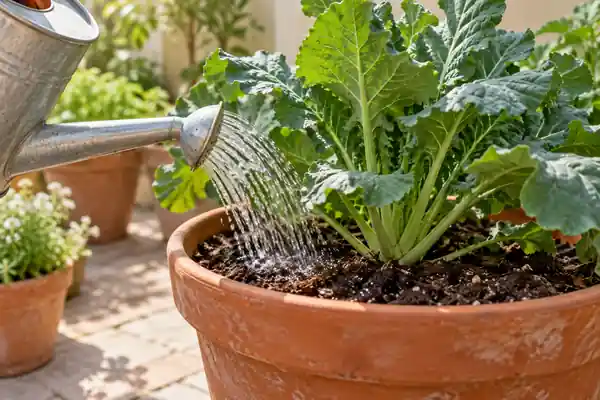
Watering Container Plants: Checks Before Choosing Tools
Watering container plants is easier to manage when you check the growing mix and the individual plant before reaching for the watering can. Pot size, crop, weather and position all affect moisture, so a single schedule will not suit every container.
Research-based beginner guide. Equipment categories below are planning options, not tested product recommendations.
Check moisture before watering
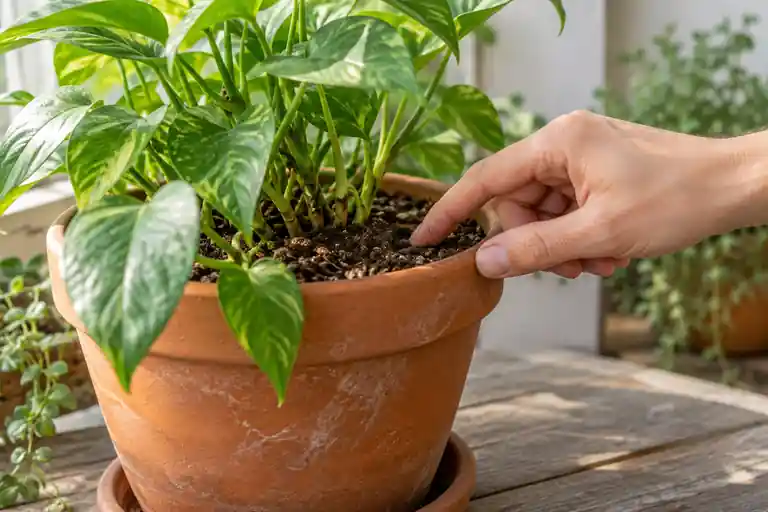
The RHS recommends checking each container’s moisture rather than watering automatically. Look beyond the surface when assessing the growing mix. During warm or windy conditions, containers may need more frequent checks; checking does not mean every pot needs water each time.
Keep a short note of what you find: which container, whether the mix feels moist or dry, recent weather and any plant changes. This helps you recognise a pattern before setting up equipment.
Understand your container’s drainage
Check how water leaves an ordinary pot and whether drainage holes are clear. If a plant sits inside a decorative outer container, make sure you can remove or drain unwanted water. A self-watering pot is a different system, with a reservoir and its own instructions.
The setup should be easy to inspect. If watering requires lifting a heavy pot or reaching around unsafe obstacles, improve access before relying on a more complex system.
Choose tools around a specific problem
- Watering can: useful when you can reach a small number of pots and inspect them individually.
- Soil moisture meter: consider it as an aid to observations. Check the intended growing medium, instructions and maintenance; a reading should not replace understanding the plant.
- Self-watering pot: check reservoir access, overflow arrangements, crop suitability and how easily you can monitor the system.
- Drip irrigation or automatic watering: check the water source, tubing layout, adjustment options and maintenance before committing.
These are questions to investigate, not a claim that every garden needs all four tools. Begin with the simplest setup you can use consistently.
Before leaving plants unattended
Test any planned watering arrangement while you are still available to inspect it. Record what reaches each pot and what the growing mix looks like afterwards. Recheck after changing the layout or settings, and arrange someone to inspect the plants when the consequences of a failure would matter.
Do not assume that a timer, reservoir or battery makes a system maintenance-free. Follow manufacturer guidance and plan for the practical conditions in your own space.
Make your care record useful
Try recording one observation before watering and one afterwards. Include the crop, pot size and weather, rather than just a date. If several plants struggle, those details make it easier to separate a setup issue from the needs of one particular crop.
For a new garden, start with our container vegetable planning guide or the windowsill herb setup guide. Our Start Here checklist connects the main decisions.