Growing Lettuce Indoors: Light, Sowing & Leaf Harvests
Growing lettuce indoors works best when you plan for small, repeatable leaf harvests rather than a windowsill full of large heads. Start with a suitable loose-leaf variety, a drained container, fresh growing mix and enough light to produce healthy leaves. Keep moisture consistent and leave the growing centre intact when picking individual outer leaves.
This guide uses potting mix and containers for loose-leaf or baby-leaf lettuce. A hydroponic system has different nutrient and equipment requirements; our indoor growing system comparison helps if you are choosing between those routes.
Choose the lettuce and harvest stage first
Choose seeds labelled for leaf lettuce or baby-leaf harvest, and keep the packet for spacing, sowing depth and variety details. Green and red loose-leaf types can both make useful small plantings. A mixed packet may contain crops with different growth rates, so a single lettuce variety makes a first attempt easier to monitor.
The RHS lettuce guide describes loose-leaf types as suitable for picking individual leaves and growing in small spaces. Head-forming varieties need room to develop their full shape and generally take longer. Decide whether you want young leaves or a mature head before choosing the planter.
| Growing goal | What to choose | What changes? |
|---|---|---|
| Individual leaf picking | A suitable loose-leaf lettuce variety | Leave room for each rosette and keep its centre intact |
| A baby-leaf crop | Seeds sold for young salad-leaf harvest | Harvest younger and thin for the intended crop stage |
| A compact lettuce head | A named small heading variety | More growing room, adequate root space and longer care |
Baby-leaf lettuce has developed true leaves and is grown beyond the earliest seedling stage. For the earlier seedling harvest, see our guide to growing microgreens at home. Keep those projects distinct rather than assuming one shallow tray, spacing pattern and harvest method suits both.
Provide light across the whole planter
A bright window may work for a small crop, but inspect the sunlight reaching every part of the planter. Curtains, buildings and shorter winter days can reduce it. A plant on the far side of a shelf may receive much less light than the one beside the glass.
Illinois Extension’s indoor lettuce guidance discusses bright windows and supplemental lighting during winter. Its fluorescent-light example runs for 14–16 hours daily. For a modern fixture, follow its coverage and distance guidance, use a timer and allow a dark period rather than leaving it on continuously.
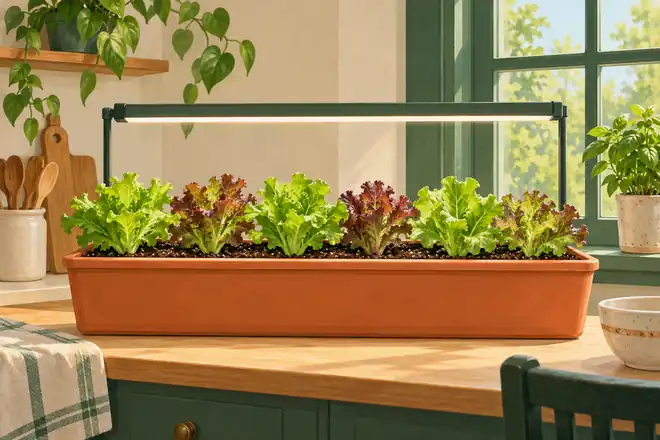
Position the light so it covers the leaves, then adjust as the plants grow. Long, thin seedlings leaning strongly toward light are a reason to reassess the setup before feeding more. The Illinois indoor kitchen-garden guide explains that light intensity, duration and quality all matter; a timer alone cannot compensate for a poorly positioned lamp.
Choose a container that can grow the crop
Measure usable growing depth and width rather than the decorative outer dimensions. A seed-starting cell is a temporary home, not automatically a suitable final planter. A broad container can make leaf picking easier, provided you can reach the plants and lift or drain it safely.
For full-sized transplanted lettuces, the RHS suggests a large container at least 30 cm (12 inches) wide and deep. That is a different growing goal from a young baby-leaf crop in a smaller planter. Choose depth and plant numbers for your intended harvest instead of applying one tray size to every method.
Use drainage holes with a removable collection tray. Empty excess water so the roots do not stay submerged, and keep electrical connections away from spills. Our container drainage guide explains ordinary outlets and reservoir overflows.
Choose fresh commercial growing mix suitable for containers, or seed-starting mix for the initial sowing stage. Avoid dense garden soil in an indoor planter. University of Maryland’s indoor baby-greens guidance explains growing media and the difference between baby greens and microgreens. Our potting mix guide helps with US potting-mix and UK potting-compost labels.
Sow and establish lettuce in four stages
1. Moisten the mix and sow lightly
Moisten the growing mix as directed and fill the planter, leaving watering space below the rim. Scatter or sow seeds evenly, following the packet’s shallow sowing depth. Avoid dropping a dense pile in the centre and hoping later watering will distribute it.

2. Keep the sowing moist until emergence
Use gentle watering that does not wash seeds into one corner. Check the surface regularly without flooding the container. If the sowing instructions call for a cover, remove or ventilate it as appropriate once seedlings appear; do not leave emerging plants sealed in a damp enclosure indefinitely.
3. Thin for the harvest you want
Young leaves and mature heads have different spacing requirements. Follow the variety and planned harvest stage instead of copying a tightly packed microgreen tray. Clip unwanted seedlings carefully where pulling them would disturb neighbouring roots.
University of Minnesota’s lettuce guidance distinguishes baby-leaf and full-size spacing. That difference is useful for planning a container too: choosing a young-leaf crop does not mean allowing unlimited crowding.
4. Maintain light and regular checks
Inspect leaf growth, moisture and air space as seedlings develop. Move the lamp or thin where necessary. Keep a note of sowing date and variety, then judge harvest readiness by the actual leaves rather than a guaranteed number of days.
Water and feed without stressing the roots
Aim for consistently moist growing mix with free drainage. Check before watering; a small planter may dry quickly, while a cool, poorly lit one may stay wet longer. Gentle watering at the growing mix is easier to control than spraying the foliage every day.
Let unwanted water drain and empty the tray. Our container watering guide provides a practical checking routine. If mix has dried and water runs through a gap at the edge, re-moisten it carefully rather than assuming the roots received enough.
Check the growing mix’s nutrient label before adding fertiliser. Follow a product suitable for edible container crops and its indoor-use instructions. Seedlings in a low-nutrient starting mix and established plants in a pre-fed potting mix will not necessarily need the same treatment.
Harvest leaves while protecting new growth
For individual leaf picking, take a few useful outer leaves from an established loose-leaf plant, leaving its central young leaves to continue growing. Use clean scissors and avoid damaging the growing centre. Harvest lightly from each plant rather than stripping one rosette bare.

A baby-leaf crop can also be cut as a batch according to its growing instructions. Subsequent growth depends on the crop, cut position and conditions; it is not an endless harvest. Start a replacement sowing while the first container is productive if you want a more dependable sequence of small crops.
Check heat, bolting and weak growth
Lettuce is a cool-season crop. A hot room, radiator or overheated sunny window can make growing conditions harder to manage. Maryland Extension’s lettuce guide explains how heat and changing day length can encourage bolting and bitterness. Reassess the position when a central flowering stem develops; extra water will not turn a bolting plant back into a young crop.
- Thin, leaning seedlings: check light coverage and crowding.
- Wilting: check moisture first; dry and persistently wet roots can both cause trouble.
- Seedlings collapsing at the base: review drainage, crowding and cleanliness; remove affected plants and seek specific advice if it continues.
- Sticky or damaged leaves: inspect undersides and identify pests before choosing a treatment suitable for edible crops.
Keep a manageable planting while learning. For an outdoor alternative with different sunlight and exposure, see our balcony vegetable garden ideas. Browse the Container Vegetables guides for more crop and container decisions.
Frequently asked questions
Can lettuce grow indoors without a grow light?
Yes, when the window supplies enough light for healthy leaf growth. Check the actual position and season. Supplemental lighting may help when winter daylight or shading limits the crop.
How long does indoor lettuce take to harvest?
It depends on variety, harvest stage and growing conditions. Use packet timings as a guide, then wait for leaves of useful size and healthy growth. A large head usually needs longer than a young-leaf crop.
Will harvested lettuce keep growing?
Suitable leaf types can produce further growth when their growing centre remains healthy. Repeated cuts eventually lose quality or productivity, so plan replacement sowings rather than relying on one container forever.
Can I regrow a full lettuce crop from a supermarket stump?
A stump may produce some new leaves, but that is different from establishing a full crop from suitable seed or young plants. Use a proper growing setup when your goal is reliable indoor leaf production.