How to Propagate Basil from Cuttings in Water or Soil
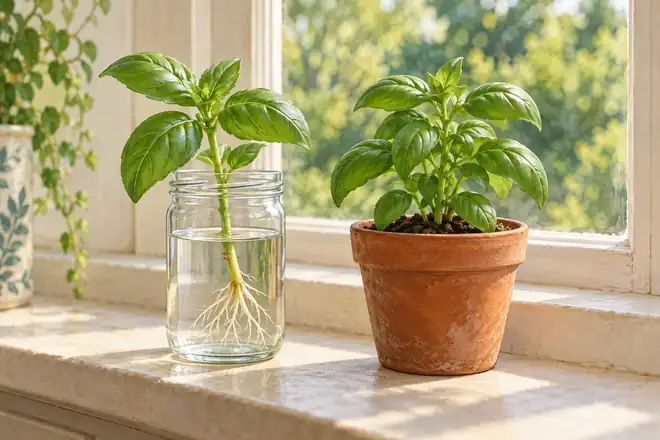
To propagate basil from cuttings, take a healthy non-flowering stem, remove its lower leaves and stand the bare lower stem in clean water. Once several roots have formed, move it into a small pot of fresh potting mix with drainage holes. You can also root basil directly in a moist growing medium.
This guide follows the cutting from the parent plant to its first pot. For light, feeding and ongoing harvests after it settles in, see our guide to growing basil indoors.
Water or soil: which method should you choose?
Water makes the developing roots visible, so it is a useful first method if you want to watch progress. Direct rooting in potting mix keeps the cutting in its growing medium from the start, but roots are harder to inspect. The RHS basil guide confirms that both methods work. Choose the one you can check consistently.
A jar of water is a rooting setup, rather than a complete long-term feeding plan. This article ends with a potted plant. If you want to grow herbs in a managed hydroponic system instead, our indoor garden systems guide explains the equipment and ongoing care involved.
What you need
- A healthy basil plant with a tender, leafy shoot that is not flowering.
- Clean, sharp scissors or pruning snips and a clean jar.
- Fresh water for the water method.
- A small nursery pot with drainage holes and fresh potting mix for transplanting.
- A bright, warm indoor spot out of harsh direct sunlight while roots develop.
Gather everything before taking the cutting so you can put it straight into its rooting setup. Illinois Extension recommends clean tools, containers and healthy material for propagation. Do not take cuttings from a plant showing pests or disease.
Step 1: choose and prepare a basil cutting
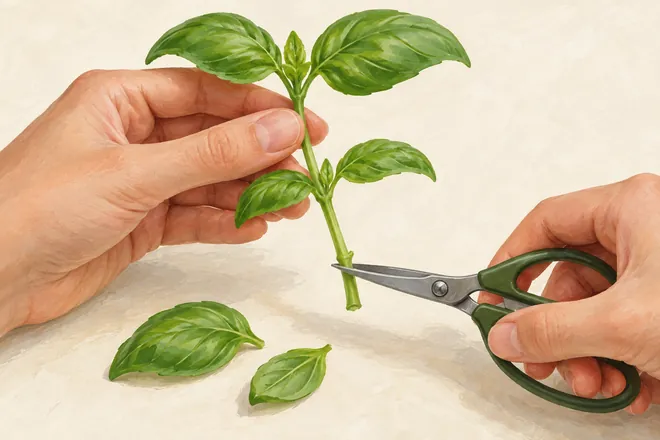
Pick a flexible green shoot rather than a tough old stem. A cutting about 3–5 inches (8–13 cm) long with a few leaves is a practical starting point, consistent with Illinois Extension’s general tip-cutting guidance. Identify the nodes: the places where leaves join the stem. You need a stem section, not just a loose basil leaf.
There are two cuts to think about. When removing a shoot from the parent plant, leave a pair of leaves on the parent below the cut. University of Minnesota Extension advises cutting harvested stems above a leaf pair so the remaining plant can regrow. Then prepare the detached cutting by trimming its bottom just below a lower node.
Remove lower leaves that would sit in water or beneath the potting mix. Keep a small amount of healthy foliage at the top and remove any flower buds. Check that the remaining stem is intact; a crushed base is a reason to prepare a fresh cutting.
Step 2: root basil cuttings in water
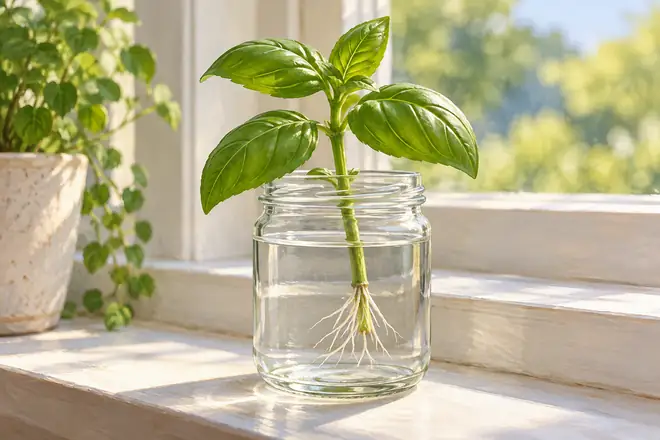
Place the cutting in a clean jar. Add enough water to cover the bare lower stem and a lower node while keeping every remaining leaf above the water. Use a jar that holds it upright without squeezing the stem. Start with a small number of cuttings so you can inspect each one easily.
Set the jar in bright, indirect light rather than hot direct sun. Replace the water every 3–5 days as a starting routine, following Illinois Extension’s water-propagation guidance, and sooner if it becomes cloudy. Check the water level between changes so the lower stem does not dry out.
Use those checks to look at the whole cutting: is the foliage holding up, is the stem firm, and are roots appearing? If a leaf falls into the jar, remove it. A simple daily glance is more useful than leaving the setup untouched until a promised rooting date.
How long do basil cuttings take to root?
Allow a few weeks for rooting and potting rather than expecting every cutting to finish on the same day. The RHS describes potting water-rooted basil after a few weeks. Warmth, the condition of the shoot and the indoor growing spot all affect progress. Treat a calendar reminder as a prompt to inspect roots, not a guarantee that they are ready.
Look for several developing roots, rather than one tiny white bump. Illinois Extension’s general cutting guidance uses roots about 1 inch (2.5 cm) long as a transplant indicator. That is a useful reference point, not a requirement to measure every root precisely. Prepare the pot before lifting the cutting from water.
Step 3: transplant rooted basil into a pot
- Fill a small pot with fresh potting mix and moisten it. Let excess water drain before planting.
- Make a hole wide enough to receive the roots without forcing them through compacted mix.
- Lift the cutting carefully, guide the roots into the hole and keep its leaves above the surface.
- Gently settle the mix around the roots. Water to settle it, let the pot drain and empty collected water from the saucer.
Use a container that actually drains. Minnesota Extension recommends bottom drainage holes for basil containers. A decorative outer pot can hold the nursery pot, but it should not leave the roots sitting in collected water. Our container drainage guide explains how to check that arrangement.
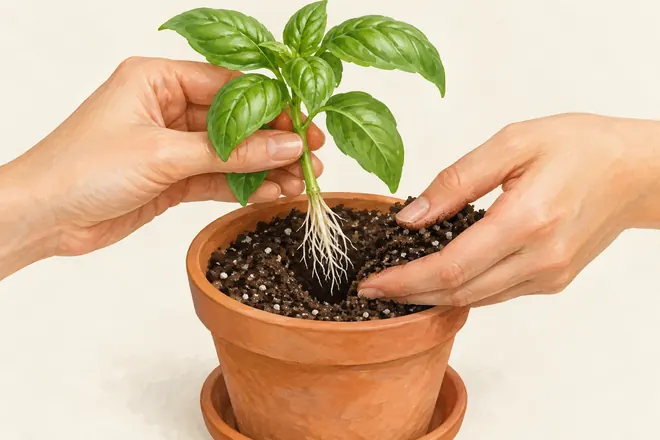
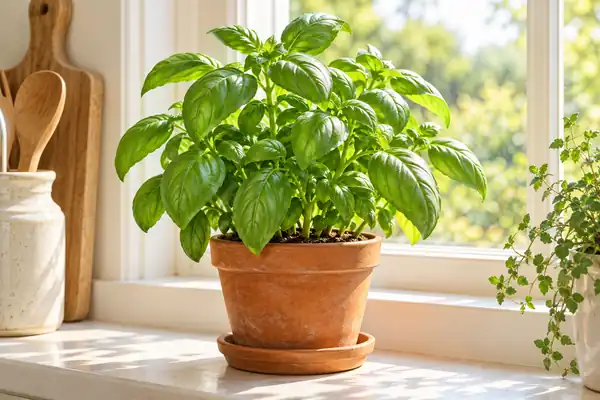
Keep the new transplant in bright, indirect light while it adjusts. Check the mix regularly and keep it moist without making it constantly soggy. Avoid immediately moving a newly potted cutting onto a hot outdoor balcony. Once it is established and growing, follow the brighter-light care described in our basil growing guide.
Can you propagate basil directly in soil?
Yes. Prepare the same kind of leafy stem cutting, then place its bare lower section in pre-moistened rooting medium. Make the planting hole first and gently firm the mix around the stem. Keep leaves clear of the surface. The RHS lists direct rooting in compost as an alternative to water. Here, “compost” means suitable potting compost, rather than putting a cutting into unfinished kitchen compost.
Illinois Extension’s propagation guidance recommends bright, indirect light and evenly moist, well-aerated rooting media. A clear cover can help maintain humidity around soil-rooted cuttings; ventilate it as needed and keep it out of direct sun. Check the medium before adding water, since a covered pot may dry more slowly.
Avoid repeatedly pulling the stem out to look for roots. Watch for sustained new growth and allow time for establishment before treating it as a harvest-ready plant. For the differences between container mixes and garden soil, see our potting mix guide.
Common basil propagation problems
- Wilted foliage: check that the lower stem is in water or the rooting mix is moist. Also check for hot direct sun. If the whole cutting continues to collapse, start again with healthy material.
- Cloudy water: replace it, clean the jar and remove any submerged or fallen leaves. Inspect the stem rather than simply adding more water.
- A dark, soft or collapsing stem: discard the affected cutting, clean the container and restart. Taking another cutting from a visibly unhealthy parent plant is unlikely to solve the underlying problem.
- No visible roots yet: review the growing spot and cutting condition. A firm green cutting may need more time; a declining cutting is a reason to start a fresh one.
- Yellowing after potting: check drainage, moisture and light before reaching for fertilizer. Yellow leaves alone do not identify the cause.
Aftercare and the first harvest
Basil needs warmth. Illinois Extension notes that cold can damage basil around 50°F (10°C), so protect young plants from cold windows and outdoor weather. A bright-looking room can still provide poor growing light during darker months; our windowsill herb garden guide helps you assess the location.
Begin light harvesting after the plant is established and making new leafy growth. Avoid stripping a small transplant of the foliage it needs to grow. As it becomes larger, regular tip harvesting helps keep it bushy. Remove developing flower buds if your priority is leaves for the kitchen.
Water according to the mix and growing conditions, rather than copying a fixed weekly schedule. Our container watering guide explains the moisture checks to use as the rooted cutting grows into a larger potted herb.
Frequently asked questions
Can you propagate supermarket basil?
You can try a healthy leafy shoot from a living supermarket basil plant. Inspect it first and avoid damaged or diseased material. The RHS notes that supermarket pots often contain overcrowded plants intended for short-term harvesting. Taking a cutting and dividing an overcrowded pot are different approaches; this guide covers cuttings.
Do basil cuttings need rooting hormone?
The RHS water-rooting method does not require it. Start with healthy stems, clean equipment and suitable conditions. If you choose to use a rooting product for a soil method, follow its label and confirm it is suitable for edible plants.
Can a single basil leaf grow a new plant?
Use a leafy stem cutting with nodes for the method described here. A loose leaf is not the equivalent of that cutting. Choose material that includes the stem structure needed to produce a new growing plant.
Can you keep propagating basil all year?
An indoor plant in suitable growing conditions may provide cuttings outside summer, but short days, weak light and cold make success harder. Starting another cutting does not remove those limits or guarantee an endless harvest. Assess the growing space as well as the parent plant.