Growing Cilantro Indoors: Sowing, Light & Harvesting
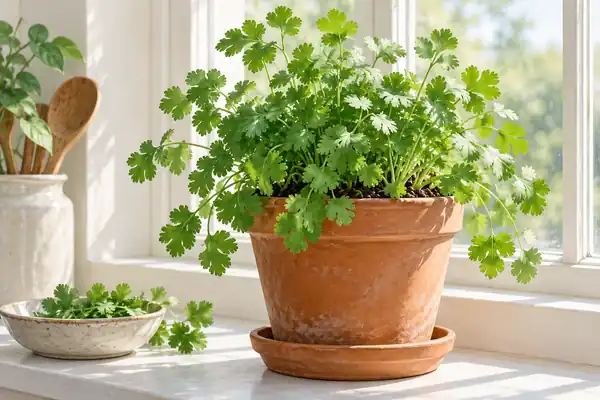
Growing cilantro indoors works best as a series of small crops: sow a pot, give it strong light, harvest lightly, and start another batch before the first flowers. A sunny-looking kitchen alone does not guarantee enough light or a long harvest.
In the US, cilantro usually means the leaves and coriander the seeds. UK gardeners generally call the plant and its leaves coriander. Both names here refer to Coriandrum sativum. If you are planning several herbs, start with our windowsill herb garden guide.
Choose a leafy crop, not a permanent houseplant
Cilantro is an annual. It eventually flowers and sets seed, so one pot will not supply leaves indefinitely. University of Maryland Extension recommends successive sowings every two to three weeks for an ongoing supply. Use that as a starting rhythm, then adjust to the space and leaves you actually use.
For a first attempt, label two small pots with sowing dates. Keep the newer pot growing while you harvest the older one. Choose seed described as slow-bolting for leaf production; this delays flowering rather than preventing it.
Light: a bright window or a grow light
Watch where direct sunlight reaches the leaves over a full day. A nearby window facing a wall or shaded by trees may provide much less light than its appearance suggests. Keep the pot where the foliage receives the light, rather than behind other plants.
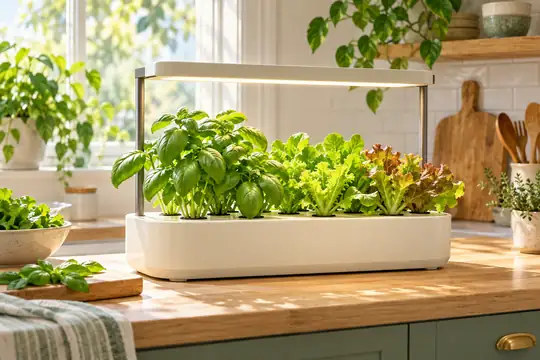
Maryland’s indoor herb guidance suggests a south- or west-facing window with at least five hours of sun. It also recommends supplemental lighting in winter, with grow lights running 14–16 hours daily. These are general herb guidelines, not a promise that every cilantro pot will thrive in every window.
If stems stretch and growth stays weak, improve the light before adding fertilizer. Follow your light manufacturer’s distance guidance and use a timer with a daily dark period. Keep the pot away from radiators and hot air vents; check whether a sunlit sill becomes uncomfortably hot.
Pick a pot with depth and drainage
Use a container with drainage holes and enough depth for roots. Utah State University Extension specifically advises a deep enough container for indoor cilantro and cautions against warm growing conditions near heat sources.
Choose a light, free-draining potting mix suitable for containers. Peat-free potting compost is the usual UK term. Check the bag for suitability for seeds and edible plants. Avoid compacting heavy garden soil into a kitchen pot. A decorative outer pot is useful only if you can remove the inner pot to water and empty the collected water.
How to sow cilantro seeds indoors
The RHS coriander guide notes that coriander dislikes transplanting and treats windowsill growing as a short-term crop. Sow in the pot you intend to harvest from to reduce root disturbance.
- Fill a clean pot with suitable compost, leaving room below the rim for watering. Moisten it so the surface is damp, without standing water.
- Space seeds across the surface and cover to the depth on your seed packet. USU gives a general sowing depth of ¼–½ inch (about 6–13 mm).
- Water gently so you do not wash seeds into one corner. Label the variety and sowing date.
- Keep the compost evenly moist during germination. Check it regularly rather than relying on a fixed watering day.
- Thin established seedlings to avoid a crowded clump. RHS windowsill advice uses approximately 2 inches (5 cm) between seedlings for leaf growing.
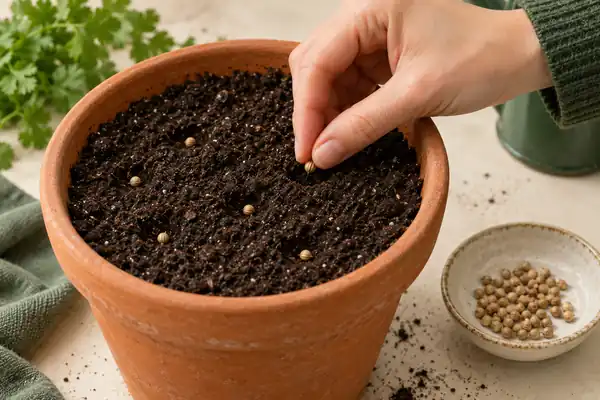
RHS gives roughly two to three weeks for indoor germination. Record when seedlings appear; avoid discarding a pot after only a few days. If the packet gives different directions for your variety, use those.
Water by checking the compost
Cilantro needs moisture while establishing, but drainage remains essential. University of Minnesota Extension places cilantro in the carrot family, whose herbs prefer slightly moist soil with good depth and drainage. Its indoor herb guidance suggests checking about ½ inch below the surface before watering.
Once seedlings are growing, feel the compost and lift the pot to learn how its weight changes. If the surface has dried but the mix underneath is still wet, wait and check again. When water is needed, let excess drain and empty the saucer. Our container watering guide explains these checks in more detail.
Read the potting mix label before feeding: some mixes already contain nutrients. Minnesota advises light feeding for container herbs. Do not use extra fertilizer to compensate for a dark window or persistently wet roots.
Harvest leaves and manage bolting
Maryland suggests picking sparingly once plants are around 4–6 inches (10–15 cm) tall. Snip a few leafy stems with clean scissors and leave enough foliage for continued growth. For a new pot, take a small kitchen harvest first rather than stripping every stem.
Bolting means the plant is moving toward flowers and seed. Heat and dry conditions can shorten its leafy stage. Keep the crop bright but reasonably cool, avoid letting seedlings repeatedly dry out, and sow replacements. Removing emerging flower stems may extend leaf picking, but it does not turn cilantro into a permanent leafy plant.
Check these problems before changing your routine
- Long, pale stems: review light exposure and crowding. Do not start by increasing feed.
- Wilting with dry compost: water, allow drainage, and reassess the window’s heat.
- Wilting with wet compost: check drainage and standing water before adding more water.
- A tall flowering stem: plan the next sowing. Flowering is part of this annual herb’s life cycle.
Frequently asked questions
Can I grow coriander indoors in winter?
Yes, if you can provide enough light and suitable conditions. Short winter days may require supplemental lighting. Start with one pot and judge growth before filling the windowsill.
Will cilantro regrow after cutting?
Light harvesting can allow more leaves while the plant remains in its leafy stage. Do not count on repeated regrowth from a pot cut bare or already flowering; keep another sowing underway.
Can cilantro and rosemary share a pot?
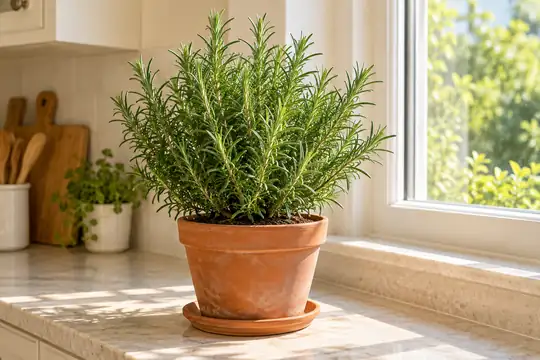
Separate pots make watering and replacement easier. Compare our indoor rosemary care guide before choosing a shared arrangement: each herb needs its own checks.
Explore the Indoor Herbs guides to plan your next crop.