Growing Lemon Balm Indoors: Light, Pot Care and Pruning
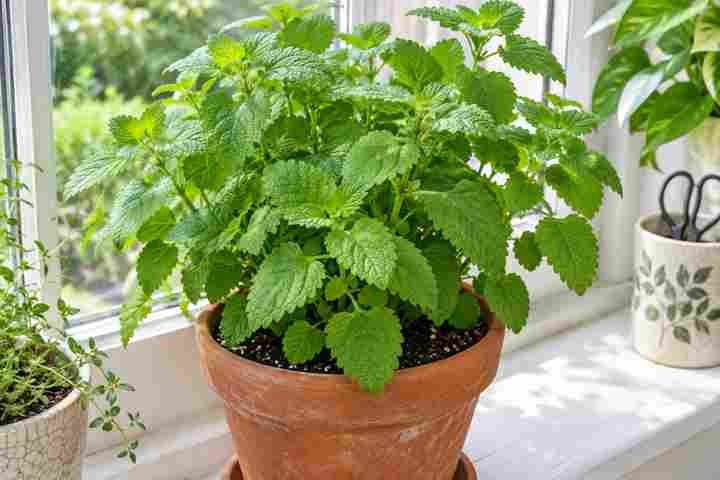
Growing lemon balm indoors is possible when you give the plant strong light, its own draining pot and regular, modest pruning. Start with culinary lemon balm, Melissa officinalis, place it at a bright window or under a grow light and keep the mix lightly moist without leaving the roots in water. Expect a few fresh sprigs rather than a guaranteed year-round supply.
Lemon balm is a perennial garden herb, not a plant that automatically thrives on a dark kitchen shelf. Indoor care works best when you judge new growth: close leaf spacing and fresh tips are more useful signs than simply keeping old stems alive. This guide focuses on a potted indoor plant, including a seasonal move from a patio.
Choose the right plant and a realistic starting method
Buy a labelled edible herb plant or seeds marked Melissa officinalis. Common names can be confusing: lemon verbena, lemongrass and lemon-scented geranium are different plants. Do not identify an unknown leaf for eating by its fragrance alone. A small healthy nursery plant is the quickest route to useful growth; seed is slower but lets you raise just a few plants.
Choose compact, branching growth with clean leaf undersides and no obvious pests. Avoid a plant sitting in saturated compost or tightly wrapped decorative packaging. If you are bringing a garden division inside, check it separately from other indoor herbs first. Cut away dead material and inspect the pot rim and underside for hitchhiking slugs or insects.
Pick a draining pot and suitable compost
For an established plant, the RHS lemon balm guide recommends a container at least 25cm (10in) wide and deep. That is a useful longer-term target. A tiny seedling can begin in a smaller nursery pot, moving up as roots fill it; placing a small root ball straight into a huge wet tub makes moisture harder to manage.
Use a well-drained herb or general potting mix, with a suitable peat-free potting compost in the UK. Potting compost is the growing medium, not a bucket of undiluted garden compost. Keep drainage holes open and use a saucer to protect the sill. If you prefer a decorative outer pot, lift the inner pot out to water and drain it before returning it.
Set the root ball at its previous level and fill gently around the edges. Leave a little watering room below the rim. Water to settle the mix, let excess drain away and avoid pressing the compost into a dense block. Our windowsill herb garden guide helps you arrange pots without crowding the glass.
Use the window’s real light, not the room’s brightness
Start with your brightest practical window, often south- or west-facing in US and UK homes. Observe direct sun over several days and check for shading from buildings, curtains and overhangs. A spot a few steps into a bright room may still be too dim for useful herb growth. Rotate the pot occasionally if growth leans strongly toward the glass.
Winter light is often the limiting factor. University of Minnesota Extension’s herb guidance describes artificial lighting for indoor herbs and warns that inadequate light produces thin growth. An approximately 12-hour supplemental-light routine is a reasonable starting point, adjusted for natural daylight, the fixture and the plant’s response. Leave a dark period each night.
Follow the light maker’s distance guidance rather than borrowing the distance for a different lamp. Long gaps between leaves suggest insufficient light; leaves bleaching or drying near a hot fixture need a closer look at heat and distance. Our indoor herb grow-light setup covers timers and positioning. More fertiliser will not replace missing light.
Sowing lemon balm from seed
Spring is a practical seed-starting season because natural light is improving. Use clean small pots and a fine seed mix. Sow sparingly and cover only very lightly, following the seed packet. Moisten gently so the small seeds stay in place. Keep the pot in a warm, bright position and remove any germination cover once seedlings emerge.
Keep the surface lightly moist while seedlings establish, with enough ventilation to prevent a continuously wet enclosure. Thin crowded seedlings so that each retained plant has room. Use their roots and new growth, not a fixed age alone, to decide when they can move to a larger pot. Raising a few strong seedlings is easier on a windowsill than finding homes for a crowded tray.
Water by checking the mix

Lemon balm prefers moisture with air around its roots. Check just below the surface before watering. If the upper mix is starting to dry and the pot feels lighter, water thoroughly and drain. If it remains damp and heavy, wait and check again. Small pots, heating and sunny windows can speed drying; dim winter conditions often do the opposite.
Do not leave a weekly watering quantity unchanged through the year. A newly repotted plant may use water slowly until roots reach the fresh mix. Drooping can mean dry roots, but also roots struggling in wet compost. Check before reacting. The container watering guide explains why the surface alone can be misleading.
Feed lightly while the plant is actively growing
Read the potting mix label for its initial nutrient supply. When that supply is used and the plant is making new leaves, apply a fertiliser suitable for edible herbs at the labelled container rate. Avoid feeding a dormant, waterlogged or badly stressed plant in an attempt to force a recovery.
Utah State University Extension’s lemon balm factsheet cautions against over-fertilisation and describes moist, well-drained conditions. For a small indoor plant, let healthy growth guide the routine instead of trying to copy a garden-bed feeding schedule. Keep notes on watering, feeding and changes in light so you can adjust one factor at a time.
Prune for branching and harvest fresh tips
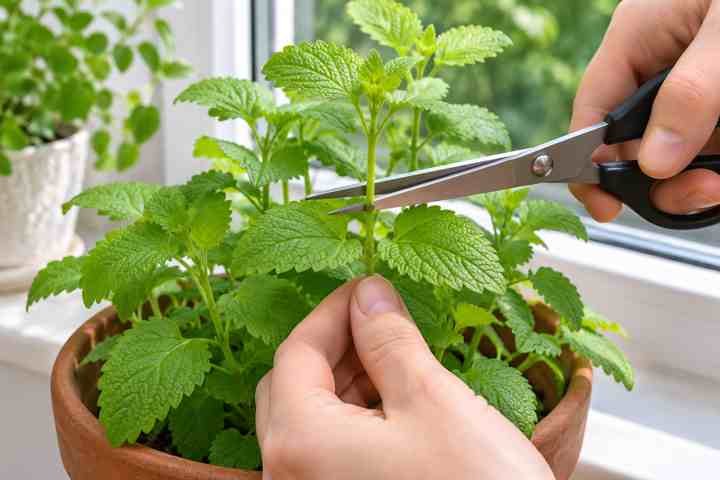
Once the plant is established and producing new growth, snip a small leafy tip just above a pair of leaves. Leave plenty of foliage to support recovery. This encourages a branching shape and gives you tender leaves for the kitchen. Do not strip a weak new transplant simply because a recipe calls for a handful.
Illinois Extension describes pruning to renew lemon balm and opening dense growth for airflow. Keep indoor harvesting gentler when light is poor. Remove flower stems if your aim is leafy growth; if the pot spends summer outdoors, preventing seed formation also helps limit unwanted seedlings. A pot controls root space, but does not stop seeds escaping.
Use clean scissors and harvest healthy leaves. Rinse them under running water before culinary use and pat dry. Add a few leaves to drinks or food for flavour; this gardening guide makes no treatment or health claims. If you have spare leaves, our homegrown herb drying guide explains drying and storage. Discard mouldy material rather than trying to dry it for tea.
Common indoor problems and useful checks
| Symptom | Check first | What to change |
|---|---|---|
| Long stems with widely spaced leaves | Actual light reaching the plant | Move to stronger suitable light; prune lightly after growth improves. |
| Yellowing with damp compost | Drainage and watering frequency | Empty standing water and allow the mix to begin drying. |
| Crisp edges or repeated wilting | Dry root ball, heat or hot glass | Check moisture and move clear of the heat source. |
| Sticky tips or fine webbing | Leaf undersides for aphids or mites | Isolate, identify the pest and use controls labelled for edible herbs. |
| Tiny flies above the mix | Persistent surface wetness | Review watering and follow the fungus-gnat identification guide. |
For small flies, see our fungus gnats in indoor herbs guide before treating. Keep leaves clear of cold glass, radiators and strong HVAC airflow. Brown stems alone do not identify a pest; inspect the whole plant, including roots if deterioration continues. Avoid unlabelled homemade sprays on leaves you intend to eat.
US and UK seasonal care
Outdoors, lemon balm naturally slows and may die back as winter arrives. An indoor pot can also slow sharply when daylight falls; moving it inside does not guarantee uninterrupted harvesting. Reduce water use and pause feeding if growth stops. Keep a resting pot protected from severe drying, but do not keep it constantly wet.
In spring, new shoots are a better cue to resume active care. If moving the plant outside for summer, acclimatise it gradually to stronger sun and wind. In hot regions, afternoon protection may help a container avoid rapid drying. Choose a sheltered position and reassess watering after every move.
Frequently asked questions
Is lemon balm the same as mint?
It is a different herb in the mint family. For this guide, use a labelled Melissa officinalis plant. Similar scent or leaf shape is not sufficient identification for eating an unknown plant.
Can lemon balm survive in a north-facing window?
It may remain alive, but weak light can limit useful leafy growth, especially in winter. Assess new stems and consider supplemental light rather than promising success from window direction alone.
How soon can I harvest a new plant?
Wait until it is settled and actively growing. A purchased plant and a newly germinated seedling are very different starting points. Begin with a small tip and watch how the remaining plant responds.
Can I keep it with other herbs in one pot?
Its vigorous growth makes a separate pot easier to manage indoors. You can still group several separate containers on a tray, while watering each according to its own mix and roots.
Keep the routine small
Start with one labelled plant, give it sufficient light and check the roots’ moisture before watering. Small harvests from healthy new tips make a more sustainable indoor routine than repeatedly cutting back a plant that is struggling to regrow.