Growing Dill Indoors: Sow, Light and Harvest
Growing dill indoors is easiest when you sow a compact culinary dill directly into a deep pot with drainage holes. Give the pot your sunniest usable window or a suitable grow light, keep the mix lightly moist while seeds germinate and pick a few outer fronds once the plant is growing strongly. Sow a second pot before the first starts flowering if you want leaves over a longer period.
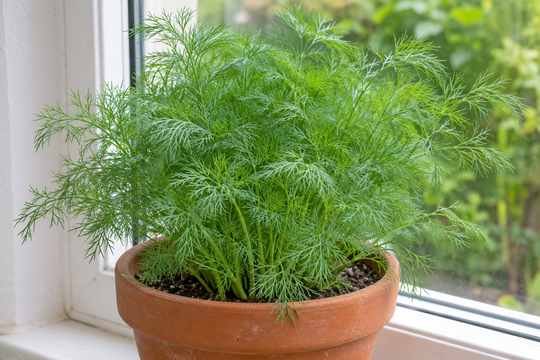
Culinary dill (Anethum graveolens) is an annual grown for its feathery leaves and seeds. For a kitchen shelf, focus on the leaves. A variety sold as compact will usually fit the space better than a tall variety chosen mainly for flower heads or seed. Check the mature height on the packet as well as the word “compact”, because shelves leave less room than an open sill.
Choose a deep pot and start with seed
Dill develops a taproot, so direct sowing in the final container avoids an unnecessary move. Texas A&M AgriLife Extension recommends a deep container with drainage. Choose a pot that can accommodate the roots and remain stable as the stems lengthen, rather than a shallow decorative bowl. If you use a cover pot, take the inner pot out to water and let it drain before putting it back.
Fill it with a loose container mix. In the UK, a suitable peat-free potting compost works; if your mix is coarse, a thin layer of fine seed mix makes it easier to sow small seeds evenly. Moisten it first so you do not have to soak the pot after sowing. Sow at the depth and spacing on the packet and label the pot with its date. A gentle spray or brief bottom watering avoids moving the seeds. Drain the pot afterwards.
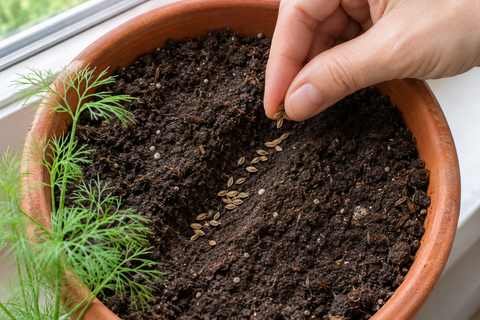
Keep the surface lightly moist until seedlings emerge. Once you can see which seedlings are strongest, thin to the packet spacing for a mature plant. Cut extras with clean scissors if pulling them would disturb the roots you want to keep. Avoid assuming a dense tuft of dill will keep producing for longer. Crowded seedlings are harder to light evenly and compete for the same water.
Give seedlings enough indoor light
Texas A&M suggests at least five to six hours of direct sun for indoor dill. In the Northern Hemisphere, start with the brightest unobstructed window you have, often a south-facing one. Observe where the sunlight actually falls. The room can look bright while an overhang or nearby building shades the pot for most of the day. A sill beside a heater or against cold glass can create a difficult spot even when the light looks good.
If new growth looks thin and leans sharply toward the window, give the plant stronger light. A grow light above the pot helps direct growth upward. Follow the fixture’s distance guidance and use a timer with a dark period. See our grow light guide for indoor herbs for positioning a fixture over a shelf. If a stem already needs support, a loose tie to a small stake can help it stand while new growth adjusts to better light.
The RHS dill guide notes that dill can be sown indoors through the year in a suitable sunny window or warm greenhouse, but better light produces fuller plants. In the UK and northern US, weak winter daylight may justify adding a lamp or waiting for brighter conditions. In warmer regions, watch for the opposite problem: a small pot can dry quickly beside hot afternoon glass. Our windowsill herb garden guide helps you judge a spot before filling it with pots.
Water by feel and keep the foliage airy
After establishment, feel just below the mix surface. Water when it begins to dry and let the pot drain freely. A seedling should not sit in saturated mix, but a tiny root system can also dry faster than you expect. Check new pots more closely than established ones and empty their saucers. See our container watering guide if the surface and root zone seem to dry at different rates.
Check the mix label before adding any fertiliser. If it includes starter feed and the dill is growing well, there is no reason to add more right away. If an actively growing plant in older mix needs feeding, choose a product labelled for container herbs and follow its directions. Weak, stretched stems are a reason to check light first.
| What you see | What to check | First action |
|---|---|---|
| Tall, pale stems | Light reaching the plant and crowding | Move to stronger light and thin crowded seedlings |
| Yellowing with damp mix | Drainage and water sitting in the saucer | Empty runoff and let the mix begin to dry before watering again |
| Tiny flies around the pot | Whether the surface stays wet | Check drainage and follow the fungus gnat guide |
| Flower stalk forming | Whether you want foliage or seed | Start a replacement for leaves, or let this plant flower if you want seed |
Inspect the soft growing tips and undersides of leaves from time to time. If you find clusters of aphids or other insects, separate the pot from neighbouring herbs and identify the pest before deciding on a control suitable for edible plants.
Harvest leaves without taking the growing centre
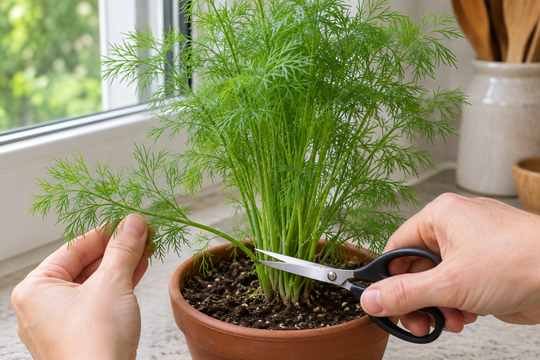
The University of Minnesota Extension dill guide describes harvesting green foliage before the flower clusters open. Use clean scissors to take a few outer leafy fronds, leaving the centre and most of the foliage. If you want leaves only, snipping off an emerging flower stem may extend picking, but an annual plant will still finish its cycle. A succession pot gives you new foliage while the first plant ages.
Rinse dill under running water before use, following the FDA’s produce guidance. Use the leaves fresh or see our guide to drying homegrown herbs if you have more than you can use. Pick only as much as the pot can spare; an indoor plant in weak light replaces leaves slowly.
When you start a second pot, label both with their sowing dates. Keep the older plant in use while the new seedlings establish. If there is room for only one pot under your light, prioritise the new seedlings once the older plant has mostly flowered.
Frequently asked questions
Can I grow dill without a grow light?
Yes, if a sunny window provides enough direct light. Check the plant rather than the room: stems that stretch and lean strongly toward the glass suggest you need a brighter location or a lamp.
Can dill share a pot with other herbs?
Separate pots are easier on a windowsill. Dill needs depth and can shade shorter herbs as it grows. You can group individual pots together while keeping each plant’s watering and space separate.
Will the plant keep producing if I remove the flowers?
Removing a forming flower stem can extend the leaf harvest, but it will not turn dill into a perennial. Start another pot while you still have usable leaves on the first one.
Sow one compact variety in a deep pot, observe the light at leaf level and pick a few outer fronds at a time. If you use dill often, stagger the pots rather than asking one plant to supply the kitchen indefinitely.