Thyme Indoor Care: Light, Watering & Pot Tips
Growing thyme indoors is most reliable with a healthy culinary plant, the brightest suitable window or a grow light, a draining pot and careful watering. Let the mix dry slightly between drinks and harvest small green tips while leaving plenty of foliage. A dim kitchen shelf and constantly damp roots are a poor combination for this sun-loving herb.
Thyme indoor care at a glance
Start with a labelled culinary thyme plant in a freely draining pot. Put light first: use your brightest suitable window or supplemental light when growth becomes weak. Allow the mix to dry slightly before watering and empty collected water. Harvest small green tips while leaving enough foliage to regrow.
Start with common culinary thyme, Thymus vulgaris, or another clearly labelled culinary variety. A small indoor plant is useful for occasional sprigs; heavy, continuous picking needs more vigorous growth and enough light to replace what you remove. For another culinary herb that does well in a bright spot, see our guide to growing oregano indoors.
Start with the right thyme
English and French culinary thymes are common choices. Lemon-scented culinary varieties offer another flavour, but check the botanical label and intended use. Plants sold as decorative ground cover should not automatically be treated as kitchen herbs, especially if their treatment history is unknown.
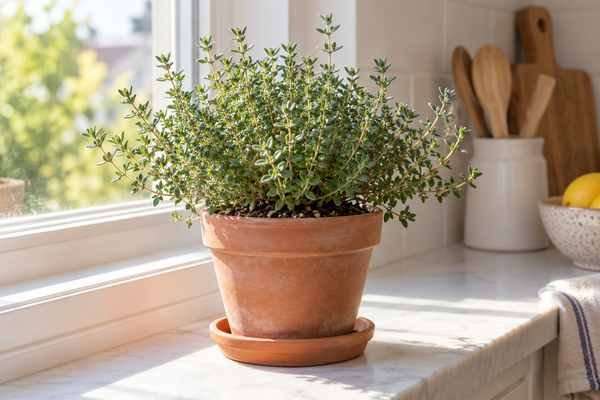
The Illinois Extension thyme guide describes common thyme’s small oval grey-green leaves and woody perennial stems. A healthy plant should have live green growth and firm stems rather than a soggy base or extensive dead patches.
Buying a small established plant is the quickest practical route to light picking. Cuttings and divisions can also work. Seed is slower, and named varieties may not come true from seed. If you want to compare broader setup choices, our windowsill herb garden guide helps you assess the space before filling it with plants.
Give light first priority
Place thyme close to a bright window without pressing foliage against cold glass. In the Northern Hemisphere, a clear south-facing window is often promising, but buildings, trees and the season can change the actual light considerably. Observe the plant’s position across the day rather than relying on the window’s compass direction alone.
Iowa State University Extension identifies light as a major indoor limitation. Several hours of weak winter brightness are not equivalent to strong direct sun. Thin stretched stems and increasingly sparse leaves are reasons to reassess lighting before adding fertiliser.
If daylight is inadequate, use a suitable grow light on a timer. Start with the fixture’s recommended distance and adjust for its output and the plant’s response. Broad indoor-herb guidance commonly uses a 12–16-hour lighting period, leaving a dark interval; there is no single safe distance for every LED.
Our indoor herb grow-light guide explains placement and timer decisions. Keep water away from electrical connections and use equipment intended for the growing environment.
Rotate a window-grown pot periodically so growth receives light from different sides. Keep foliage clear of heating vents and avoid trapping it in a stagnant cluster of plants. Thyme does not need a sealed humid cover once established.
Choose a modest pot and free-draining mix
Use a container with functioning drainage and a removable saucer. Pick a pot that comfortably accommodates the existing root ball, with a little growing room rather than a huge volume of wet mix around a tiny plant. Terracotta can be helpful because it dries more readily, although it still needs moisture checks.
For one plant, the RHS thyme guide gives a container minimum of about 15cm (6in) wide and 10cm (4in) deep. An established larger root ball may require more space. Treat the minimum as a starting reference, not a reason to squeeze a mature plant into a shallow decorative dish.
Use a free-draining formulated potting mix suitable for container herbs. UK gardeners may choose peat-free soil-based container compost with appropriate grit; US bag formulations differ. Read the product instructions instead of assuming that every mix needs the same added sand. Fine, unsuitable sand can make a mixture less useful rather than more draining.
Do not add stones beneath the root ball as a drainage cure. If an outer decorative pot is used, lift the inner pot out to water and empty the collected runoff. Roots should not sit in a hidden reservoir simply because the surface looks dry.

When repotting, support the root ball, settle it at the previous growing depth and fill around it gently. Keep the woody crown above the surrounding mix rather than burying stems. Water enough to settle the new mix, drain thoroughly and reassess moisture before the next drink.
Water by checking the root zone
Check below the surface with a finger and learn how the pot feels as it gets lighter. Water when the upper mix has dried and the root zone is no longer persistently wet. Do not wait for a severely wilted, brittle plant as your normal signal, and do not water merely because another herb needed it.
Apply water slowly to the mix, allowing the root ball to moisten and excess to escape. Empty the saucer afterward. Illinois Extension’s indoor advice is to keep thyme on the drier side; that does not mean giving a tiny splash that leaves most roots dry.
Our container watering guide explains why pot size, light, temperature and growing medium change the interval. An indoor winter plant may use much less water than the same pot outdoors in summer.
If the leaves wilt while the mix remains wet, stop assuming more water is the answer. Check drainage, root condition and lighting. A woody perennial with badly damaged roots may not recover simply because its foliage is misted.
Feeding, winter care and starting from seed
Read the mix’s initial fertiliser supply. During active growth, use a suitable edible-herb or container feed at its label rate if needed. Avoid strong repeated feeding to force growth in low light. For a window-grown plant growing slowly through winter, little or no extra feed may be appropriate until stronger growth returns.
Winter conditions vary. UK and northern US homes may have very short daylight, cold window glass and warm dry air from heating. A southern US window may offer more winter sun but also heat. Adjust to the actual room and plant rather than using one winter watering schedule for both.
If bringing an outdoor pot inside, inspect leaves, stems and the container for pests and keep it separate from other plants while observing it. Reduce harvesting while it adjusts. Thyme’s ability to survive outdoors in some climates does not guarantee fast indoor regrowth.
For seed starting, sow thinly on the surface of moist seed compost and follow the packet. RHS recommends bright conditions around 15–20°C (59–68°F), with no compost covering over the tiny seed. Keep seedling mix lightly moist without saturation; a mature plant’s drier watering routine should not be imposed on newly germinating seed.
Transplant small seedlings carefully once they have several leaves. Be patient: growing from seed is a plant-establishment project, not a quick way to replace tonight’s supermarket thyme.
Harvest green tips and keep the framework leafy
Wait until a new plant is established and growing. Use clean scissors to take a few soft tips just above leaves, leaving green growth below the cut. Spread picking around the plant and allow time for regrowth. Avoid cutting all stems back into bare old wood for a kitchen harvest.
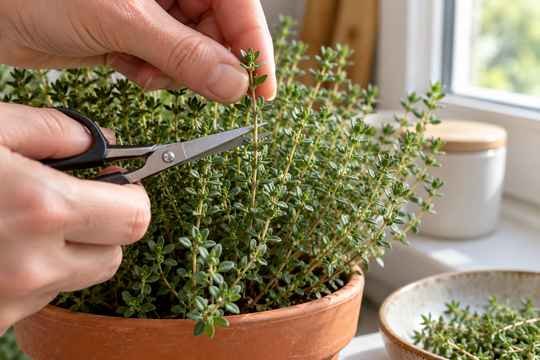
Light trimming helps maintain a useful shape. Do not apply a severe outdoor rejuvenation cut to a weak indoor plant in midwinter. If most growth has become woody and sparse, improve conditions and consider propagating or replacing the plant during a suitable growing period.
Wash hands and rinse harvested sprigs under running water before preparing them, following FDA produce-cleaning advice. Use culinary leaves in food; this guide does not recommend ingesting thyme essential oil or making medical claims.
For surplus sprigs, our homegrown herb drying guide covers drying and storage. Only harvest as much as the plant can replace under its current conditions.
Troubleshoot before changing everything
| Symptom | What to check | First response |
|---|---|---|
| Long, weak shoots | Light reaching the leaves | Improve suitable light; do not compensate with extra feed |
| Yellowing with wet mix | Drainage, oversized pot, damaged roots | Stop routine watering and diagnose the root zone |
| Crisp leaves and very light pot | Dry root ball or heat exposure | Water thoroughly if dry and move away from excessive heat |
| Fine webbing or insects | Leaf undersides and growing tips | Isolate, identify the pest and use crop-labelled controls if needed |
For flies around damp mix, use our fungus gnats in indoor herbs guide. Do not spray an unidentified pest or use a houseplant chemical on an edible herb unless its label allows that crop and use.
Frequently asked questions
Can thyme grow on a shaded kitchen shelf?
A shelf needs adequate supplemental light if daylight is weak. The plant may remain green for a while without growing enough to support repeated harvests. Put useful light ahead of decoration.
Should I water thyme every week?
Use a weekly reminder to inspect it, not a compulsory watering event. The mix, pot and season determine when water is needed. A wet pot should be allowed to dry slightly first.
Is a supermarket thyme plant suitable?
It can be, if it is a healthy culinary plant. Check roots, remove wrapping that traps water and avoid heavy picking immediately. Crowding or poor retail conditions may need attention before it settles.
Can I move it outdoors in spring?
Yes, when local conditions suit the plant. Acclimatise it gradually to direct sun and outdoor exposure rather than moving a soft indoor plant straight into harsh weather. Check the variety’s hardiness for your region.
Grow for a modest, steady picking
Start with labelled culinary thyme, give it strong light and a draining pot, then water according to the mix. Small harvests from leafy green tips are more realistic than constant heavy cutting from a slow-growing winter plant.